

Best Japanese Teaware & Matcha Sets to Buy in 2026 (Kyusu, Yunomi & Ceremony Kits)
Updated July 2026 · 12 min read
Japan Shop Helper Editorial
Tokyo-based · prices & fees verified on real orders
Japanese teaware is one of the rare souvenir categories where the everyday version is the good version: the same side-handled kyusu teapot and thick-walled yunomi cups you see in a Kyoto family kitchen are the pieces worth carrying home. But the category has its own vocabulary — kyusu, yunomi, chawan, chasen — and its own quality tiers, and a tourist working from guesswork usually overpays for the wrong piece. This guide sorts the essential pieces by what they’re actually for, what each price band buys, and which make better gifts than daily drivers — curated the way a good Japanese select shop would stock its tea shelf.
Heads Up
The Vocabulary: Five Words That Make Teaware Shopping Easy
Every piece of Japanese teaware answers a specific question, and once you know the names, a crowded shop shelf resolves into a short, logical list:
- Kyusu— the teapot, classically with a hollow side handle set at 90 degrees to the spout. Built for loose-leaf green tea: sencha, gyokuro, hojicha.
- Yunomi— the everyday cylindrical tea cup, taller than it is wide, no handle. Sold singly or, very often, in his-and-hers pairs.
- Chawan— the wide bowl used for whisking and drinking matcha. Bigger and more open than a yunomi for a reason: the whisk needs room to move.
- Chasen— the bamboo whisk, carved from a single piece of bamboo into dozens of fine tines. The one tool with no real substitute.
- Chashaku— the slim bamboo scoop for measuring matcha powder, usually about two scoops per bowl.
The practical takeaway: leaf tea needs a kyusu and yunomi; matcha needs a chawan, chasen, and chashaku. Those are two separate kits, and most people are happier buying one of them properly than both of them cheaply.
The Kyusu: The One Teapot Worth Bringing Home
If you buy a single piece of teaware in Japan, make it a kyusu. Western teapots are built for black tea — big, tall, designed for long steeps. A kyusu is the opposite: small (200–500ml), squat, and fitted with a fine mesh filter, because Japanese green tea brews in 30–90 seconds and needs to pour off the leaves completely the moment it’s done. The side handle looks eccentric until the first pour, when the wrist-rotation motion turns out to be exactly right for emptying the pot to the last drop — the “golden drop” that carries the most flavor.
Traditional regions matter here. Tokoname (near Nagoya) and Banko (Yokkaichi) make the classic unglazed red and purple clay kyusu that tea professionals favor — the porous clay is said to round off bitterness over years of use. Modern Japanese makers like Kinto and Hario take a different route: glazed ceramic or heat-resistant glass, dishwasher-safe, with removable stainless filters. For a first kyusu that will actually get used weekly rather than displayed, the modern school is the honest recommendation.

Pro Tip
Yunomi Cups: Why the Good Ones Come in Pairs
The yunomi is the workhorse cup of Japanese daily life — tall enough to hold heat, thick enough to handle without a handle, and small enough (150–200ml) that the tea never sits long enough to go cold and bitter. Walk through any Japanese homeware floor and you’ll notice yunomi sold overwhelmingly in twos: the meoto yunomi, or married-couple pair, traditionally one slightly larger and one slightly smaller, in matching or mirrored glazes. It’s one of Japan’s classic wedding and anniversary gifts, which is exactly what makes a boxed pair such an easy present to carry home — the gift logic is built into the format.
Quality signals to check: a foot ring that sits flat without wobbling, a rim that’s smooth against the lip, and glaze that runs cleanly inside the cup (bare patches inside will stain). Weight is taste rather than quality — rustic, heavy Mashiko-style cups and delicate thin porcelain both have their partisans.

The Matcha Ceremony Kit: What You Actually Need (and What You Don’t)
Matcha gear intimidates people because tea ceremony is a formal art with dozens of implements. Making a good bowl at home needs exactly three: a chawan wide enough to whisk in, a chasen, and a chashaku (a teaspoon works, but the bamboo scoop measures better and costs almost nothing as part of a set). Everything else — the silk cloths, the lacquered tea caddy, the kettle — belongs to the ceremony, not the drink.
The chasen is the piece that can’t be faked. Those hundred-odd springy bamboo tines are what aerate matcha into the fine microfoam that makes it taste round instead of chalky; a milk frother approximates it badly and a fork not at all. Chasen are consumables — with weekly use the tines gradually splay and snap over a year or two — which is why starter sets that bundle whisk, bowl, and scoop are the rational first purchase rather than buying each piece separately at import prices.

Pro Tip
Filling the Bowl: Matcha Worth the Whisk
A ceremony kit without good matcha is a decoration, so treat the powder as part of the purchase. The name to know is Ippodo— a Kyoto tea merchant in business for roughly three centuries, and the brand Japanese buyers themselves default to when they want dependable ceremonial-grade matcha without navigating single-farm boutiques. The sealed tin format matters more than it looks: matcha oxidizes fast once opened, dulling from electric green to khaki, so small sealed tins beat big bags for anyone drinking a few bowls a week.
Grade determines use. Ceremonial grade — smooth and sweet enough to drink straight with water — is what a tin like Ippodo’s delivers. Culinary grade is deliberately more robust and bitter so it survives milk, sugar, and oven temperatures; it’s the right choice for lattes and baking and the wrong one for straight drinking. Our full Japanese matcha guide goes deeper on grades, regions, and how to spot tourist-trap tins.

Kutani Ware: When You Want Color and Occasion
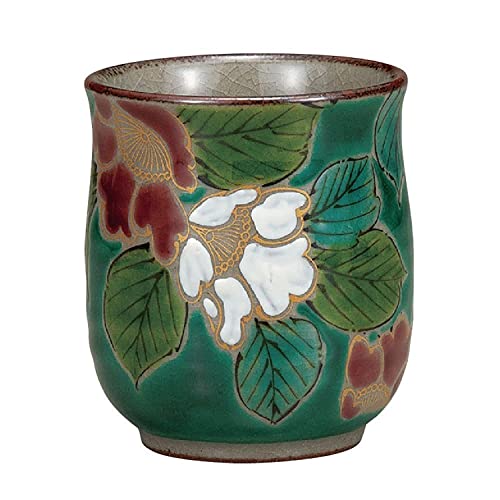
Most Japanese teaware whispers — muted glazes, bare clay, quiet restraint. Kutani ware, from Ishikawa Prefecture, is the tradition that doesn’t. For over three centuries Kutani kilns have specialized in vivid overglaze painting: deep greens, reds, golds, and blues laid over porcelain in dense pictorial designs. It photographs beautifully, reads instantly as “special occasion,” and is the style to reach for when the recipient would find an unglazed brown teacup underwhelming.
The trade-off is honest: hand-painted overglaze enamel wants gentler treatment than a stoneware daily driver — hand-washing, no microwave if there’s gold detailing. That’s precisely what makes it a better gift than a workhorse. A Kutani cup is the piece that comes out when guests visit, which for many recipients is exactly the role a souvenir from Japan should play.
Quality Tiers: What ¥2,000, ¥6,000, and ¥20,000 Actually Buy
Japanese teaware pricing is unusually rational once you see the tiers. Roughly:
- ¥1,000–¥4,000 — honest production ware. Factory-made in Japan or to Japanese specs, consistent, functional, often genuinely handsome. Every pick in this guide lives here, and for a first kit this tier is the right call.
- ¥4,000–¥10,000 — craft production. Small-kiln work, regional clays (Tokoname, Hagi, Mashiko), some hand-finishing. Where you shop when the first kyusu has earned a place in your routine.
- ¥10,000+ — artist pieces.Named potters, one-of-a-kind glazes, box signed by the maker. Wonderful, and wasted on anyone who doesn’t already drink loose-leaf tea weekly.
The select-shop rule of thumb: buy the tier below your enthusiasm. A ¥3,000 kyusu that gets used every day is a better purchase than a ¥15,000 one that intimidates you into keeping it in the box.
The Coffee Crossover: Why Japan’s Tea Shops Sell Drippers
Spend time in Japanese homeware shops and a pattern emerges: the tea shelf and the coffee shelf are the same shelf. Japan’s kissaten café culture developed pour-over coffee with exactly the sensibility of tea preparation — controlled water temperature, deliberate pouring, single small batches — and Japanese-designed brewers went on to conquer specialty coffee worldwide. The emblem of that crossover is the Hario V60, a cone dripper designed in Tokyo whose spiral-ribbed geometry became the default brewer in third-wave cafés from Melbourne to Copenhagen.
For a teaware buyer this matters for two reasons. First, if your household splits between tea and coffee drinkers, a V60 slots into the same gift box as a kyusu with total aesthetic coherence — same philosophy, different leaf. Second, it’s dramatically cheaper bought in Japan than the same unit marked up in a Western specialty shop.

Gift or Daily Driver? Matching the Piece to the Person
The single most useful sorting question for this whole category: will this piece be used weekly, or brought out for occasions? Daily drivers should be glazed, robust, and replaceable — the Kinto kyusu and a yunomi pair. Occasion pieces can be delicate and decorative — the Kutani cup. The matcha set sits in between: it looks ceremonial but is genuinely a weekly-use kit for anyone who drinks matcha at all.
For gifts, completeness beats prestige. A ¥4,000 bundle of ceremony set plus matcha tin gets used the week it’s unwrapped; a ¥10,000 bare chawan with nothing to whisk in it goes on a shelf. The same logic favors the yunomi pair (complete by design) and the kyusu-plus-tea combination — pick a sencha or hojicha to tuck inside the pot using our guide to the best Japanese green tea. And if teaware is one line in a longer shopping list, our best souvenirs from Japan roundup covers what else earns suitcase space.
Carrying Ceramics Home (or Skipping the Suitcase Entirely)
Ceramics survive flights fine with basic care: wrap each piece in clothing, keep it in the center of the bag surrounded by soft layers, and never check a bag with a chasen loose in it — the tines crush. Japanese shops will bubble-wrap and box anything on request; the phrase “omiyage desu” (it’s a gift) usually triggers the full wrapping treatment unprompted.
The easier answer for anyone reading this from abroad, or already over their luggage allowance: every item in this guide ships from Amazon Japan, and proxy services forward anything that doesn’t ship internationally. Ordering the breakables to your home address and hand-carrying only the tea itself is the veteran move — the tin of matcha weighs nothing, and the teapot arrives professionally packed.
At a Glance: Which Piece for Which Purpose
| Piece | Best For | Price Range | Gift or Daily Driver? |
|---|---|---|---|
| Kinto ceramic kyusu (450ml) | Loose-leaf sencha, hojicha, genmaicha | ¥3,000–¥6,000 | Daily driver |
| Yunomi pair set | Everyday cups; couples’ gift format | ¥2,000–¥4,000 | Both |
| Matcha ceremony set (whisk, bowl, scoop) | Complete matcha starter kit | ¥1,500–¥3,000 | Best all-round gift |
| Ippodo matcha (tin) | Drinking-grade matcha to fill the bowl | ¥2,000–¥2,500 | Consumable — pair with the set |
| Kutani ware tea cup | Decorative, occasion use, display | ¥2,000–¥4,000 | Gift / occasion piece |
| Hario V60 dripper | The coffee drinker in a tea household | ¥1,000–¥2,000 | Daily driver |
Teaware Buying Checklist
Frequently Asked Questions
Can I make matcha without a bamboo whisk?
You can dissolve it — a small jar with a tight lid and vigorous shaking works in a pinch, and an electric milk frother gets closer. But neither produces the fine, stable microfoam a chasen’s hundred-odd tines create, and that foam is most of the difference between smooth matcha and chalky green water. Given that a full whisk, bowl, and scoop set costs ¥1,500–¥3,000, substituting is the expensive-tasting economy.
What’s the difference between a kyusu and a regular teapot?
Size, filter, and geometry. A kyusu is small (usually 200–500ml) because Japanese green tea is brewed in short, repeated steepings rather than one big pot; it has a fine integrated mesh because sencha leaves are small and fragmentary; and the classic side handle gives the wrist leverage to pour off every last drop quickly, which stops the brew from over-steeping. A Western teapot does none of those things well for green tea.
Is it cheaper to buy Japanese teaware in Japan than abroad?
Substantially, in most cases. Standard production pieces — a Hario dripper, a Kinto kyusu, a chasen set — commonly sell abroad at two to three times their Japanese catalog price once import markups land on them. Amazon Japan prices are essentially home-market prices, which is why ordering ahead or shipping via a proxy service usually beats both airport shops and Western specialty retailers.
Are these sets dishwasher and microwave safe?
Treat glazed modern ceramic (like the Kinto kyusu) as dishwasher-tolerant but remove the mesh filter first; hand-wash anything hand-painted, gilded, or unglazed — Kutani overglaze and bare clay both suffer in machines. Bamboo pieces (chasen, chashaku) are rinse-only: no soap, no dishwasher, dried tines-up. When in doubt, hand-wash; none of these pieces are large enough to make that a chore.
Which single item makes the best gift from this list?
The matcha ceremony set, with the Ippodo tin alongside it — together around ¥3,500–¥5,500, complete on arrival, and usable the same evening. For a couple, the yunomi pair set carries the built-in symbolism of the married-cup tradition. For someone who values display over use, the Kutani cup is the piece that looks most unmistakably like it came from Japan.
Disclosure
This article contains affiliate links. We may earn a commission when you buy through them, at no extra cost to you. Every pick is an honest recommendation.
Planning to buy from Japan?