

Best Japanese Stationery Brands 2026: Midori, Stalogy, Hobonichi & More
Updated June 2026 · 14 min read
Japan Shop Helper Editorial
Tokyo-based · prices & fees verified on real orders
Ginza’s Itoya flagship stacks floor after floor of paper goods, and the selection is genuinely incredible—but suitcase space is always the real constraint. The best Japanese stationery brands to buy in Japan in 2026 are Midori, Stalogy, Hobonichi, Delfonics, and Mark’s, each offering Japan-exclusive items at prices 30–60% lower than what overseas resellers charge. This guide ranks them, shows exactly where to buy each one in Tokyo and beyond, and explains how to stretch your budget with smart 100-yen shop and Muji picks.
Japanese stationery isn’t just pretty. The paper is measurably different: Tomoe River paper (used by Hobonichi) weighs just 52 gsm yet resists fountain-pen bleed-through better than most 80 gsm Western notebooks. Midori’s MD paper went through years of internal testing before reaching market. This obsession with materials is why stationery lovers fly to Japan specifically to buy notebooks.
Below, you’ll find a brand-by-brand breakdown, a comparison table, Tokyo store recommendations, budget alternatives, and answers to the questions tourists ask most often. If you’re also shopping for travel gear, check out our guide to Japanese travel accessories worth buying.
Brand-by-Brand Comparison at a Glance
Before we get into individual breakdowns, here’s how the top six brands stack up on the dimensions that matter most to tourists: price range for a signature product, paper quality, design aesthetic, availability in English, and whether they stock Japan-exclusive items you can’t find abroad.
| Brand | Signature Product | Price Range (Japan) | Paper Quality | Best For | Japan Exclusives? |
|---|---|---|---|---|---|
| Midori | Traveler’s Notebook | ¥770–¥5,500 | MD Paper (excellent) | Journal lovers, travelers | Yes — seasonal refills, Tokyo Station edition |
| Stalogy | Editor’s Series 365 | ¥1,100–¥2,750 | Thin grid paper (very good) | Planners, minimalists | Limited — mostly available globally |
| Hobonichi | Hobonichi Techo | ¥2,420–¥4,950 | Tomoe River (exceptional) | Daily planners, fountain-pen users | Yes — cover collaborations, Tobichi store events |
| Delfonics | Rollbahn notebook | ¥440–¥1,760 | Cream-colored (good) | Casual note-takers, gift buyers | Yes — character collabs (Snoopy, Moomin) |
| Mark’s | EDiT planner | ¥1,760–¥3,300 | Smooth cream (good) | Professional planners, design lovers | Yes — limited-edition covers |
| Muji | Recycled paper notebook | ¥100–¥490 | Recycled pulp (decent) | Budget shoppers, bulk buying | Some — Japan-only sizes and covers |
Now let’s look at each brand in detail, starting with the one that arguably started the global Japanese stationery craze.
1. Midori: The Traveler’s Notebook Pioneer
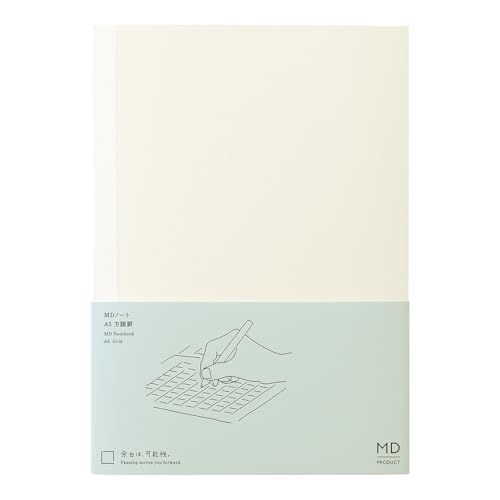
Midori has been making paper products since 1950, and the company’s Tokyo headquarters (parent company Designphil) still tests every paper formulation in-house. Their MD Paper series—short for “Midori Diary”—uses a proprietary cream-colored stock that handles fountain pen, rollerball, and brush pen ink without feathering. Hold a sheet up to the light and you’ll notice zero show-through even with wet nibs.
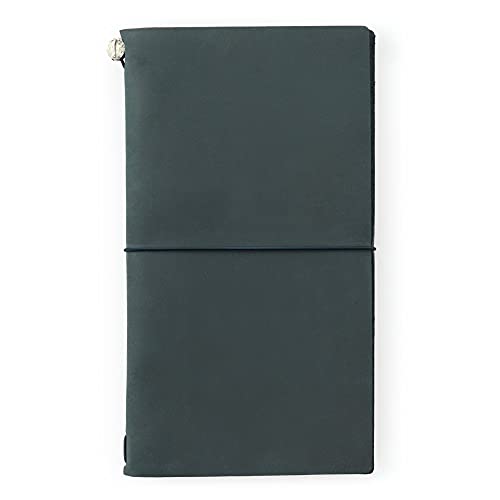
The product that put Midori on the global map is the Traveler’s Notebook—a leather cover with a simple elastic band system that holds interchangeable refills. A standard-size starter kit costs about ¥4,950 in Japan; the same kit runs $55–$65 on Amazon US. That’s a savings of roughly ¥1,500 per unit, which adds up fast if you’re buying refills (¥385 each vs. $6–$8 abroad).
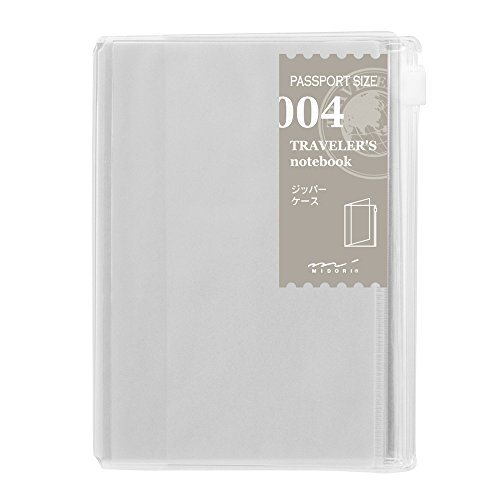
The Japan-exclusive angle matters here. Midori releases seasonal limited-edition refills—typically tied to spring cherry blossoms or autumn foliage—that never reach overseas retail. The Tokyo Station Traveler’s Factory store (inside the Marunouchi side of Tokyo Station) stocks location-exclusive brass charms and leather accessories you literally cannot order online from outside Japan.
Where to Buy Midori in Tokyo
Traveler’s Factory Nakameguro (the flagship) carries the full range and hosts occasional stamp events. Traveler’s Factory Station inside Tokyo Station is smaller but stocks station-exclusive items. Itoya in Ginza carries the MD Paper line across multiple floors. Hands stores (formerly Tokyu Hands) stock Midori basics in every major branch.
Pro Tip
2. Stalogy: The Minimalist’s Daily Driver
Stalogy’s brand name comes from a portmanteau of “Stationery, Standard & Technology.” It’s made by Nitoms, a company better known for adhesive products and lint rollers. That adhesive expertise shows: Stalogy’s translucent sticky notes and masking-tape circle stickers are cult favorites among bullet journalers because they peel cleanly without tearing paper.
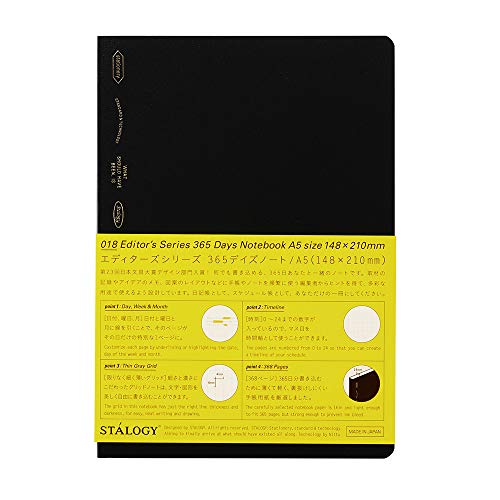
The hero product is the Editor’s Series 365 Days Notebook. Available in A5, A6, and B5, it uses ultra-thin 4mm grid paper (about 50 gsm) that stays flat when open. Each notebook contains 368 pages—one for each day of the year plus a few extras. A single A5 version costs ¥1,980 in Japanese stores. The same notebook sells for $22–$28 on international sites, so the savings hover around 20%.
Stalogy’s gel ink ballpoint pen (product #028) deserves a mention too. At ¥330 for a single pen, it writes more smoothly than many pens at triple the price. The ink dries in about 1.5 seconds—fast enough for left-handers to avoid smearing.
Where to Buy Stalogy
Stalogy closed its Tokyo Midtown Yaesu flagship store in 2023 and hasn’t opened a replacement standalone shop. Your best bet is Itoya Ginza (6th floor), Loft stores nationwide, or the stationery section of large Tsutaya Bookstores. In Osaka, try Loft Umeda or the stationery corner in Lucua 1100.
3. Hobonichi: The Planner with a Cult Following
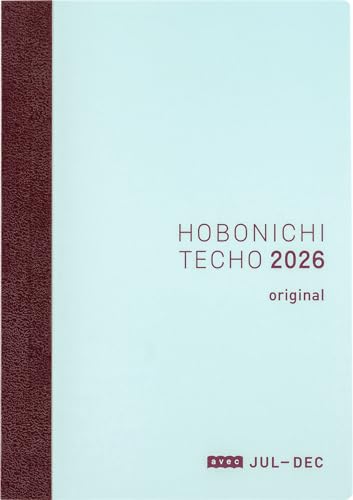
Hobonichi Techo started as a side project by the online editorial site “Hobonichi” (run by Shigesato Itoi, the copywriter who also created the Mother/EarthBound video game series). The planner launched in 2001 and now sells over 800,000 units per year. That volume is remarkable given that each planner costs ¥2,420–¥4,950 depending on size, and the covers (sold separately) can run another ¥3,000–¥10,000.
The paper is the star. Hobonichi uses Tomoe River paper at 52 gsm—thinner than a standard Post-it note. Despite the thinness, fountain-pen ink sits on the surface with almost no bleed-through. A single day gets its own page in the Original (A6) and Cousin (A5) sizes, with a small daily quote in Japanese at the bottom. The English Planner version uses English quotes and starts the week on Monday.
Japan-exclusive covers are the reason stationery tourists time their trips around Hobonichi’s release cycle. New covers launch every September 1 at the Tobichi stores in Tokyo (Minami-Aoyama) and Kyoto. Some collaboration covers—think Evangelion, Moomin, or Yayoi Kusama—sell out within hours. If you’re visiting in September or October, arrive at Tobichi by 10 AM opening to grab limited items.
Pro Tip
Hobonichi Stores in Japan
Tobichi Tokyo (Minami-Aoyama, 5-minute walk from Omotesando Station exit B1) is the flagship. Tobichi Kyoto sits near Shinkyogoku Shopping Street. Both stock the full planner range plus exclusive merchandise like Hobonichi-branded tote bags. Outside the brand stores, Loft carries Hobonichi in every major branch—the Shibuya Loft typically has the biggest selection.
4. Delfonics: Colorful, Affordable, Gift-Ready
Delfonics leans into retro-modern aesthetics with candy-colored covers and vintage typography. The brand’s most popular product is the Rollbahn notebook—a spiral-bound notebook with 5mm grid pages and rear pockets for storing loose paper or receipts. At ¥440 for the pocket size and ¥660 for the A5, it’s one of the best stationery values in Japan.

What makes Delfonics a smart tourist buy is the collaboration editions. Delfonics produces Rollbahn notebooks featuring Snoopy, Moomin, Miffy, and other characters in Japan-only colorways. A Snoopy Rollbahn costs about ¥770 in a Delfonics store and resells for $15–$20 overseas. If you need gifts for stationery-loving friends back home, grab five or six of these—they’re lightweight, flat, and universally liked.
Beyond notebooks, Delfonics makes pen pouches, document files, and photo albums. Their Inner Carrying bags (transparent zip pouches in various sizes) are popular with travelers who want to organize cables and accessories. A set of three sizes runs about ¥1,320.
Where to Buy Delfonics
Delfonics operates standalone shops in Shibuya (Shibuya 109 area), Jiyugaoka, and Kichijoji. The Smith stationery stores (also run by Delfonics) carry a curated selection alongside other brands. Loft and Itoya stock Rollbahn basics, but you’ll find the broadest collaboration lineup at the brand’s own shops.
5. Mark’s: The Design-Forward Planner Brand
Mark’s Inc. produces the EDiT planner series, which appeals to users who want a more professional-looking daily planner than the colorful Hobonichi. The EDiT 1-Day-Per-Page (B6 size) costs ¥2,640 and uses 80 gsm cream paper with a subtle time axis printed on each page. It’s thicker paper than Hobonichi’s Tomoe River, which some users prefer because it feels more substantial under a ballpoint pen.
Mark’s also produces masking tape, letter sets, and seasonal greeting cards. Their masking tape (often branded “maste”) comes in patterns like vintage ticket stubs, botanical illustrations, and traditional Japanese patterns. A single roll costs ¥280–¥440, making it an easy gift item that weighs almost nothing. If you’re looking for uniquely Japanese gift ideas, our feature on the best souvenirs to buy in Japan covers more options across categories.

Where to Buy Mark’s
Mark’s Style Tokyo stores exist inside Tokyo Skytree Town (Solamachi) and other commercial complexes. Itoya Ginza and Loft also carry EDiT planners. In Kyoto, check the stationery floor of Takashimaya department store on Shijo-dori.
Budget Japanese Stationery: 100-Yen Shops & Muji
Not every good notebook costs ¥2,000. Japan’s 100-yen shops—Daiso, Seria, and Can Do—stock surprisingly decent stationery at ¥110 per item (including tax). Daiso’s A5 dotted notebooks use 70 gsm paper that handles gel pens and fineliners without bleeding. Seria tends to have the most design-forward covers; their seasonal collaboration notebooks (Disney, Sanrio) rotate every few months.
Muji sits a step above 100-yen territory. Their A5 recycled-paper notebooks start at ¥100 for a thin 30-page version and top out at ¥490 for a 184-page sewn-bound notebook. The paper is a warm beige color (recycled pulp) that accepts most pens cleanly, though fountain-pen users may notice minor feathering with very wet inks. Muji gel pens (¥100 each) are legendary for smooth writing and come in 20+ colors.

Heads Up
A smart budget strategy: buy your premium items (Midori, Hobonichi) at dedicated stationery stores, then fill out your haul with Muji pens and Daiso washi tape. You can build a 10-item gift set for under ¥3,000 this way.
Best Japanese Stationery Stores in Tokyo
Tokyo has more stationery retail density than any other city on earth. Here are the stores worth your time, ranked by breadth of selection.
Itoya Ginza (12 floors)
The mothership. The main building has 12 floors dedicated to pens, paper, notebooks, letter writing, art supplies, and desk accessories. The annex across the street (K.Itoya) adds another 6 floors focused on lifestyle goods. Plan 90–120 minutes. Each floor is organized by category, so head to floor 2 for notebooks, floor 4 for pens, and floor 6 for planners and diaries.
Loft Shibuya (7th–8th floors of Seibu)
Loft carries every brand mentioned in this article under one roof. The Shibuya branch has the largest stationery section, covering roughly 500 square meters across two floors. Prices are standard retail—no haggling, no markups.
Kakimori Kuramae
This tiny shop near Kuramae Station lets you build a custom notebook from scratch: choose your cover material, paper type, binding method, and even mix custom ink colors at the ink bar (¥4,400 for a 35ml bottle). It’s a 10-minute walk from Asakusa, making it easy to pair with a temple visit.
Hands (formerly Tokyu Hands)
The Shibuya flagship remains the most stocked, though the Ikebukuro branch is nearly as good and less crowded. Hands stocks Midori, Stalogy, Pentel, Pilot, Zebra, and dozens of smaller brands. The pen-testing station lets you try 200+ pens before buying.
Pro Tip
How to Avoid Overpaying at Tourist-Trap Stationery Stores
Japanese stationery has price tags printed directly on the product or shelf—there’s no negotiation. But tourist-adjacent shops sometimes inflate prices by 20–40%. Here are the red flags.
The biggest money trap is small souvenir shops that repackage Daiso-tier goods with “Made in Japan” labels at 3–5x the price. If a brush pen costs ¥110 at Daiso and ¥500 at a souvenir stall in Asakusa, it’s the same pen. Also be aware that some pens and inks are available for even less through tax-free shopping strategies.
Packing Stationery for the Flight Home
Paper is heavier than you think. A single Hobonichi Techo Original weighs about 200g; a Stalogy 365 weighs 310g. Ten notebooks can add 2–3 kg to your luggage. Here’s how to pack smart.
First, ditch the shopping bags. Japanese stores give you pristine paper bags, but they waste space. Consolidate everything into one large Muji zip bag (¥290 for the travel series). Second, distribute notebooks across your checked bag and carry-on so you don’t hit the weight limit on one bag. Third, if you’re carrying fountain-pen ink bottles, double-bag them in zip-lock bags and pack them in the center of your checked luggage—cabin pressure changes rarely cause leaks, but a stained notebook is heartbreaking.
Customs-wise, paper products face zero duty in most countries. You won’t encounter issues unless you’re importing a commercial quantity (over 50 identical items). Keep receipts in case customs asks about value declarations.
What Japanese Stationery to Prioritize as a Tourist
With limited suitcase space, focus on items that offer the biggest Japan-vs-abroad price gap or are genuinely unavailable outside the country. Here’s a quick priority framework.
High Priority: Buy These in Japan
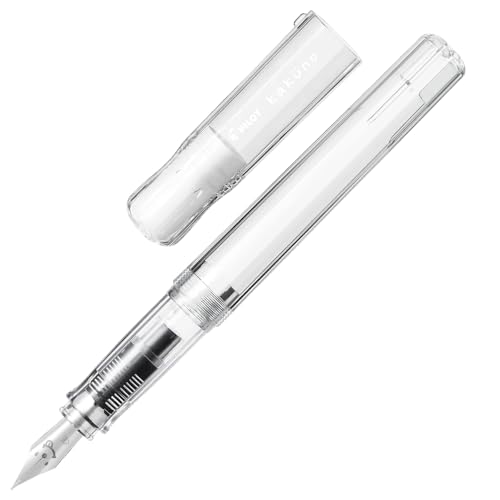
Midori Traveler’s Notebook refills (¥385 vs. $6–$8 abroad). Hobonichi Techo covers (especially collaborations). Stalogy masking stickers and translucent sticky notes. Any Japan-exclusive or seasonal-edition notebooks. Pilot Kakuno fountain pens (¥1,100 in Japan vs. $15–$20 overseas).
Medium Priority: Slight Savings
Stalogy 365 notebooks, Delfonics Rollbahn standard colors, Muji gel pens in bulk. You save 10–20% buying in Japan versus online importers.
Low Priority: Skip Unless You Love It
Standard Muji notebooks (available globally at similar prices). Basic Pilot or Zebra pens (widely distributed). Washi tape from 100-yen shops (cute but adds bulk fast).
Japanese Stationery Shopping Beyond Tokyo
Tokyo isn’t the only city with great stationery stores. Here are highlights from other popular tourist destinations.
Kyoto
Hobonichi Tobichi Kyoto near Shinkyogoku. TAG Stationery on Teramachi-dori stocks high-end pens and Kyoto-exclusive ink colors (Kyo-no-oto series, ¥1,760 per 40ml bottle—ink colors inspired by Kyoto temples and seasons). Loft Kyoto inside the Kyoto Marui building near Shijo-Kawaramachi.
Osaka
Loft Umeda (NU Chayamachi). Maruzen & Junkudo Chayamachi (massive bookstore with two floors of stationery). For 100-yen stationery, hit the three-story Daiso in Shinsaibashi.
Fukuoka
Inkstand by Kakimori inside Canal City Hakata lets you mix custom ink, just like the Tokyo original. Loft in Tenjin Core carries the same brand selection as the Tokyo branches.
Frequently Asked Questions
What is the best Japanese stationery brand for fountain-pen users?
Hobonichi, hands down. The Tomoe River paper (52 gsm) used in Hobonichi Techo planners shows off ink sheen and shading better than any other commercially available paper at this price point. Midori MD Paper is a close second—slightly thicker at roughly 70 gsm, with excellent resistance to bleed-through. If you use wet inks like Iroshizuku, start with Hobonichi.
Can I get tax-free prices on stationery in Japan?
Yes. Most major stores (Itoya, Loft, Hands, Muji) offer tax-free shopping for foreign tourists who spend ¥5,000 or more (excluding tax) in a single receipt. Bring your passport. The store will package your tax-free items in a sealed bag—do not open it until you leave Japan, or customs may charge you the 10% consumption tax at the airport.
When does Hobonichi release new planner covers?
Hobonichi launches the next year’s lineup on September 1 each year. Online sales open the same day, and Tobichi stores in Tokyo and Kyoto hold in-person launch events. If you’re visiting Japan in September or early October, you’ll catch the freshest stock. By late November, popular collaboration covers are typically sold out.
Is it cheaper to buy Japanese stationery in Japan or online?
Japan is almost always cheaper. A Midori Traveler’s Notebook refill costs ¥385 in Japan (about $2.60 at current exchange rates). The same refill lists for $6–$8 on Amazon US. Add tax-free savings and you’re looking at 40–60% less for high-turnover items like refills, ink cartridges, and masking tape. The exception is basic Muji products, which are priced similarly worldwide.
What’s the difference between Midori MD Paper and Tomoe River paper?
MD Paper is a cream-colored sheet around 70 gsm, designed for a smooth writing feel across pen types—it excels with pencils, rollerballs, and medium-nib fountain pens. Tomoe River is thinner (52 gsm), lighter, and shows ink sheen more dramatically. Tomoe River is better for fountain-pen enthusiasts who want to see their ink’s full character; MD Paper is more versatile for everyday writing.
How much stationery can I bring home in my luggage?
Paper products don’t face import duty in most countries, so there’s no customs limit for personal use. Your real constraint is weight. Budget about 2–3 kg for a moderate stationery haul (8–12 notebooks plus pens). If you’re going heavy, consider shipping a box via Japan Post’s Surface Mail (¥2,000–¥3,000 for a 2 kg box to most countries, arriving in 1–3 months) to free up suitcase space.
Disclosure
This article contains affiliate links. We may earn a commission when you buy through them, at no extra cost to you. Every pick is an honest recommendation.
Find unique Japanese items