

Regional Omiyage Guide 2026: The Best Souvenir Sweets from Each Region of Japan
Updated July 2026 · 12 min read
Japan Shop Helper Editorial
Tokyo-based · prices & fees verified on real orders
Walk through any Japanese train station and you’ll pass a wall of individually boxed sweets, each one printed with a specific place name: Tokyo, Hokkaido, Hiroshima, Kyoto. This is omiyage — meibutsu, or “famous product,” sweets tied to a single region, sold almost nowhere else, and bought by nearly every traveler who passes through. Bringing the right box home (or handing it to a coworker the morning after a trip) is one of the most universal customs in Japanese travel, and it has its own unspoken rules about what to buy, how much, and for whom.
This guide works region by region: what each area is actually known for, where to find the genuine version versus a generic substitute, and the practical details — shelf life, packing, customs — that determine whether a box survives the trip home intact.
Heads Up
Why Omiyage Is Not Just “A Souvenir”
In English, “souvenir” usually means something you keep for yourself. Omiyage runs the opposite direction: it is bought specifically to give away, often to people who did not travel at all. Return from a work trip or a weekend away without a box for the office, and it reads as a small social oversight in many Japanese workplaces. The custom exists because the sweet itself functions as proof of the trip — the box says exactly where you went, and the region-specific branding does the explaining for you.
This is why the entire category is built around individually wrapped pieces inside one outer box. A pack of twelve Tokyo Banana or twenty Hiyoko buns is designed to be split: one piece per desk, one per household, distributed in a break room without anyone needing to cut or divide anything. When shopping for a group rather than a single recipient, count heads first and buy the box size that matches, or slightly exceeds, the number of people you need to cover.
Pro Tip
Where Omiyage Is Actually Sold
Three venues cover almost every purchase. Station kiosks and the ekinaka shopping concourses inside major terminals (Tokyo, Shin-Osaka, Hakata) stock the region’s signature sweets in travel-ready boxes, often with a dedicated omiyage hall near the Shinkansen gates — this is the single best one-stop option if you are short on time before a train. Depachika, the basement food floors of department stores, carry a wider and often fresher selection, including exclusive flavors and gift-set sizes not found at the station. Airports are the least reliable of the three: selection is narrower and prices run higher, so treat an airport purchase as a backup, not the plan.
A fourth option worth knowing about: many of the sweets in this guide, especially the shelf-stable ones like Tokyo Banana and Shiroi Koibito, are sold through Amazon Japan in gift-box format. Ordering ahead to a hotel means you can secure a box before you even reach the region it’s associated with, which matters if your itinerary is tight or a particular flavor tends to sell out.
Tokyo: Tokyo Banana
Tokyo Banana is the sponge-cake-and-banana-cream classic that has represented the capital since the late 1980s, and it remains the best-selling omiyage sold at Tokyo and Haneda. The soft, banana-shaped cake wraps a light custard cream, and limited collaboration flavors and character tie-ins rotate constantly — the standard yellow box is the one to default to if a collaboration isn’t available.

Because Tokyo is nearly everyone’s entry or exit point, Tokyo Banana doubles as a fallback: buy it at Haneda or Tokyo Station on the way out if a regional favorite from earlier in the trip has already sold out or gone stale.
Two newer Tokyo Station favorites are worth knowing. Tokyo Milk Cheese Factory’s salt-and-camembert cookies are the box locals actually queue for on the Gransta concourse, and Gateau Festa Harada’s Gouter de Roi butter rusks — technically from neighboring Gunma — sell out of Tokyo department store counters daily.


The same Gransta concourse has quietly become Tokyo’s most competitive omiyage arena, and two more of its perennial best-sellers deserve a place on the shortlist.

Hokkaido: Shiroi Koibito
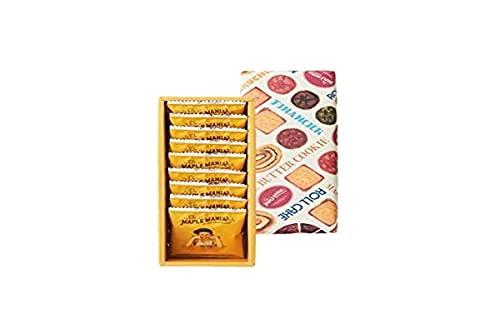
Shiroi Koibito (“white lovers”) is Ishiya’s white chocolate sandwiched between two crisp langue de chat cookies, and it has been Hokkaido’s single most recognized export since 1976. The pale blue box printed with a mountain scene is instantly familiar to anyone who has shopped for omiyage in Japan, and the cookie’s thin, snap-crisp texture is distinct from the softer cream-filled cakes that dominate elsewhere in this guide.
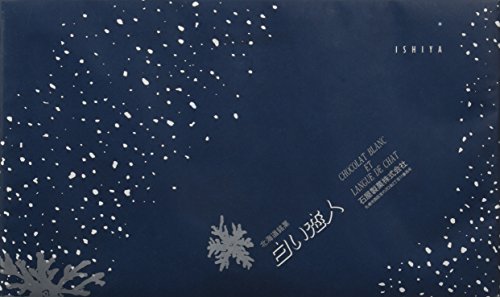
Because the cookies are baked, not creamed, Shiroi Koibito has one of the longer shelf lives on this list — typically several weeks unopened — which makes it the most forgiving choice if your flight home is not for another week or two.
Hokkaido’s other icon sits at the opposite end of the shelf-life spectrum. Royce’ Nama Chocolate is a fresh ganache dusted with cocoa — closer to a chilled dessert than a chocolate bar — and it needs refrigeration from counter to mouth.

Hiroshima: Momiji Manju
Momiji Manju takes its shape from the maple leaf, the symbol of Miyajima, the island just offshore from Hiroshima where the treat originated. The classic version is a small sponge cake filled with sweet red bean paste, though modern variations swap in custard, chocolate, or matcha cream. Nishikido and several other long-running Hiroshima bakeries produce the definitive versions, sold both on Miyajima itself and at Hiroshima Station.

These are freshest eaten within a few days, so if Hiroshima is early in a longer trip, consider the vacuum-packed or longer-shelf-life gift-box versions over the fresh bakery counter version, which is meant to be eaten the same day.
Kyoto: Nama Yatsuhashi
Yatsuhashi is a cinnamon-scented rice-flour sweet that has represented Kyoto for centuries, and the soft, unbaked “nama” version — a thin, chewy triangle folded around a filling, most classically sweet red bean — is the one travelers actually buy. Matcha, black sesame, and seasonal fruit fillings sit alongside the traditional cinnamon-and-bean version in most gift boxes, giving a single box real flavor variety.

Nama yatsuhashi is soft and moisture-sensitive, with one of the shorter shelf lives in this guide — typically one to two weeks refrigerated. The baked, cracker-like yatsuhashi (without “nama” in the name) trades some of that delicate texture for a much longer shelf life, and is the better pick if you are shipping the sweets home rather than eating them within the trip.
Kyoto Station’s omiyage halls have also produced a modern classic that now sits beside yatsuhashi on nearly every shelf: Kyo Baum, a green-layered baumkuchen from the makers of Otabe.

Ise, Mie: Akafuku Mochi
Akafuku Mochi has been sold at a single storefront near Ise Grand Shrine since 1707, and it remains one of the few omiyage sweets whose identity is tied as much to pilgrimage as to tourism — visiting Ise Jingu and skipping Akafuku is considered an incomplete trip by many Japanese travelers. The sweet itself is simple: soft mochi rice cake wrapped in smooth sweet red bean paste, shaped to evoke the ripples of the nearby Isuzu River.

This is the most perishable item on this list: fresh Akafuku Mochi is meant to be eaten within a day or two, since mochi hardens quickly at room temperature. Shelf-stable versions sold for shipping trade some texture for weeks of shelf life — a worthwhile swap if Ise is not your last stop before flying home.
Yamanashi: Kikyo Shingen Mochi
Shingen Mochi takes its name from the 16th-century warlord Takeda Shingen, whose former domain is now Yamanashi Prefecture — the gateway region for Mount Fuji and the Fuji Five Lakes. Small mochi cubes dusted in roasted soybean flour (kinako) are served with a small bottle of dark brown-sugar syrup poured over just before eating, making it one of the more interactive sweets on this list rather than a straight bite-and-go treat.

Shelf life sits in the middle of the pack — typically one to two weeks unopened — and the syrup bottles travel well sealed in a side pocket, since they are small enough to fall under standard carry-on liquid limits.
Sendai, Miyagi: Hagi no Tsuki
Hagi no Tsuki (“moon over bush clover”) is a Sendai specialty: a thin, delicate sponge-like cake wrapped around fresh whipped cream, named for the bush clover flowers associated with the Tohoku region in autumn poetry. It sits at the premium end of this guide — the fresh-cream filling means a shorter shelf life and a noticeably richer, more dessert-like flavor than the bean-paste-based sweets found further south and west.

Because of the fresh cream, this is a refrigerate-and-eat-soon item — plan on finishing it within a few days, and keep it cold if you are carrying it any distance before eating.
Fukuoka: Hiyoko Manju
Hiyoko is a soft, cake-like bun shaped like a baby chick and filled with smooth white bean paste — a Fukuoka original since 1912 that has since become one of Kyushu’s most recognized exports. The shape alone makes it an easy conversation starter as a gift, and the mild, not-too-sweet bean filling appeals to a wide range of palates, including people who find red bean paste too intense.

Hiyoko keeps reasonably well for a bean-paste sweet — about a week to ten days unopened — making it a practical choice even if Fukuoka falls early in a longer Kyushu-to-Tokyo itinerary.
Quick Comparison: Regional Omiyage at a Glance
| Region | Sweet | Price Range | Shelf Life |
|---|---|---|---|
| Tokyo | Tokyo Banana | ¥1,000–¥2,000 | ~1–2 weeks |
| Hokkaido | Shiroi Koibito | ¥1,000–¥2,500 | Several weeks (baked cookie) |
| Hiroshima | Momiji Manju | ¥1,200–¥2,000 | A few days fresh; longer if vacuum-packed |
| Kyoto | Nama Yatsuhashi | ¥800–¥1,500 | ~1–2 weeks refrigerated |
| Ise, Mie | Akafuku Mochi | ¥1,300–¥2,000 | 1–2 days fresh; longer shelf-stable version available |
| Yamanashi | Shingen Mochi | ¥1,500–¥2,500 | ~1–2 weeks |
| Sendai, Miyagi | Hagi no Tsuki | ¥2,000–¥3,500 | A few days, refrigerated (fresh cream) |
| Fukuoka | Hiyoko Manju | ¥1,500–¥2,500 | ~1–1.5 weeks |
Shelf Life, Packing, and Bringing Sweets Through Customs
Sort your omiyage into two groups as soon as you buy them: shelf-stable and fresh-perishable. Baked or dried sweets — Shiroi Koibito, nama yatsuhashi’s baked cousin, most Hiyoko — keep for one to several weeks unopened at room temperature and travel fine in a suitcase. Fresh, cream- or mochi-based sweets — Hagi no Tsuki, fresh Akafuku Mochi, bakery-counter Momiji Manju — are meant to be eaten within days and should go in a carry-on cooler bag if you are not eating them immediately, not checked luggage.
For customs, solid baked or rice-based sweets almost universally clear without issue in most countries’ personal-allowance rules, since they contain no fresh meat, dairy beyond what is baked in, or restricted plant material. Rules vary by destination country, so if you are traveling on to a country with strict biosecurity screening (Australia and New Zealand in particular), check that government’s specific food import rules before packing anything with fresh dairy or egg fillings.
Pro Tip
Frequently Asked Questions
Can I bring these sweets through customs back home?
In most cases, yes. Baked, dried, or rice-based sweets without fresh meat or dairy clear personal-allowance customs rules in the vast majority of destination countries without issue. Countries with strict biosecurity screening, notably Australia and New Zealand, apply tighter rules to items containing egg, dairy, or fresh fruit fillings, so check specific import guidance if you are headed there.
Do I need to buy omiyage in the actual region, or can I get it elsewhere?
Some of these sweets, like Shiroi Koibito and Tokyo Banana, are widely sold at major airports and department stores nationwide, so missing the home region is not a problem. Others, like Akafuku Mochi and fresh Momiji Manju, are far more tied to their local stores, and the version sold elsewhere is usually a shelf-stable substitute rather than the exact product sold at the source.
How many boxes should I buy for a Japanese workplace?
Count desks, not people you know personally — omiyage is typically shared with an entire team or department, not handed only to close colleagues. Buy a box sized for the full group (most gift boxes list an individually wrapped piece count on the packaging), and round up rather than down if you are unsure of the exact headcount.
What is the difference between omiyage and meibutsu?
Meibutsu refers to any product a region is famous for — it can be a sweet, a craft, or a dish. Omiyage is the act and etiquette of buying something, usually meibutsu, specifically to give as a gift after a trip. Every sweet in this guide is a meibutsu; buying it to bring home for someone else is what makes it omiyage.
Which of these sweets travels best over a long, multi-city itinerary?
Shiroi Koibito and Hiyoko Manju hold up best over one to several weeks unopened, making them the safest picks if you buy early in a long trip. Fresh mochi and cream-filled sweets like Akafuku Mochi and Hagi no Tsuki should be bought as close to your departure or return date as possible, or replaced with their shelf-stable gift-box counterparts.
Is it cheaper to buy these at the station, a depachika, or online?
Prices at station kiosks and depachika are usually close for the same box size, though depachika sometimes carry exclusive sets not sold at the station. Airport prices tend to run slightly higher. Ordering shelf-stable versions through Amazon Japan ahead of time is a useful option if a flavor tends to sell out or you want boxes waiting at your hotel rather than carried across cities.
For a wider view of what else is worth carrying home beyond sweets, see our best souvenirs from Japan guide. If snacking on the go is more your speed than gift boxes, our konbini snack guide covers the everyday side of Japanese sweets and treats. And for the department-store basements mentioned throughout this guide, our Japan department store shopping guide breaks down how to navigate a depachika floor.
Disclosure
This article contains affiliate links. We may earn a commission when you buy through them, at no extra cost to you. Every pick is an honest recommendation.
Planning to buy from Japan?