

Best Japanese Pool & Beach Gear for Summer 2026 (Swimwear, Rash Guards & Floats)
Updated July 2026 · 11 min read
Japan Shop Helper Editorial
Tokyo-based · prices & fees verified on real orders
Walk into any Japanese sports store or scroll Amazon Japan in June and you’ll notice something unusual: the swimwear aisle looks more like sun-protection equipment than fashion. Long-sleeve rash guards for toddlers, UPF-rated one-pieces, leg-covering trunks, and goggles engineered by companies that also make Olympic racing eyewear — most of it priced between ¥800 and ¥5,000. Whether you’re visiting Japan with kids in August, stocking a beach trip to Okinawa, or ordering ahead through a proxy service, this guide covers the water gear Japan genuinely does better, what it costs, and how to get the sizing right.
Heads Up
Why Japanese Water Gear Is Built Around Sun Safety
Japanese summer culture treats sun exposure as something to manage, not chase. Schools run mandatory swimming lessons where rash guards and swim caps are standard equipment, public pools enforce cap rules, and parents dress children for the beach the way other countries dress them for skiing: covered. The result is a domestic market where UV-cutting fabric (look for “UVカット” or a UPF50+ label) is the default rather than a premium upsell, and where a long-sleeve swim top for a five-year-old costs less than a tube of good sunscreen.
For traveling families this is a quiet bargain. Instead of reapplying sunscreen to a squirming child every hour at the beach, you cover most of the skin with a ¥2,000 rash guard and only manage the face, hands, and feet. It’s also why Japanese kids’ swimwear tends toward two-piece sets — a covered top plus trunks or leggings — rather than the minimal cuts common elsewhere. If you’re planning a summer trip, our Japan with kids guide pairs well with this one: pools, splash parks, and river shallows are some of the best free entertainment in a Japanese August.
Kids’ UV Swimwear and Rash Guards: The Core Purchase
Start here. A long-sleeve rash guard is the single most useful item in the Japanese water-gear catalog: it works at the hotel pool, the beach, the water park, and the school-style swimming class if your trip includes one. Japanese kids’ versions typically zip at the front (easier over wet skin than pull-over styles), use flat seams that don’t chafe, and dry fast enough to be worn damp under a T-shirt on the walk back. Boys’ UV swimsuits and girls’ swimsuit sets in the same catalog run ¥1,500–¥3,000 and follow the same covered-by-default philosophy — many girls’ sets bundle a top, bottoms, and a swim cap in one purchase.

Pro Tip
Adults Wear Rash Guards Here Too — and You Should
At a Japanese beach, adults in rash guards outnumber adults without them. It isn’t modesty so much as practicality: July UV indexes in Japan regularly hit levels where an unprotected back burns in under half an hour, and the fabric also solves the stand-up-paddleboard, snorkeling, and carrying-a-toddler-on-your-shoulders problems in one garment. Adult versions come in loose “fitness” cuts you can wear as a regular shirt over swim trunks — nobody will read it as a wetsuit.

One cultural note worth knowing before you pack: visible tattoos are still restricted at many Japanese pools, onsens, and some managed beaches. A long-sleeve rash guard is the accepted workaround at most pools that allow covered tattoos — check the facility’s policy, but the garment you’re buying for sun protection often solves this problem too.
Goggles: Where Japan Quietly Leads
Japan’s goggle benchmark is SWANS, made by Yamamoto Kogaku in Osaka — an optics company whose racing goggles show up on national teams. What matters for a traveler is that the same anti-fog know-how trickles down into everyday models sold for under ¥2,000. Japanese anti-fog coatings tend to hold up noticeably longer than the bargain-bin goggles sold at beach shops, and the fit engineering (softer gaskets, finer strap adjustment) suits a wider range of face shapes, including narrower ones that Western-market goggles often over-size.

For children, the same catalog carries kids’ anti-fog goggles in the ¥800–¥1,500 range with easily adjustable straps — worth grabbing in the same order, since ill-fitting goggles are the fastest way to end a pool session early. Two care habits extend any anti-fog coating’s life: rinse in fresh water after swimming, and never rub the inside of the lens.
Swim Caps, Fins, and the Rules at Japanese Pools
If your trip includes a public or municipal pool — often the cheapest swim option in a Japanese city, frequently a few hundred yen per person — expect a swim cap requirement for everyone, adults included. Silicone kids’ caps cost ¥500–¥1,000 and take no luggage space; buying one locally is easier than arguing with a lifeguard. Some pools also restrict swim rings above a certain size, prohibit glass, and enforce a charming all-swimmers-out rest break every hour on the hour.
Short training fins are another under-the-radar buy. Japanese kids’ swim programs use stubby, blade-length fins that build kick technique without the tripping hazard of full snorkeling fins, and the consumer versions (¥1,500–¥2,500) turn a nervous swimmer into a confident one over a single beach week. For older kids ready for fish watching, kids’ snorkel mask and fin sets in the ¥2,000–¥3,500 range cover Okinawa-style shallow reefs without renting gear at resort prices.


Life Jackets: Look for JCI Approval
Japan certifies recreational life jackets through JCI (Japan Craft Inspection Organization) type approval — the standard required for boats, and a meaningful quality bar for anything you’d trust a child’s buoyancy to. Plenty of cheap “float vests” online are pool toys in vest shape; a JCI-approved jacket is the category to search if your plans include boat tours, river play, or SUP rentals, where operators may require one anyway.

Heads Up
Floats, Swim Rings, and Baby Gear
Japan’s float catalog splits into two personalities. On one side: character swim rings (¥800–¥1,500) in the licensed-character art styles kids recognize from Japanese TV — a cheap, photogenic souvenir that happens to float. On the other: the giant Instagram-bait floats (¥2,000–¥4,000) that Japanese resort pools tolerate more readily than crowded beaches do. Check pool rules before inflating something two meters wide.
For babies, the standout local design is the sunshade float: a seat-style ring with a removable canopy that keeps direct sun off a child too young for sunscreen marathons, typically ¥1,500–¥2,500. Pair it with a reusable swim diaper (¥1,000–¥1,800) — required at most Japanese pools for non-toilet-trained children, and far cheaper bought once than disposables bought daily. And a note from experience-adjacent physics: electric pumps exist, hotel rooms have outlets, and lungs are a poor way to inflate a baby float at 9 a.m. in 34°C heat.

Backyard-Grade Fun: Inflatable Pools and Water Guns
Two categories in this catalog make more sense for buyers shipping overseas or families staying in a Japanese house rental with outdoor space. First, kids’ inflatable pools with built-in slides — a staple of the Japanese summer backyard, sized for the compact gardens the market designs around, which conveniently also fits balconies and small patios elsewhere.
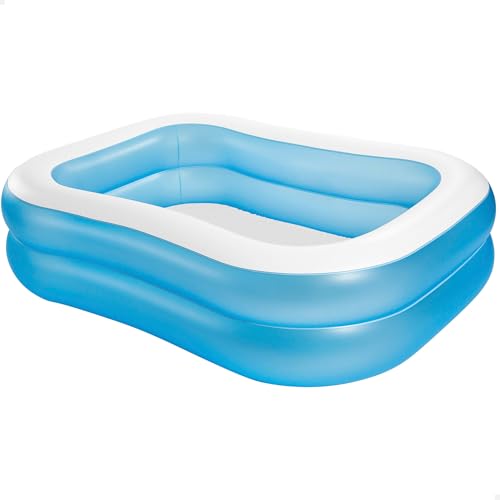
Second: water guns. Japanese summer festivals and park culture have kept the humble pump-action water gun cheap and plentiful — multi-packs land around ¥1,000–¥2,000, which matters because water fights are only fun when everyone is armed. Add a set of diving pool toys (¥1,200–¥2,000) for the hotel-pool hours when the novelty of just swimming wears off, and you’ve covered a full week of water entertainment for less than one theme-park ticket.

Sizing Japanese Swimwear: Read This Before Ordering
The most common mistake overseas buyers make with Japanese swimwear is trusting the letter on the label. Japanese adult sizes run one to two steps smaller than US/EU equivalents — a Japanese L is closer to a US M, sometimes S, and cuts are slimmer through the shoulders and hips. For rash guards, where a snug fit is normal but a sausage fit is miserable, the reliable method is to ignore the letter entirely and compare the garment’s chest measurement in centimeters against a shirt you own.
- Kids’ sizes are heights, not ages.Japanese children’s swimwear is labeled 90/100/110/120/130 etc. — the child’s height in centimeters. Measure your child; a “size 120” fits a roughly 115–125cm child regardless of age.
- Adults: size up at least one letterfrom your usual, and check the cm chart in the listing. Broad-shouldered or tall buyers may top out of Japanese sizing on fitted styles — loose-cut rash guards are the safer bet.
- Feet:kids’ water shoes and beach sandals are also sold by cm. Trace a foot on paper and measure — more reliable than converting shoe sizes across three systems.
- Life jackets are sized by body weight, not height. Use the kg rating in the listing and round up if between sizes.
Pro Tip
Building the Family Beach Kit: Who Needs What
Here’s how the catalog maps onto ages, with everything at the catalog’s typical price so you can budget the whole kit at a glance.
| Who | Essentials | Nice to Have | Approx. Total |
|---|---|---|---|
| Baby / toddler | Swim diaper, sunshade float, UV swimsuit | Character swim ring for the pool photos | ¥4,000–¥7,000 |
| Kids 4–9 | Rash guard, UV swimsuit, goggles, swim cap, water shoes | Short fins, life jacket for boats/rivers, water gun | ¥6,000–¥12,000 |
| Kids 10+ | Rash guard, SWANS-class goggles, water shoes | Snorkel set, diving toys, giant float | ¥6,000–¥11,000 |
| Adults | Rash guard, anti-fog goggles, waterproof phone case | Dry bag for the whole family’s valuables | ¥5,000–¥9,000 |
Two accessories deserve a line of their own. An IPX8 waterproof phone case (¥800–¥1,500) means the family photographer actually gets in the water, and a 20L waterproof dry bag (¥1,200–¥2,000) solves the unattended-towel-pile problem at beaches without lockers. Both fold flat and keep working on every trip after this one.

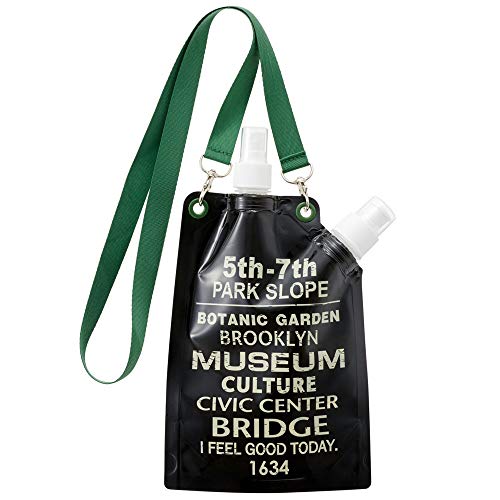
Hydration deserves the same one-clever-object treatment. Japanese beaches rarely have drinking fountains, vending-machine bottles add up fast in 34°C heat, and a rigid bottle hogs bag space on the trip out — which is exactly the problem the local catalog solves.
Where and When to Buy
In Japan, swim gear season runs hard from June to mid-August. Amazon Japan has the deepest size runs; physical alternatives include sports chains, the seasonal aisles of Don Quijote, and even large 100-yen shops for goggles-grade basics. By late August the category goes on clearance — excellent if you’re buying for next year or a southern-hemisphere summer, thin if you need a specific kids’ size. Overseas buyers using proxy or forwarding services should note that inflatables ship light but bulky, so compression matters more than weight for shipping cost.
If you’re building a broader Japan shopping list around a summer trip, our what to buy in Japan guide covers the year-round categories, and the Japan summer snacks guide handles the other half of a proper Japanese beach day: what goes in the cooler bag.
Pre-Trip Water Gear Checklist
Frequently Asked Questions
Can I buy swim gear cheaply after arriving in Japan, or should I order ahead?
Both work, but ordering to your first hotel is the sweet spot: you get Amazon Japan’s full size range at domestic prices without spending vacation hours in a store. Buying on arrival works fine for accessories (caps, rings, water guns) but gets risky for specific kids’ clothing sizes in late July, when popular sizes sell through.
Is Japanese UV swimwear actually different from what I can buy at home?
The fabric technology exists everywhere; the difference is price and default coverage. In Japan, UPF-rated, long-sleeve, flat-seamed swimwear is the mass-market norm at ¥1,500–¥3,500, where equivalent sun-protective swimwear abroad often sits in a premium niche. You’re buying the same protection at commodity pricing, with more covered cuts to choose from.
Do adults really need to wear swim caps at Japanese pools?
At most municipal and school-affiliated pools, yes — caps are required for all swimmers regardless of age or hair length. Hotel and resort pools usually don’t require them. A basic silicone cap costs ¥500–¥1,000, packs flat, and removes the problem entirely.
What size should I order if my child is between Japanese sizes?
Size up. Japanese kids’ swimwear is labeled by height in cm (100, 110, 120…), and the next size up fits sooner than you think, while a too-small rash guard is genuinely hard to put on wet. For life jackets, ignore height entirely and follow the body-weight rating, rounding up between sizes.
Are big inflatable floats allowed at Japanese beaches and pools?
It varies. Resort pools often welcome them (they photograph well), while crowded public pools and lifeguarded beaches may restrict float size or ban large inflatables outright, especially on windy days when they drift. Check posted rules or ask staff before inflating — and treat a giant float as a toy, never as flotation for a weak swimmer.
Disclosure
This article contains affiliate links. We may earn a commission when you buy through them, at no extra cost to you. Every pick is an honest recommendation.
Planning to buy from Japan?