

Best Japanese Whitening Toothpaste 2026: Apagard, Ora2, White&White & More Ranked
Updated June 2026 · 13 min read
Japan Shop Helper Editorial
Tokyo-based · prices & fees verified on real orders
Walk into any Matsumoto Kiyoshi or Sundrug and the toothpaste aisle alone can stop you cold — eighty-plus products, most labeled only in Japanese, at prices that make you want to buy five tubes at once. The good news: Japanese whitening toothpastes genuinely work differently from Western brands, they cost far less than they do overseas, and the top five options can be narrowed down fast once you know what each formula actually does.
This guide covers the five best Japanese whitening toothpastes for 2026 — Apagard Premio, White & White, Systema WHITE, NONIO Whitening, and Ora2 White — ranked with real ingredient comparisons, price gaps versus overseas, and a clear answer on where to buy them whether you’re in Japan or ordering from abroad.
Why Japanese Whitening Toothpaste Actually Works
In the U.S. and Europe, “whitening” almost always means hydrogen peroxide or carbamide peroxide — chemicals that bleach pigment from inside the tooth. Japanese law restricts peroxide concentrations in over-the-counter dental products to functionally negligible levels, so Japanese brands developed a completely different playbook.
The two core technologies you’ll encounter are nano-hydroxyapatite (nano-HAp) and polysilicate/enzyme stain removal. Nano-HAp — originally developed by Sangi Co. in the 1980s, partly inspired by NASA research on bone loss in astronauts — physically fills microscopic scratches and pits on tooth enamel. Smooth enamel reflects light more uniformly, so teeth look brighter without any bleaching chemistry. A 2019 study in BDJ Open(a Nature journal) found 10% nano-HAp paste comparable to 500 ppm fluoride in remineralization tests. Japan’s Ministry of Health approved nano-HAp as an anti-caries agent back in 1993.
The enzyme approach, used by brands like Ora2 and NONIO, breaks down the protein-based pellicle film that traps coffee, tea, and red-wine pigments on the tooth surface. This is gentler than abrasive scrubbing — and Japan takes low-abrasion ratings seriously. Many products proudly print their Relative Dentin Abrasivity (RDA) score on the box, something you almost never see on Western packaging. Lower RDA means less long-term enamel wear.
The practical result: Japanese whitening toothpastes are enamel-safe, peroxide-free, and calibrated for daily long-term use. They won’t jump you three shades the way a professional bleaching session does, but after 2–4 weeks of daily brushing you’ll see a measurable reduction in surface staining — and your enamel stays intact.
Best Japanese Whitening Toothpastes in 2026
Five products cover the full range from premium hydroxyapatite to budget drugstore staple. Here they are in ranked order.
| Product | Maker | Price (100 g) | Key ingredient | Best for |
|---|---|---|---|---|
| Apagard Premio | Sangi | ¥1,400–¥1,600 | Nano-hydroxyapatite | Enamel repair & remineralization |
| White & White | Lion | ¥300–¥450 | Polyphosphate + silica | Best-value daily whitening |
| Systema WHITE | Lion | ¥500–¥700 | IPMP antibacterial + whitening silica | Gum care + whitening combo |
| NONIO Whitening | Lion | ¥400–¥550 | LSS antibacterial + polishing | Whitening + breath care |
| Ora2 White | Sunstar | ¥400–¥550 | Stain-dissolving enzymes + silica | Young adults, gift potential |
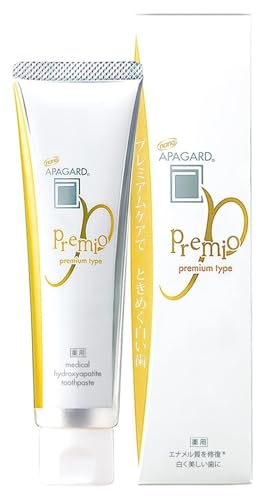
1. Apagard Premio (Sangi) — The Hydroxyapatite Benchmark
Apagard Premio is the product that put Japanese whitening toothpaste on the global radar. It contains the highest concentration of nano-hydroxyapatite in Sangi’s consumer lineup — roughly 1.4 times the amount in the entry-level Apagard M-Plus — and the science behind it is unusually well-documented for a drugstore product.
The 100 g tube retails for ¥1,480 at Matsumoto Kiyoshi and Sundrug. That same tube costs $28–$35 on Amazon US (roughly ¥4,200–¥5,250 at current exchange rates), a 65–70% markup. The 50 g travel size fits carry-on liquid restrictions comfortably. Most users notice visible brightening within 2–4 weeks.
One important note: Apagard Premio is fluoride-free. Nano-HAp is approved as an anti-caries agent in Japan, but the American Dental Association still officially endorses fluoride. If you’re cavity-prone, many Japanese users alternate — Apagard in the morning, a fluoride paste at night. Sensitive-teeth users often find Apagard beneficial because nano-HAp particles fill dentinal tubules, reducing cold sensitivity alongside the whitening effect.
2. White & White (Lion) — Best-Value Drugstore Pick
White & White by Lion is the toothpaste Japanese convenience stores and pharmacies are never out of stock on — and for good reason. At ¥300–¥450 for a standard tube, it’s the cheapest proper whitening product on this list, yet it uses two active mechanisms: polyphosphate to prevent stain reattachment and silica to gently polish existing surface discoloration.
Polyphosphate works by forming a thin invisible barrier on enamel that makes it harder for tannins and chromogens (the pigment molecules in coffee and tea) to bond to the surface. It’s a preventive as much as a corrective ingredient — which makes White & White particularly useful for heavy tea or coffee drinkers who want to stay ahead of staining. Fluoride content is 1450 ppm, matching the WHO-recommended standard.
The flavor is a clean, cool spearmint — less sweet than most Western toothpastes. Lion sells it in single tubes and multipacks; the three-tube multipack is a common sight in Donki and is good value if you want to stock up.
3. Systema WHITE (Lion) — Gum Care Plus Whitening
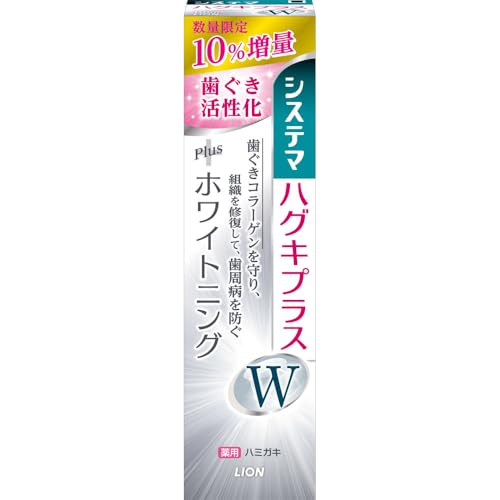
Systema WHITE sits at the intersection of two categories: gum health and whitening. Lion’s Systema line is recommended by Japanese dentists for patients showing early signs of gum recession, and the WHITE variant adds mild whitening silica to the flagship IPMP (isopropyl methylphenol) antibacterial formula.
IPMP targets the bacteria responsible for gingivitis and periodontal disease, while vitamin E supports blood circulation in gum tissue. The whitening silica polishes surface stains without aggressive abrasion. It’s a dual-purpose product — if your gums bleed slightly when you floss or you’ve had a dentist mention early gum recession, this is the tube to reach for. Fluoride is present at 1450 ppm. Price sits around ¥600 for 90 g.
4. NONIO Whitening (Lion) — Breath Care Meets Brightening
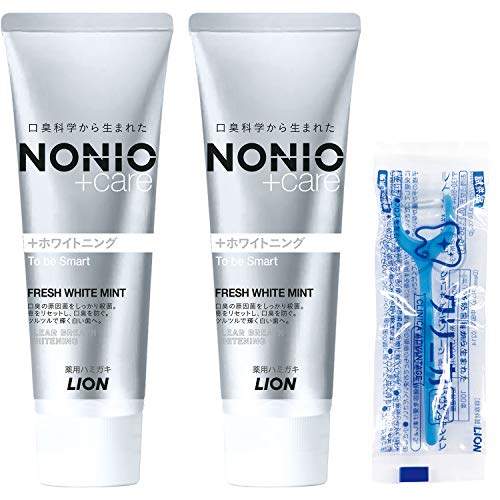
NONIO is Lion’s flagship breath-care line, and the Whitening variant layers surface stain polishing on top of the brand’s core LSS (lautyl sarcosinoate sodium) antibacterial technology. LSS disrupts the protein structure of volatile sulfur compounds — the primary source of bad breath — while the whitening abrasive addresses coffee and tea discoloration simultaneously.
NONIO Whitening has become particularly popular with younger Japanese consumers in their 20s and early 30s who prioritize fresh breath as much as visible whitening. The mint flavors are noticeably sharper than Lion’s other lines — the Splash Citrus Mint variant in particular has developed something of a cult following. Fluoride is 1450 ppm, and the price sits at ¥400–¥550 for a standard tube, making it one of the better-value options here.
5. Ora2 White (Sunstar) — Enzyme Power with Gift Appeal
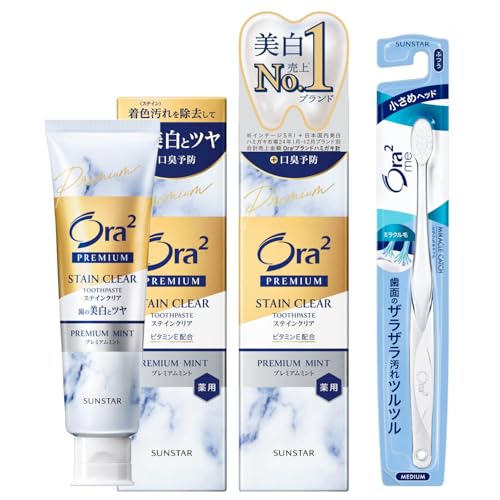
Ora2 by Sunstar has maintained a loyal following among Japanese consumers in their teens and twenties, partly because of its design-forward packaging and rotating seasonal flavors — Peach Leaf Mint, Floral White Tea, and Natural Mint among them — and partly because the formula genuinely delivers. The enzyme-based stain-dissolving system breaks down the protein pellicle film that traps coffee and matcha pigments, while silica polishes the surface clean.
Ora2 White includes sodium fluoride at 1450 ppm, so you get stain removal and fluoride cavity protection in one tube. The 25 g travel size (“Ora2 me Stain Clear”) costs about ¥180 and fits perfectly in a carry-on liquids bag — it’s one of the best Japan-specific souvenirs to bring back because the seasonal flavors are genuinely unavailable overseas.
Pro Tip
Japanese Whitening Toothpaste vs. Western Brands
The core difference comes down to the whitening mechanism. Western brands — Colgate Optic White, Crest 3D Whitestrips toothpaste, Arm & Hammer Whitening — typically rely on low concentrations of peroxide combined with abrasive silica. They can produce faster color changes because peroxide actually bleaches the chromogen molecules inside the enamel. Japanese brands work more slowly by fixing the surface rather than chemically oxidizing what’s beneath it.
| Factor | Japanese brands | Western brands |
|---|---|---|
| Whitening mechanism | HAp repair, enzyme stain removal, polyphosphate barrier | Peroxide bleaching + abrasive silica |
| Enamel safety | Low RDA; enamel-safe for daily use | Variable; some formulas have high RDA |
| Speed of results | 2–4 weeks for visible improvement | Faster on deep stains (peroxide-driven) |
| Sensitivity risk | Low; HAp can reduce existing sensitivity | Moderate; peroxide can trigger sensitivity |
| Price in Japan | ¥300–¥1,600 retail | Imported brands cost ¥1,200–¥2,500+ |
| Feel & texture | Smooth, less gritty, often lighter foam | Often thicker paste, heavier foam |
Practically speaking, if you have heavy intrinsic staining (nicotine, years of coffee) and want a dramatic visible change quickly, Japanese toothpastes alone won’t match a peroxide-based regime. But for the much more common case — light surface staining from daily tea, coffee, or matcha — Japanese formulas are genuinely the better long-term choice: more enamel-safe, less irritating for sensitive teeth, and significantly cheaper at source.
Where to Buy in Japan
All five products are carried by every major drugstore chain in Japan. The two best options for price and selection are Matsumoto Kiyoshi and Sundrug — both maintain tax-free counters in tourist-heavy neighborhoods and apply the exemption to consumables including toothpaste when you spend ¥5,000 or more in a single transaction. If you’re already buying skincare or sunscreen, adding a few tubes of toothpaste easily clears the threshold.
Sugi Yakkyoku (Sugi Pharmacy), Welcia, and Cocokara Fine are the other major chains. Welcia tends to have slightly lower base prices but fewer English-language signs. Don Quijote (Donki) carries all five at most locations — prices run 10–15% higher than dedicated pharmacies, but many locations are open until 5 a.m., which matters for last-minute pre-departure shopping.
For White & White and NONIO, convenience stores (FamilyMart, Lawson, 7-Eleven) often stock the smaller 60–90 g tubes. Ora2 is nearly always available at hotel amenity shops. Apagard Premio is primarily a pharmacy product — convenience stores rarely carry it.
Airport duty-free at Narita and Haneda sometimes stocks Apagard Premio, but selection is inconsistent and prices are not meaningfully better than in-city drugstores. Buy before you reach the airport.
Carry-On Packing: Which Tube Sizes Fit
Standard international carry-on liquid rules cap individual containers at 100 ml. Toothpaste counts as a gel/liquid. Here’s the practical situation for each product:
Heads Up
How to Order from Overseas
You don’t need to be in Japan to buy these products — the overseas premium is real, but several routes bring the cost down significantly.
Amazon Japan Direct
Amazon Japan ships most toothpaste products internationally. The process requires an Amazon Japan account, which is straightforward to set up with an existing Amazon login. Apagard Premio, White & White, NONIO Whitening, and Ora2 White all ship internationally via Amazon Japan. Shipping costs ¥400–¥900 per order for standard international delivery, which is easy to absorb when you order 3–5 tubes at once.
Even with shipping, buying direct from Amazon Japan beats Western reseller prices for Apagard and Ora2. White & White is so cheap domestically that the shipping cost matters more — ordering it as part of a larger Japan goods order makes more sense than a standalone shipment.
Forwarding Services
If a specific product doesn’t ship internationally via Amazon Japan directly, a forwarding service solves the problem. You shop any Japanese retailer — Amazon Japan, Rakuten, the brand’s own site — ship to a Japanese warehouse address, and the forwarding company bundles and ships internationally. Tenso and Buyee are the two most-used services for beauty and personal care products; both have English interfaces and handle customs documentation.
Pro Tip
Frequently Asked Questions
Is Japanese whitening toothpaste actually effective?
Yes, with the right expectations. Japanese whitening toothpastes remove surface stains and smooth enamel rather than bleaching teeth from within. You won’t jump three shades the way a professional peroxide treatment delivers, but after 2–4 weeks of daily use you should see a visible reduction in staining from coffee, tea, and matcha. The effect is also more durable because you’re not repeatedly applying a chemical oxidizer.
Do Japanese whitening toothpastes contain peroxide?
No. Japanese over-the-counter dental products do not contain meaningful concentrations of hydrogen peroxide or carbamide peroxide. Whitening relies on hydroxyapatite, enzymes, polyphosphate, and polishing silica. If you want peroxide-based whitening in Japan, you’d need a dental clinic visit, which typically costs ¥20,000–¥50,000 per session.
Which product should I choose if I have sensitive teeth?
Apagard Premio is the strongest choice for sensitive teeth. Nano-hydroxyapatite fills the microscopic dentinal tubules that cause pain when you drink cold water, reducing sensitivity alongside the whitening effect. Ora2 White is the gentlest of the enzyme options and also suitable for sensitive users. Avoid high-abrasion alternatives if sensitivity is a concern.
Which product offers the best value for a first-time buyer?
White & White at ¥300–¥450 is the easiest first purchase: low risk, good results, widely available, and cheap enough to buy two tubes. If you want to try HAp technology specifically, Apagard M-Plus (the entry-level Apagard at around ¥900 for 125 g) gives you the hydroxyapatite experience without the full Premio premium.

How many tubes can I bring back from Japan?
There is no specific customs limit on toothpaste in most countries, including the U.S., UK, Australia, and Canada. Toothpaste is a personal-care item, not a restricted good. For personal use and gifts, 5–10 tubes is completely unremarkable to customs officers. Very large quantities (20+ tubes) could theoretically trigger questions about resale intent.
Which product is best as a souvenir or gift?
Ora2 White, for the seasonal flavors and distinctive Japanese packaging. Apagard Premio also travels well as a gift because it’s well-known among people who follow dental or skincare trends, commands genuine overseas price premiums, and the sleek minimal packaging reads as premium without being bulky.
Why Japanese Toothpaste Uses Hydroxyapatite Instead of Peroxide
Japan’s Ministry of Health restricts hydrogen peroxide in over-the-counter toothpaste to concentrations so low they’re functionally ineffective as a bleaching agent. This isn’t an oversight — it’s a deliberate regulatory choice that pushed Japanese oral care companies toward a fundamentally different whitening science.
The answer they landed on is nano-hydroxyapatite (nHAp), a synthetic form of the mineral that makes up 97% of tooth enamel. When applied in a toothpaste, nano-HAp particles physically fill microscopic scratches and pits on the enamel surface — the same surface irregularities that trap pigment from coffee, tea, and matcha. Smooth enamel reflects light more uniformly, producing the “brightening” effect without any bleaching chemistry at all.
Sangi Co. pioneered this technology in Japan in the 1980s, and their Apagard Premio remains the benchmark nano-HAp toothpaste worldwide. A 2019 study in BDJ Open(a Nature-family journal) found 10% nano-HAp comparable to 500 ppm fluoride in enamel remineralization tests. Japan’s health ministry approved nano-HAp as an anti-caries agent in 1993 — three decades before it gained significant traction in Western markets.
Settima, another Japanese nano-HAp product available at select pharmacies and online, takes a similar approach with a slightly silkier texture and a formulation targeted at post-whitening treatment maintenance.
The practical difference for the consumer: Western whitening toothpastes bleach pigment chemically (fast, can cause sensitivity). Japanese whitening toothpastes repair and smooth enamel physically (gradual, enamel-safe, sensitivity-reducing). Neither approach is universally “better” — they solve different problems. For daily maintenance and enamel health, nHAp wins. For dramatic whitening in days, peroxide wins. Japanese toothpastes are the long game.
Pro Tip
Where to Find Japanese Whitening Toothpaste (With Prices)
Whether you’re shopping in Japan or ordering from abroad, here’s where to find each product and what to expect to pay.
In Japan: Drugstores and Discount Chains
Matsumoto Kiyoshi and Welciaare the two best starting points. Both carry all five products on this list, apply Japan’s 10% tax-free exemption for tourist purchases over ¥5,000, and have staff familiar with foreign customer requests. Matsumoto Kiyoshi tends to stock a wider range of Apagard variants; Welcia often has slightly lower base prices on Lion products (White & White, Systema WHITE, NONIO).
Don Quijote (Donki)stocks all five at most locations, typically at ¥50–¥100 above dedicated pharmacy prices. The tradeoff is unbeatable opening hours — many locations run until 5 a.m. — and a dedicated tax-free counter that processes purchases quickly even during peak tourist season. Apagard Premio at Donki runs around ¥1,580–¥1,650 (vs ¥1,480 at Matsumoto Kiyoshi).
Amazon Japan ships most of these products internationally. Approximate prices including international shipping:
| Product | Japan retail | Amazon Japan (incl. shipping) | Western reseller |
|---|---|---|---|
| Apagard Premio 100 g | ¥1,480 | ¥1,480 + ¥500–900 shipping | $28–$35 (~¥4,200–¥5,250) |
| White & White 150 g | ¥380 | Best ordered with other items | $8–$14 (~¥1,200–¥2,100) |
| Ora2 White 130 g | ¥450 | ¥450 + ¥500–900 shipping | $12–$18 (~¥1,800–¥2,700) |
For the best economics when ordering from overseas, bundle 3–5 tubes in a single Amazon Japan order to amortize the flat shipping cost. See our guide to shopping on Amazon Japan from overseas for account setup and international shipping instructions.
More Frequently Asked Questions
Is Japanese whitening toothpaste safe?
Yes. Nano-hydroxyapatite is non-abrasive and safe for daily use — it’s the same mineral your enamel is made of. Japan’s pharmaceutical regulations for oral care products are among the strictest in the world; any claim on the packaging has been reviewed and approved by the Ministry of Health, Labour and Welfare. Fluoride-containing options (White & White, Systema WHITE, NONIO, Ora2) meet the WHO-recommended 1000–1500 ppm fluoride standard for adults.
How is Japanese whitening toothpaste different from American brands?
The core difference is the whitening mechanism. American brands (Colgate Optic White, Crest 3D White) rely on hydrogen peroxide or carbamide peroxide to chemically bleach chromogen molecules inside the tooth. Japanese toothpaste uses hydroxyapatite to remineralize and smooth enamel, combined with enzymes or polyphosphate to prevent stain reattachment. The result is gradual brightening without the tooth sensitivity that peroxide frequently causes — and without any bleaching chemistry.
Can I buy Japanese toothpaste online?
Yes. Amazon Japan ships internationally and carries Apagard Premio, White & White, NONIO Whitening, and Ora2 White. Popular options like Apagard and Ora2 are available with global shipping, though prices are lower when purchased in-store in Japan. Setting up an Amazon Japan account takes about five minutes with an existing Amazon login.
How long does it take to see results?
Most users notice brighter teeth within 2–4 weeks of twice-daily use. Hydroxyapatite works by filling microscopic enamel scratches that trap pigment — as those surfaces smooth out, teeth reflect light more evenly and look noticeably cleaner. The results are gradual but lasting, because you’re repairing the enamel surface rather than repeatedly bleaching it. Heavy coffee or tea drinkers may want to pair Apagard Premio (morning) with a polyphosphate paste like White & White (evening) for faster stain prevention.
Related guides
Disclosure
This article contains affiliate links. We may earn a commission when you buy through them, at no extra cost to you. Every pick is an honest recommendation.
Shop Japanese beauty products