

Best Japanese Vitamin C Serum 2026: Melano CC vs DHC vs SK-II Pitera — Fully Ranked
Updated June 2026 · 14 min read
Japan Shop Helper Editorial
Tokyo-based · prices & fees verified on real orders
Melano CC is the kind of serum shoppers buy once and then keep re-ordering for years. A tiny brown squeeze bottle, ¥1,200, and it combines what the manufacturer describes as active vitamin C with retinol — a formula potent enough to embarrass products five times its price. If there’s one vitamin C serum worth carrying home from Japan, this is it.
Below we’ve ranked 10 Japanese vitamin C serums across drugstore, mid-range, and luxury tiers, with real criteria: active concentration, packaging stability, price per milliliter, and how well they survive a flight home. Some of these we recommend without hesitation. Others are worth skipping — or at least know what you’re paying the premium for. For ordering from abroad, check out our guide on proxy services.
The short answer — best vitamin C serum in Japan by use case
- Best overall: Melano CC Intensive Anti-Spot Essence — ¥1,200, active vitamin C + retinol (per manufacturer)
- Strongest formula: Obagi C20 — 20% L-ascorbic acid, popular among dermatologists in Japan
- Sensitive skin: DHC Vitamin C Serum — gentle ascorbyl glucoside, fragrance-free
- Luxury pick: SK-II GenOptics Ultraura — PITERA + niacinamide + VC derivative
Why Japanese Vitamin C Serums Are Formulated Differently
Japanese formulators have a quiet obsession with vitamin C stability. Pure L-ascorbic acid oxidizes fast — exposure to light and air turns it yellow, then brown, then useless. Western serums often solve this with low-pH water-based formulas (think SkinCeuticals C E Ferulic at $182/30 ml). Japanese chemists lean toward oil-based vehicles and stabilized derivatives like ascorbyl glucoside or ascorbyl tetraisopalmitate, which resist oxidation far longer at room temperature.
The result: you get products that stay potent for months without refrigeration, ship without cold packs, and cost a fraction of their Western equivalents. Melano CC’s opaque squeeze tube, for example, limits air and light exposure with every use — it’s functional packaging, not just branding.
A less obvious advantage is Japan’s “quasi-drug” category (医薬部外品). Products in this class must prove efficacy to the PMDA (Japan’s FDA equivalent) before making any claims. Several serums on this list carry quasi-drug status, meaning their brightening claims aren’t just marketing copy — they’re government-reviewed.
All 10 Serums Compared: Price, Actives, Best For
Prices reflect standard Japanese retail (drugstore or department store) as of spring 2026. Overseas prices on Amazon or through proxy services run 40–120% higher depending on the product.
| Rank | Product | Price (Japan) | Key Active(s) | Best For |
|---|---|---|---|---|
| 1 | Melano CC Intensive Anti-Spot Essence | ¥1,200 / 20 ml | Active vitamin C + retinol (per maker) | Best overall value |
| 2 | Rohto Melano CC Premium | ¥1,580 / 20 ml | Higher-conc. L-ascorbic acid + pyridoxine | Stubborn pigmentation |
| 3 | Obagi C Serum (C10 / C20) | ¥4,400–¥8,800 / 26 ml | 10–20% L-ascorbic acid | Targeted derm-grade brightening |
| 4 | Kose Brightening Lab 20% Vitamin C | ¥1,800 / 15 ml | 20% ascorbyl glucoside | High concentration on a budget |
| 5 | DHC Vitamin C Serum | ¥1,900 / 25 ml | Ascorbyl glucoside, preservative-light | Sensitive skin, minimal formula |
| 6 | Hada Labo Skin Perfecting Serum | ¥1,100 / 30 ml | Vitamin C + hyaluronic acid | Hydration + brightening combo |
| 7 | Fancl Brightening Essence | ¥3,300 / 18 ml | Stabilized VC derivative, preservative-free | Preservative-free devotees |
| 8 | SK-II GenOptics Ultraura Essence | ¥18,700 / 50 ml | PITERA + niacinamide + VC derivative | Luxury mature-skin care + brightening |
| 9 | Cosmé Decorte AQ Brightening Serum | ¥16,500 / 40 ml | VC derivative + botanical extracts | Department-store luxury experience |
| 10 | Shiseido Elixir Brightening V Serum | ¥5,500 / 40 ml | Stabilized VC + collagen support | Duty-free one-stop pick |
#1 — Melano CC Intensive Anti-Spot Essence: The ¥1,200 Legend
Rohto Pharmaceutical’s Melano CC has held the top-selling spot in the Japanese vitamin C serum category for years, and the reason is brutally simple: it works. The formula packs active vitamin C and retinol into an oil-based vehicle — an unusually aggressive combination for a product you can grab next to cough drops at any Matsumoto Kiyoshi or Sundrug.
At ¥60 per milliliter, it costs less than a single onigiri per application. Compare that to the same bottle on Amazon US at $18–$24 (roughly 3× the Japanese price). If you’re visiting Japan even once, buying three or four tubes saves enough to cover a bowl of good ramen. The ingredient nerd note: the opaque squeeze tube isn’t just a branding decision. It limits air and light exposure with every use, which is exactly how you keep L-ascorbic acid stable. Most Western brands selling in transparent dropper bottles are fighting physics.
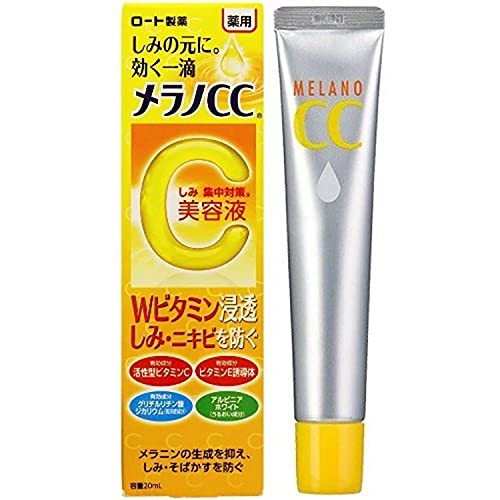
The tube design deserves a mention. Unlike dropper bottles that expose serum to oxygen every time you open them, Melano CC’s metal squeeze tube dispenses product through a tiny opening, keeping the rest sealed. It’s the same engineering logic behind toothpaste tubes — minimal air exchange.
Pro Tip
#2 — Rohto Melano CC Premium: The Upgraded Formula
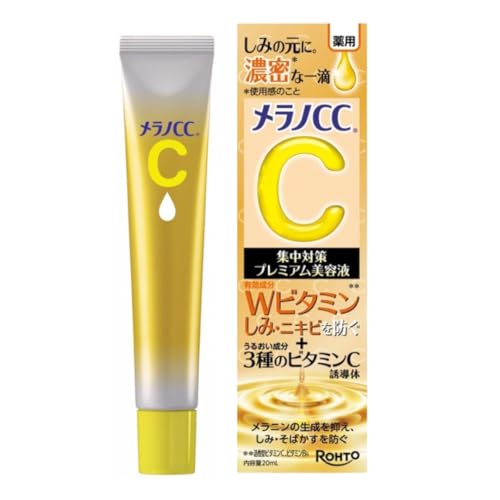
Rohto released the “Premium” version in response to demand for a stronger formula. The upgrade adds pyridoxine (vitamin B6) to support skin cell turnover, and the L-ascorbic acid concentration is reportedly higher, though Rohto hasn’t published exact numbers for this variant. Texture-wise it’s slightly thicker and absorbs a touch slower.
At ¥1,580 for 20 ml — only ¥380 more than the original — the Premium version is worth the step up if you’re dealing with post-inflammatory hyperpigmentation or sun spots accumulated over years. If your concern is general brightening and prevention, the original formula is more than sufficient.
#3 — Obagi C Serum: Derm-Grade Concentration
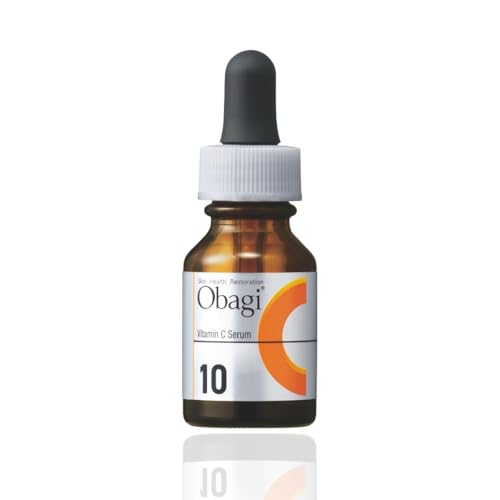
Obagi in Japan is a Rohto sub-brand (not the same as Obagi Medical in the US). Their C Serum line comes in C5, C10, C20, and C25 concentrations, with prices scaling from ¥3,300 to ¥11,000. The C10 (10% L-ascorbic acid, ¥4,400/12 ml) and C20 (20%, ¥8,800/15 ml) are the most popular among repeat buyers.
These are dropper-bottle formulas, meaning more air exposure than Melano CC’s tube. Obagi partially compensates with an amber glass bottle and a tight dropper seal. Still, once opened, aim to finish a bottle within 60 days — you’ll notice the serum turning slightly yellow as oxidation creeps in. Store in a hotel-room fridge if possible.
Heads Up
Mid-Range Picks: DHC, Hada Labo, Kose & Fancl
DHC Vitamin C Serum (¥1,900 / 25 ml)
DHC uses ascorbyl glucoside, a stabilized derivative that converts to ascorbic acid on the skin. The formula is almost spartan: no fragrance, minimal preservatives, and a lightweight gel texture. If you’ve had bad reactions to vitamin C serums in the past, DHC’s gentle approach is worth trying. The downside: slower results. Expect 8–12 weeks for noticeable brightening vs 6–8 with pure L-ascorbic acid.

Hada Labo Skin Perfecting Serum (¥1,100 / 30 ml)
Hada Labo is already a tourist favorite for its hyaluronic acid lotions (check out our guide to best Japanese skincare souvenirs). Their vitamin C crossover serum layers a VC derivative on top of multiple molecular weights of hyaluronic acid. At ¥37 per ml, it’s the cheapest option on this list by volume. Think of it as a hydration-first serum with a secondary brightening benefit.
Kose Brightening Lab 20% Vitamin C (¥1,800 / 15 ml)
Kose launched this drugstore 20% ascorbyl glucoside serum to compete directly with Western “20% vitamin C” products at a tenth of the price. The 15 ml bottle is small, but at ¥120/ml it’s competitive for the stated concentration. The texture is slightly sticky going on; give it 90 seconds to dry before layering moisturizer.
Fancl Brightening Essence (¥3,300 / 18 ml)
Fancl’s entire brand identity revolves around being preservative-free. Their brightening essence uses a stabilized VC derivative in a sealed airless pump. The tradeoff: a 60-day use-by window after opening. If you’re someone whose skin reacts to parabens or phenoxyethanol, Fancl is the safest vitamin C option on this list.

Luxury Tier: SK-II, Cosmé Decorte & Shiseido Elixir
These serums pair vitamin C derivatives with premium actives like PITERA, botanical extracts, or collagen-support peptides. The brightening effect alone doesn’t justify the price leap from ¥1,200 to ¥18,700. What you’re paying for is multi-target mature-skin care: fine lines, firmness, radiance, and evenness in one step.
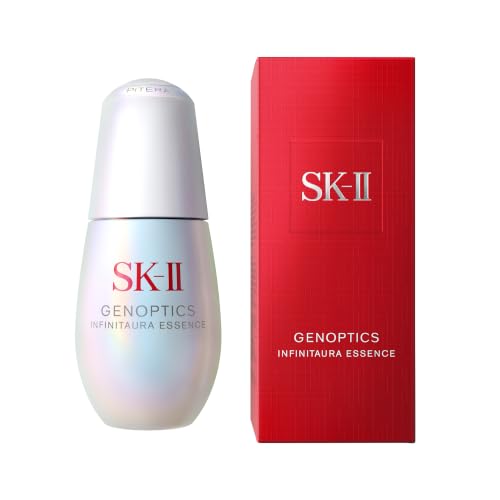
SK-II GenOptics Ultraura Essence (¥18,700 / 50 ml)
SK-II’s #1 brightening serum globally (per 2023 sales data) combines their proprietary PITERA ferment with niacinamide and a stabilized vitamin C derivative. It’s designed to layer on top of their Facial Treatment Essence. At ¥374/ml, it’s roughly 6× pricier per ml than Melano CC. The texture is silky and absorbs instantly, and the pump bottle keeps it stable far longer than a dropper would. Worth it for devotees of the PITERA ecosystem.
Cosmé Decorte AQ Brightening Serum (¥16,500 / 40 ml)
Kose’s prestige line, Cosmé Decorte, uses botanical extracts sourced from Kyoto-area plants alongside a stabilized VC derivative. The texture is rich and slightly floral. It’s the kind of product that appeals to travelers who want a department-store ritual — beautifully packaged, with an application technique demonstrated by counter staff.
Shiseido Elixir Brightening V Serum (¥5,500 / 40 ml)
The most practical luxury pick. At ¥138/ml, it sits between drugstore and high-end pricing. The Elixir line targets women in their 30s–40s who want mature-skin care and brightening without a complex routine. You’ll find it at virtually every duty-free shop in Narita, Haneda, and Kansai airports — making it a smart last-minute purchase. Our tax-free shopping guide breaks down how to maximize savings at the airport.
L-Ascorbic Acid vs Stabilized Derivatives: Which to Choose
Most Japanese vitamin C serums don’t use pure L-ascorbic acid, and that’s a deliberate choice, not a cost-cutting shortcut. Here’s the breakdown.
Pure L-ascorbic acid (used by Melano CC, Obagi C): Acts immediately, penetrates skin quickly, delivers the strongest antioxidant effect. But it oxidizes within weeks of air exposure, requires low-pH formulation, and can irritate sensitive skin. Best stored below 25°C in opaque packaging.
Ascorbyl glucoside(used by DHC, Kose Brightening Lab): Converts to ascorbic acid on the skin via enzymatic action. Slower onset but far more shelf-stable. Survives heat, light, and air exposure much better than pure ascorbic acid. Ideal for warm climates or travelers who can’t guarantee cold storage.
Ascorbyl tetraisopalmitate(used in many Japanese oil-based serums): A lipid-soluble derivative that penetrates the lipid barrier more efficiently. Often paired with squalane or jojoba oil. Found in Melano CC’s oil-based vehicle alongside the pure ascorbic acid.
For maximum spot-fading speed, choose pure L-ascorbic acid. For long-term stability and gentle daily use, stabilized derivatives win. Either approach works — the key is consistent, daily application for at least 8 weeks.
How to Store and Transport Vitamin C Serums While Traveling
Vitamin C serums are fragile travelers. Heat, light, and air are the three enemies. Here’s what to do.
Squeeze-tube formats (Melano CC, Melano CC Premium) survive travel best. Dropper bottles (Obagi C, SK-II) should go inside a ziplock with a cotton pad wrapped around the cap, just in case.
Pro Tip
Where to Buy: Drugstores, Airports & Proxy Services
Drugstores (best prices):Matsumoto Kiyoshi, Sundrug, Tsuruha, Welcia, and Cocokara Fine all carry Melano CC, Hada Labo, DHC, and Obagi. Prices are standardized — you won’t find meaningful differences between chains. Don Quijote stocks the same products, often at a ¥50–¥100 markup, but their tax-free counter is efficient for bulk purchases.
Department stores:SK-II, Cosmé Decorte, and Shiseido Elixir are sold at counters in Isetan, Takashimaya, and Mitsukoshi. Counter staff will give you samples and application demos. Prices are fixed (no haggling), but you’ll often get a bonus mini-size product with purchases over ¥10,000.
Airports:Narita and Haneda duty-free shops stock SK-II, Shiseido Elixir, and Cosmé Decorte at prices roughly 8–15% lower than department stores, plus you avoid the 10% consumption tax entirely. Melano CC is not typically stocked at airport duty-free.
Proxy services (for overseas buyers): Buyee, Zenmarket, and White Rabbit Express will purchase items from Japanese stores and ship internationally. Expect to pay the product price plus ¥300–¥500 per item handling fee, plus international shipping. It’s cost-effective for bulking up on Melano CC or Hada Labo but rarely worth it for luxury items already available at department stores worldwide.
Not traveling to Japan?The math still favors Japanese sourcing for drugstore picks. Melano CC sells for $18–$24 on Amazon US versus ¥1,200 (~$8) in Japan, so a proxy order of 4–5 tubes absorbs the shipping cost and still beats local retail. Obagi C serums are barely distributed by retailers outside Japan — the Amazon Japan listing or a proxy service is realistically the route. For picking the right proxy, our ZenMarket vs Buyee comparison covers the fee math for exactly this kind of multi-item haul.
How to Fit a Japanese Vitamin C Serum Into Your Routine
Japanese skincare typically follows a layering philosophy: thinnest to thickest. Here’s where vitamin C fits in a standard evening routine.
- Oil cleanser (to remove sunscreen and makeup)
- Water-based cleanser (double-cleanse)
- Toner / lotion (Hada Labo Gokujyun is a classic)
- Vitamin C serum— apply 4–5 drops, press gently into skin
- Moisturizer or sleeping mask
Morning use is fine too, but always layer sunscreen (SPF 50/PA++++) on top. Vitamin C increases photosensitivity slightly, and Japanese UV protection is some of the best in the world. The retinol in Melano CC adds another reason to be diligent about sun protection.
Heads Up
Insider Knowledge: What Japanese Locals Actually Buy
Here’s something tourists don’t typically know: in Japan, drugstore sunscreens regularly outperform luxury brands in independent UV-lab tests. The same dynamic applies to vitamin C serums. Japanese beauty forums and @cosme reviews consistently rank Melano CC and Obagi C above products that cost 5–10 times more. The domestic market is brutally competitive, which keeps prices low and quality high.
Local dermatologists frequently recommend Obagi C10 as a popular over-the-counter vitamin C product. Unlike the US, where Obagi requires a physician’s recommendation, in Japan you can pick up Obagi C at any drugstore. Rohto’s Obagi line is positioned between cosmetic and pharmaceutical grade — the concentration is higher than most drugstore brands.
Another insider detail: Japanese consumers strongly prefer vitamin C products packaged in opaque or amber containers. Transparent dropper bottles, popular in Korean and Western skincare, are viewed with suspicion by Japanese buyers because they signal poor UV and oxidation protection. If a serum comes in a clear bottle, many locals won’t even consider it.
Frequently Asked Questions
Is Melano CC really better than SkinCeuticals C E Ferulic?
They target different problems. SkinCeuticals delivers 15% L-ascorbic acid with vitamin E and ferulic acid for maximum antioxidant synergy, at $182/30 ml. Melano CC delivers active vitamin C + retinol (per manufacturer) at ¥1,200/20 ml. For dark-spot targeting on a budget, Melano CC is remarkably effective. For full-face antioxidant protection and mature-skin care, SkinCeuticals remains a benchmark — but at roughly 25 times the price per ml.
Can I use vitamin C serum on the plane?
Yes, and cabin air is typically 10–15% humidity — drier than most deserts. Applying a vitamin C serum (especially Hada Labo’s version with hyaluronic acid) under a moisturizer mid-flight helps protect skin from oxidative stress. Just make sure the container is under 100 ml for carry-on compliance, which every product on this list satisfies.
How many bottles of Melano CC can I bring back tax-free?
Japan’s tax-free shopping scheme has no per-item limit — you just need to spend ¥5,000 or more in consumables at a single store in one visit. You could buy 20 tubes of Melano CC (¥24,000 total) and get the full 10% tax exemption. The cashier will seal the items in a bag you’re not supposed to open until you leave Japan. Your home country’s customs duty-free allowance is a separate matter — check your personal limit before going overboard.
Do Japanese vitamin C serums expire faster than Western ones?
Not necessarily. Products using stabilized derivatives (DHC, Fancl, Hada Labo) are often more shelf-stable than Western pure-ascorbic-acid formulas. Pure L-ascorbic acid serums from any country should be used within 2–3 months of opening. The key variable is packaging: opaque squeeze tubes and airless pumps last longer than clear droppers regardless of origin.
I have sensitive skin — which serum should I start with?
Start with DHC Vitamin C Serum (ascorbyl glucoside, minimal preservatives) or Hada Labo Skin Perfecting Serum (gentle derivative + hyaluronic acid buffer). Avoid Obagi C20/C25 and Kose Brightening Lab 20% until your skin acclimates. Even Melano CC’s 1% retinol component can irritate sensitive skin types during the first two weeks of use.
Where is the cheapest place to buy Melano CC in Japan?
Prices are almost identical across major drugstore chains — typically ¥1,180–¥1,210. The real savings come from tax-free qualification (10% off at ¥5,000+ spend) and occasional point-card promotions. Welcia runs a monthly “T-Point 5x” day that effectively gives you 2.5% back in points. Don Quijote occasionally marks Melano CC at ¥1,280–¥1,320, slightly above standard drugstore pricing.
Japanese vs Korean vs Western Vitamin C Serums: What’s Actually Different
All three markets make excellent vitamin C serums, but the formulation philosophies diverge in ways that matter for how you use them.
| Factor | Japanese serums | Korean serums | Western serums |
|---|---|---|---|
| Preferred vitamin C form | Stabilized derivatives (ascorbyl glucoside, APPS) or oil-based pure L-AA | Pure L-ascorbic acid in water-based ampoules; also niacinamide combos | Pure L-ascorbic acid at high concentration (10–20%) |
| Texture | Lightweight oils or thin essences; suited to humid Japanese climate | Watery ampoules or lightweight serums | Low-pH water-based; can feel tacky |
| Packaging stability | Opaque squeeze tubes, amber glass, airless pumps | Often clear dropper bottles (higher oxidation risk) | Variable; premium brands use airless or amber bottles |
| Bonus ingredients | Rice bran, sake extract, PITERA ferment, hyaluronic acid, retinol | Niacinamide, snail mucin, centella asiatica | Vitamin E, ferulic acid (antioxidant synergy) |
| Speed of results | Gentle and consistent; 6–12 weeks | Fast on surface pigment; 4–8 weeks | Fast at high concentrations; 4–8 weeks |
| Sensitivity risk | Low; derivatives rarely irritate | Low to moderate | Moderate to high at 15–20% concentration |
The Japanese preference for stabilized derivatives reflects real-world practicality: a serum stored in a Tokyo summer (30°C+ humidity) or in a traveler’s bag for weeks needs to survive without refrigeration. Ascorbyl glucoside and APPS (ascorbyl 2-phosphate-6-palmitate) handle heat and air exposure far better than pure L-ascorbic acid, which can turn yellow and lose potency within weeks of opening.
The other distinctly Japanese touch: combination with traditional fermentation-derived ingredients. Rice bran extract (found in several Shiseido and Kose formulas) provides a natural source of antioxidants and ceramide precursors. Sake ferment extract — a byproduct of traditional sake production — contains amino acids and kojic acid that complement vitamin C’s brightening action. These aren’t marketing gimmicks; they’re ingredients with genuine dermatological backing in Japanese clinical literature.
How to Layer Japanese Vitamin C Serum in Your J-Beauty Routine
J-beauty follows a layering principle: apply thinnest to thickest. Vitamin C serums — usually lightweight essences or thin oils — go on after toner and before heavier moisturizers. Here’s the standard morning routine order:
- Cleanser — gentle foam or gel to remove overnight products
- Toner / lotion — a hydrating toner (Hada Labo Gokujyun is a Japanese staple) prepares skin and helps subsequent layers absorb better
- Vitamin C serum — apply 4–5 drops, press (don’t rub) gently into skin; allow 30–60 seconds to absorb before the next step
- Moisturizer — a lightweight gel cream or emulsion; avoid thick occlusives over L-ascorbic acid formulas as they can slow absorption
- Sunscreen (SPF 50/PA++++ minimum) — non-negotiable. Vitamin C increases photosensitivity, and skipping sunscreen wastes the serum’s brightening work
Sunscreen is where Japanese skincare has a genuine global edge. Japanese SPF formulas are lighter, less chalky, and more cosmetically elegant than most Western equivalents — and they use UV-A filters (like Tinosorb M and uvinul) approved in Japan and the EU but not yet available in the US. See our Japan sunscreen buying guide for the top picks to pair with your vitamin C serum.
Pro Tip
More Frequently Asked Questions
What is the best Japanese vitamin C serum for beginners?
Melano CC Intensive Anti-Spot Essence is the most popular entry point — affordable at ¥1,200, stable in its opaque squeeze tube, and available at virtually every drugstore in Japan. If you’re sensitive to retinol (which Melano CC contains), start with DHC Vitamin C Serum instead: gentle ascorbyl glucoside, no fragrance, and one of the least irritating formulas on the market. Both are easy to find at Matsumoto Kiyoshi, Sundrug, or any major Japanese drugstore chain.
Is Japanese vitamin C serum better than The Ordinary?
They take completely different approaches. The Ordinary uses high-concentration pure L-ascorbic acid (10–23.5%) for fast, strong results — but that speed comes with potential irritation, oxidation risk, and the need for careful storage. Japanese serums like Melano CC or DHC use stabilized derivatives that are gentler, slower, and far more forgiving in terms of storage and daily use. For consistent, low-irritation brightening over time, Japanese formulations often win. For the fastest spot-fading when irritation isn’t a concern, The Ordinary’s pure L-AA serums are hard to beat on value.
Where can I buy Japanese vitamin C serum outside Japan?
Amazon Japan ships many options internationally — Melano CC and Hada Labo are both available with global shipping, often at prices that remain competitive even after adding international shipping costs. Melano CC and Hada Labo are also available on iHerb and some Asian beauty retailers (YesStyle, Stylevana), though prices are typically 30–50% above Japanese retail. For Obagi C serums, which are barely distributed by retailers outside Japan, the Amazon Japan listing or a proxy service like Buyee or Zenmarket is the most reliable route. See our ZenMarket vs Buyee comparison for the fee breakdown.
Can I use Japanese vitamin C serum every day?
Yes. Most Japanese vitamin C serums use stabilized derivatives specifically designed for daily morning and evening use without irritation. DHC, Hada Labo, Kose Brightening Lab, and Fancl are all formulated for twice-daily application. Melano CC (which contains 1% retinol in addition to L-ascorbic acid) is generally recommended for evening use only. Obagi C20/C25 at high L-ascorbic acid concentrations should start at once-daily application until your skin acclimates.
Related skincare guides
Disclosure
This article contains affiliate links. We may earn a commission when you buy through them, at no extra cost to you. Every pick is an honest recommendation.
Shop Japanese beauty products