

Studio Ghibli Merchandise Guide 2026: Where to Buy Authentic Totoro, Kiki & Howl Goods in Japan
Updated July 2026 · 13 min read
Japan Shop Helper Editorial
Tokyo-based · prices & fees verified on real orders
Studio Ghibli merchandise is one of the most counterfeited product categories in Japan — walk through any tourist-district souvenir strip and you’ll find shelves of Totoro plush and Kiki figures that never touched an official license. The real goods are easy to find once you know where to look, but the fakes are convincing enough that plenty of visitors bring one home without realizing it. This guide covers the official Donguri Kyowakoku store network, the Ghibli Museum and Ghibli Park exclusives you can’t buy anywhere else, the tell-tale signs of a bootleg, and exactly which pieces — from Totoro and Catbus to Calcifer, Ponyo, and the Kodama of Princess Mononoke — are worth carrying home.
Heads Up
Why Ghibli Goods Are Worth Buying in Japan Specifically
Studio Ghibli licenses its merchandise carefully, and the full official catalog — plush by Sun Arrow, houseware by Benelic, stationery and figures under the Donguri Kyowakoku label — is deepest and cheapest at the source. Overseas retailers mark up official pieces significantly, and the rarest items, especially anything tied to the Ghibli Museum in Mitaka or Ghibli Park in Nagoya, are only sold on-site and never shipped internationally by the studio itself.
The other reason to buy in Japan is quality control. Licensed Ghibli plush uses consistent, durable materials and accurate character proportions — the studio is famously protective of how its characters are represented. Bootleg versions, by contrast, vary wildly: fabric feels cheap, faces are slightly “off,” and stitching comes loose within weeks. Once you’ve seen an authentic Totoro plush next to a bootleg, the difference is obvious — the challenge is telling them apart before you buy.
Donguri Kyowakoku: The Official Ghibli Store Network
Donguri Kyowakoku (“The Acorn Republic”) is Studio Ghibli’s official retail chain and the single most reliable place to buy authentic merchandise in Japan. Branches operate inside major department stores and shopping complexes in Tokyo, Osaka, Nagoya, Fukuoka, and other large cities, each stocked with plush, figures, stationery, kitchenware, and seasonal items spanning the entire Ghibli filmography — not just the handful of characters that dominate overseas merchandise.
Every item sold at Donguri Kyowakoku carries an official tag and packaging with the Studio Ghibli logo and licensing information printed clearly. Staff can also confirm authenticity on request, which is useful if you’re buying a higher-priced figure as a gift. Stock rotates seasonally, so a character prominent in spring may be harder to find by autumn — if you spot something specific, buy it rather than assuming it’ll still be there on a later trip.
Pro Tip
My Neighbor Totoro: The Flagship Plush Line
Totoro remains Studio Ghibli’s most recognizable character worldwide, and the official plush line reflects that: multiple sizes, from palm-sized keychain versions to large floor plush, all built on the same soft, slightly nubby fabric that’s become the line’s signature texture. The mid-size “M” plush is the size most visitors buy — large enough to feel substantial, small enough to pack.

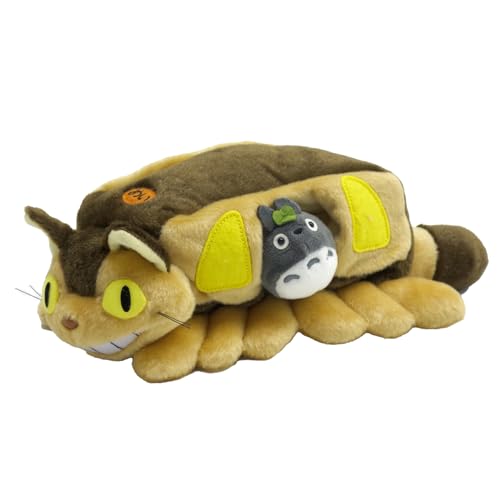
Riding alongside Totoro in popularity is the Catbus (Nekobus) — the grinning, twelve-legged bus-cat from the film’s best-loved scene. Its plush version is instantly recognizable and, because of the distinctive multi-leg design, is one of the harder characters for bootleg manufacturers to get right.
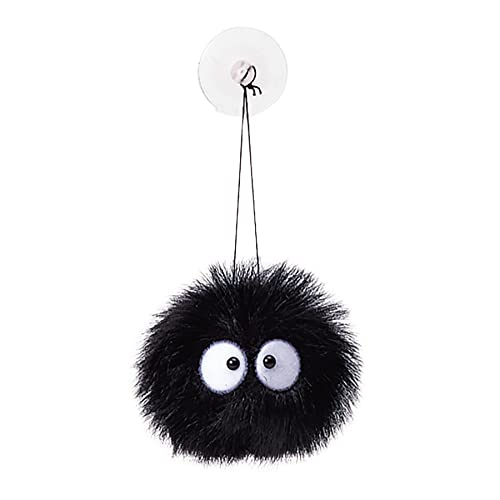
Susuwatari — the soot sprites that appear in both My Neighbor Totoro and Spirited Away— round out the Totoro universe’s plush lineup. They’re sold individually and in small sets, and their simple round shape makes them a favorite low-cost, high-volume gift for anyone buying for a whole office or classroom.
Kiki’s Delivery Service: Jiji and the Witch’s Broom Aesthetic
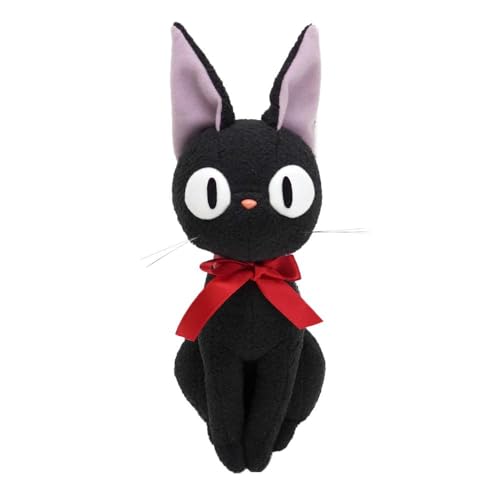
Kiki’s Delivery Service merchandise leans heavily on Jiji, Kiki’s deadpan black cat familiar, who has become a standalone character in Ghibli merchandise separate from Kiki herself. Jiji goods range from plush and phone charms to full apparel lines, and the character’s simple black silhouette makes quality differences between official and bootleg versions especially easy to spot — look closely at the stitched facial expression, which counterfeits tend to render slightly asymmetrical or too cartoonish.
Howl’s Moving Castle: Calcifer Leads the Merchandise
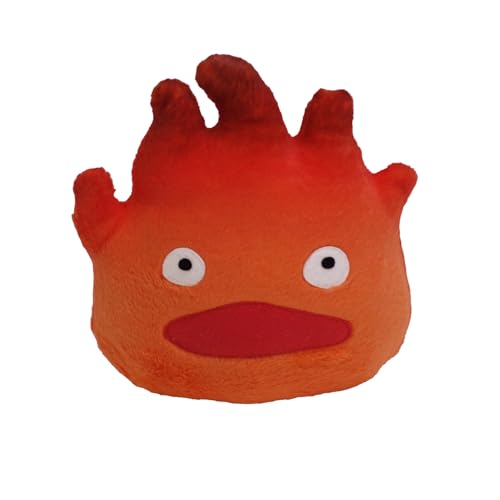
Calcifer, the fire demon who powers the castle, is by far the most merchandised character from Howl’s Moving Castle— his expressive, flame-shaped design translates well into plush, keychains, and even USB-powered desk lamps sold through Donguri Kyowakoku. His orange-to-yellow gradient coloring is one of the harder effects for counterfeit manufacturers to reproduce cleanly, which makes him a relatively safe character to shop for even outside official stores — though official is still best.
Ponyo and Princess Mononoke: Beyond the Big Three
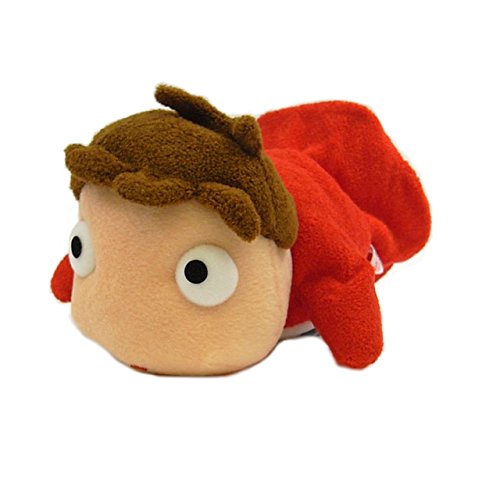
Ponyo’s bright red, round-cheeked design has made her a mainstay of the Ghibli merchandise lineup since the film’s 2008 release, and her plush remains one of the best-selling non-Totoro items at Donguri Kyowakoku. The simple, rounded shape also happens to be one of the easier designs for bootleg sellers to approximate, so authenticity checks matter more here than with more complex characters.
Princess Mononokemerchandise skews toward the Kodama — the small, rattling, glow-in-the-dark tree spirits that appear throughout the film’s forest scenes. Rather than plush, Kodama are most often sold as small glow-in-the-dark figures, which makes them one of the lightest, most packable Ghibli souvenirs in this entire guide.

Ghibli Homeware & Accessories: Beyond the Plush
Plush toys are the obvious souvenir, but Ghibli licenses a deep range of homeware and accessories that make more grown-up gifts — the kind of officially licensed pieces that turn up on Donguri Kyowakoku’s shelves and in the film-specific corners of LOFT and Tokyu Hands. These are the items a fan uses daily rather than displays.
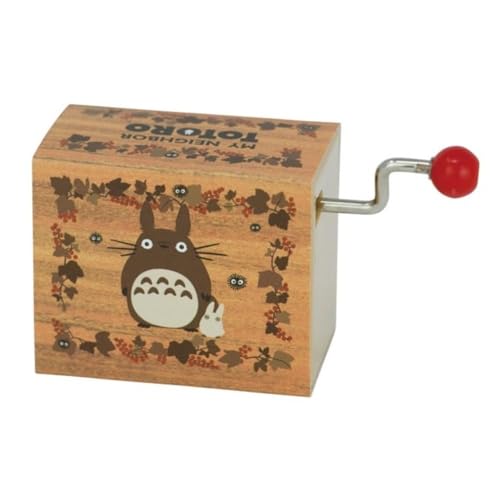
The standout is a Totoro music box. Wind-up wooden or resin music boxes playing the film’s Joe Hisaishi themes are a Ghibli staple, and a well-made one is a genuine keepsake rather than a toy — the piece a serious fan keeps on a shelf for years.
For the kitchen, two Totoro pieces bring the films to the table. A ceramic chopstick rest set shaped as Totoro and the soot sprites is a small, collectible tabletop gift, and a proper bento lunch boxturns a daily lunch into something quietly cheerful — both officially licensed and far more giftable than another figure.

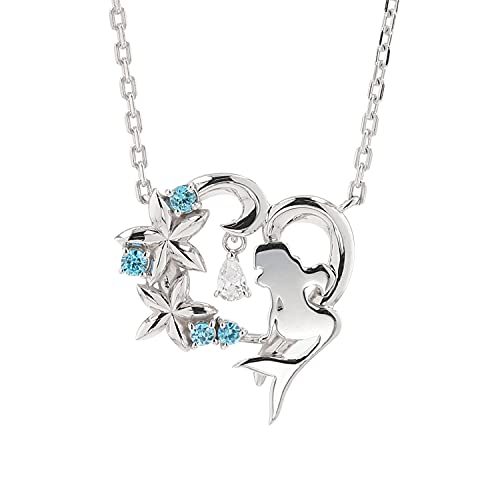
For wearable Ghibli, two accessories skew toward gifts for a specific fan. A Kiki’s Delivery Service bow headbandrecreates the film’s signature red hair bow, a favorite cosplay-adjacent piece, and a delicate Howl’s Moving Castle pendant is the understated option for someone who wants their Ghibli love a little more subtle.

Finally, for a Spirited Away fan, the No-Face coin bankis the perfect novelty gift: place a coin in front of the figure and No-Face “eats” it, a working mechanism that turns saving change into a small piece of the film.

Ghibli Museum and Ghibli Park Exclusives
Two locations sell merchandise you cannot find anywhere else, including Donguri Kyowakoku’s standard branches. The Ghibli Museum in Mitaka, on the western edge of Tokyo, has its own gift shop, Mamma Aiuto, stocked with museum-only items — often tied to the museum’s original short films that never had a theatrical release, so the designs won’t appear on general merchandise at all.
Ghibli Park, inside Aichi Prefecture’s Expo 2005 Commemorative Park near Nagoya, opened its themed areas gradually from 2022 and now has multiple shops spread across its zones — Ghibli’s Grand Warehouse, Dondoko Forest, and others — each selling area-specific merchandise. Because both locations require timed-entry tickets booked in advance (the Museum through its own reservation system, the Park through its official ticketing site), plan the visit as a dedicated day rather than a spontaneous stop, and buy anything exclusive while you’re there — neither location ships internationally.
Pro Tip
How to Spot Bootleg Ghibli Merchandise
Studio Ghibli enforces its licensing aggressively, but tourist-district shops in Tokyo and Kyoto still carry unlicensed “Ghibli-inspired” goods, particularly cheap Totoro keychains and Kiki figures sold alongside genuinely licensed anime merchandise. A few checks catch most of them: official items carry a printed Studio Ghibli or Donguri Kyowakoku tag with Japanese licensing text, not just a printed character image; stitching and proportions match the source film precisely rather than approximating it; and prices that look too low for the size and detail of the piece usually are.
Buying from Donguri Kyowakoku, the Ghibli Museum or Ghibli Park shops, or clearly licensed Amazon Japan listings removes the guesswork entirely — each channel sells only studio-approved merchandise. If you’re shopping secondhand or at a general anime-goods store rather than an official outlet, treat unusually low prices and missing packaging as red flags before you buy.
Heads Up
Ordering Ghibli Plush Online Before or During Your Trip
You don’t need to hunt down a physical Donguri Kyowakoku branch to buy authentic merchandise. Licensed Ghibli plush and figures are sold through Amazon Japan, and ordering ahead to your hotel is a practical way to secure a specific character before you arrive, especially for items that sell out around new film re-releases or anniversary campaigns. Confirm the listing is sold by an official or clearly licensed seller, and check that product photos show the correct tags and packaging described above.
This approach also solves the biggest practical problem with Ghibli shopping: limited shelf time. Donguri Kyowakoku branches can be busy, stock specific characters inconsistently by season, and don’t hold items. Ordering online removes that pressure — you can compare the full lineup at leisure and have pieces waiting at your hotel rather than carrying them through the rest of a multi-city itinerary.
Quick Comparison: The Core Ghibli Buys
| Product | Film | Price Range | Best For |
|---|---|---|---|
| Totoro plush (M) | My Neighbor Totoro | ¥3,500–¥5,000 | The flagship, most-requested souvenir |
| Catbus plush | My Neighbor Totoro | ¥3,000–¥5,000 | Display piece; matched gift with Totoro |
| Jiji plush | Kiki’s Delivery Service | ¥2,500–¥4,000 | Versatile gift for non-fans too |
| Calcifer plush | Howl’s Moving Castle | ¥2,000–¥3,500 | Compact, distinctive character pick |
| Ponyo plush | Ponyo | ¥2,500–¥4,000 | Kid-friendly and collector appeal |
| Susuwatari plush set | Spirited Away / Totoro | ¥1,500–¥2,500 | Bulk gifting, low cost per piece |
| Kodama glow figure set | Princess Mononoke | ¥1,000–¥1,500 | Lightest, most packable Ghibli buy |
Studio Ghibli Shopping Checklist
For more on where character goods fit against Japan’s wider souvenir landscape, see our best souvenirs from Japan guide. If you’re building out a broader anime and character-goods haul, our anime figure collector’s guide covers pricing and shipping for figures beyond Ghibli, and our blind box toys guide is the place to look if surprise-format character goods are also on your list.
Frequently Asked Questions
How can I tell if Studio Ghibli merchandise is authentic?
Look for an official Studio Ghibli or Donguri Kyowakoku tag with printed Japanese licensing text, accurate stitching and proportions matched to the film, and packaging that looks deliberately produced rather than generic. Buying directly from Donguri Kyowakoku, the Ghibli Museum or Ghibli Park shops, or a clearly licensed Amazon Japan listing removes the guesswork entirely.
Is Donguri Kyowakoku the only official Ghibli store?
Donguri Kyowakoku is the main retail chain, with branches in major cities across Japan. The Ghibli Museum in Mitaka and Ghibli Park near Nagoya each add their own gift shops with exclusive items not sold through the regular Donguri Kyowakoku network, so a dedicated visit is worth it if you want those specific pieces.
Do I need advance tickets to buy Ghibli Museum or Ghibli Park exclusives?
Yes. Both locations require timed-entry tickets booked in advance through their official reservation systems, and tickets sell out weeks ahead, especially around holidays. There is no way to buy their exclusive merchandise without visiting, since neither location ships internationally.
Can I bring Ghibli plush and figures through customs without issue?
Yes. Plush toys, figures, and glow-in-the-dark items are ordinary consumer goods with no special import restrictions in most countries. Keep original packaging and tags intact, which also helps if you ever need to prove authenticity or resell an item later.
Which Ghibli character has the widest merchandise selection?
Totoro, by a wide margin. As Studio Ghibli’s most recognized character, Totoro appears across every product category — plush in multiple sizes, stationery, kitchenware, and seasonal items — while characters from other films tend to have narrower, more film-specific lineups like Calcifer or the Kodama figures.
Is it cheaper to buy Ghibli merchandise in Japan than importing it?
Generally yes, and by a meaningful margin on official items, since overseas retailers add import and distribution markups. The bigger risk abroad is authenticity rather than price — buying in Japan through an official channel solves both problems at once.
Disclosure
This article contains affiliate links. We may earn a commission when you buy through them, at no extra cost to you. Every pick is an honest recommendation.
Planning to buy from Japan?