

Japanese Whisky & Sake Gift Guide 2026: What to Buy and How to Bring It Home
Updated July 2026 · 12 min read
Japan Shop Helper Editorial
Tokyo-based · prices & fees verified on real orders
Japanese whisky and sake have become two of the most sought-after gifts a visitor can bring home, and for good reason — both categories combine genuine craft with prices that, for the accessible tier, are still reasonable if you know where to shop. The confusion for most travelers isn’t whether to buy a bottle; it’s which bottle, because the whisky aisle spans everything from an approachable ¥3,500 blend to age-statement releases that resell for ten times their original sticker price, if you can find them at all.
This guide sorts the realistic buys from the unicorns. It covers the two Suntory whiskies every gift-shopper should know, how to build a beginner-friendly sake tasting set, the drinkware that turns either into a proper presentation, and — just as important — the practical rules for getting alcohol through duty-free, customs, and checked luggage without a bottle breaking or a shipment getting flagged.
Heads Up
Why Japanese Whisky and Sake Travel So Well as Gifts
Both categories share a quality that makes them ideal souvenirs: instant recognizability with real substance behind it. Japanese whisky won international blind tastings against Scotch for over a decade, and that reputation is now common knowledge among casual drinkers worldwide — you don’t have to explain why a bottle of Hibiki is special. Sake carries the same built-in credibility, plus the advantage of variety: a tasting set introduces someone to five distinct styles in one gift, something no single bottle of wine or spirits can do.
The practical case is just as strong. Both are widely available at prices meaningfully below what specialty importers charge abroad, both travel safely in checked luggage when packed correctly, and both clear customs in most countries within a normal personal allowance. The one thing to manage carefully is expectations around the whisky category’s most famous names — more on that below.
The Accessible Whiskies: Hibiki Japanese Harmony and Toki
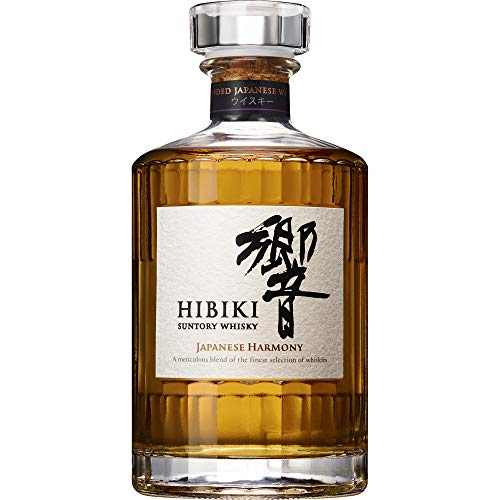
Suntory makes both of the whiskies most visitors should actually target, and they sit at different points on the gift spectrum. Hibiki Japanese Harmony is the entry point into the brand’s flagship blended whisky line — a soft, approachable bottle built from whiskies aged in five different cask types, with a distinctive 24-facet bottle that alone makes it look like a considered present. It carries no age statement, which keeps supply (and price) far more stable than Suntory’s older, harder-to-find expressions.
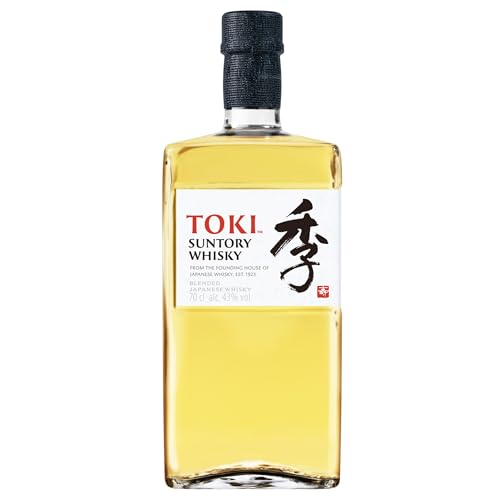
Suntory Toki sits one tier down and solves a different problem: it’s the whisky to buy when you want something unmistakably Japanese without committing to a ¥12,000 gift. Toki was built as a mixing whisky first — light, bright, and genuinely good in a highball, which happens to be how most of Japan actually drinks its whisky at home and in izakaya.
Pro Tip
The Honest Truth About Age-Statement Whisky
It needs saying plainly: the whiskies that made Japan’s reputation — aged Hibiki, Yamazaki, and Hakushu single malts with a number on the label — are genuinely scarce, and the scarcity is not a marketing trick. Demand outpaced production so dramatically over the past decade that most distilleries stopped printing age statements on their standard lines entirely, redirecting limited aged stock into small, lottery-style released batches and duty-free exclusives.
In practice, this means an 18-year Hibiki or a 12-year Yamazaki is not something you can reliably walk into a shop and buy at retail price — when it does appear, it is often priced at a multiple of its original release price, or restricted to one bottle per customer through a raffle. If you see an age-statement bottle at a suspiciously normal price in a tourist-district shop, treat it as a red flag rather than a lucky find; verify the retailer is an established liquor store or department store, and be skeptical of loose bottles without a manufacturer seal. The honest recommendation for most visitors is to enjoy an aged pour at a proper whisky bar in Japan and buy the no-age-statement bottles — Hibiki Harmony and Toki among them — to actually take home.
Sake Tasting Sets: The Best Way to Learn the Category
Sake is a harder gift to get right with a single bottle, because style varies enormously — dry versus sweet, filtered versus cloudy, chilled versus warmed — and most recipients have no frame of reference for what they’ll like. A tasting set solves this cleanly: several small bottles from different breweries and styles, low enough commitment per bottle that trying one you don’t love costs nothing, and a built-in structure for a tasting night.

For a step up in presentation and pour quality, a premium tasting set curates from higher-grade breweries rather than mixing in budget varieties, which matters if the recipient already knows their way around sake or the gift is for a special occasion rather than a casual introduction.

A quick vocabulary note worth passing along with either set: junmai means no distilled alcohol was added (rice, water, and koji only), while ginjo and daiginjo refer to how far the rice was polished before brewing — more polishing generally means a lighter, more fragrant sake. None of this is necessary to enjoy the tasting, but it turns a gift into a small education.
Drinkware: Tin Cups and Ceramic Sets That Complete the Gift
A bottle alone is a fine gift; a bottle paired with proper drinkware reads as a considered one. Toyama prefecture’s tin craftsmen make the category’s most distinctive cup — pure tin, hand-formed, and soft enough to gently reshape by hand, which is treated as a feature rather than a flaw. Tin is also prized in Japan for a genuine functional reason: many drinkers believe it smooths a sake or whisky’s flavor compared to glass or ceramic.

For a gift built around sake specifically, a ceramic cup set is the more traditional pairing — multiple small cups (ochoko) that let a group share a bottle properly, rather than the single-cup tin option above.

Where to Buy: Liquor Shops, Depachika, and Duty-Free
Three venues cover almost every purchase in this guide. Dedicated liquor shops (known as sakaya) carry the deepest selection and the most knowledgeable staff, and are the best bet for anything beyond the most common bottles. Department store basement food halls — depachika — stock a curated, well-presented range of both whisky and sake, often including regional and gift-boxed options not found elsewhere, and their gift-wrapping service is worth using if you’re buying something to hand over directly rather than pack home.
Airport duty-free is the third option, and it comes with a genuine trade-off. Prices are competitive and the selection often includes duty-free-exclusive bottlings you won’t find in city shops, but the range of accessible bottles (Toki, Hibiki Harmony) can be thinner than a dedicated liquor shop, and age-statement whisky is no more likely to appear there than anywhere else. The practical strategy: buy sake and everyday whisky in the city where selection is best, and treat duty-free as a backup or a last-minute top-up rather than your primary shopping stop.
For gifts beyond drinkware — snacks, cosmetics, and general souvenirs to round out a haul — our Don Quijote shopping guide and department store shopping guide cover the two venues you’ll likely visit anyway.
Duty-Free Limits and Customs Allowances for Bringing Alcohol Home
Japan’s own duty-free system, available to visitors on a tourist visa at registered tax-free shops, waives Japanese consumption tax on qualifying purchases over a minimum spend, generally sealed in a tamper-evident bag for departure. That’s a separate question from what your home country lets you bring in duty-free on arrival — and that allowance is the one that actually determines how many bottles you can carry without paying import duty.
Heads Up
A few practical notes that apply almost everywhere: bottles bought at Japanese airport duty-free and sealed in a tamper-evident bag with your boarding pass receipt are generally fine to carry through security at your connecting airport as long as the seal stays intact and you can show the receipt; bottles bought in the city (from a sakaya or depachika) must go in checked luggage, since they’re liquids over the security limit for carry-on. If your itinerary includes a connecting flight through a third country, confirm that country’s rules on carrying sealed duty-free liquids through its security checkpoint — policies differ by airport.
How to Pack Bottles in Checked Luggage Without Breaking Them
Glass bottles in checked luggage are safe with a bit of method. Wrap each bottle in clothing — a sweater or several t-shirts work well — and stand it upright in the center of the suitcase, surrounded on all sides by soft items rather than pressed against the case wall. Many liquor shops and depachika will sell or provide a padded bottle sleeve or a corrugated protector box for a small fee or free with purchase; always ask, as it’s the single easiest upgrade to breakage protection.
Pro Tip
Distribute bottles across your luggage rather than clustering them all in one case, both for weight balance and so a single mishandled bag doesn’t cost you the whole collection. And keep any gift-boxed bottle in its original box for the flight home even if you unwrap the box for photos in Japan — the box’s foam or cardboard inserts are usually better cushioning than anything you’ll improvise.
Quick Comparison: The Core Whisky & Sake Buys
| Product | Type | Price Range | Best For |
|---|---|---|---|
| Hibiki Japanese Harmony | Blended whisky, no age statement | ¥11,000–¥15,000 | Splurge gift; consistently in stock |
| Suntory Toki (700ml) | Blended whisky, mixing-forward | ¥3,500–¥5,000 | Everyday gift; great as a highball |
| Sake mini bottle set (5 x 300ml) | Beginner tasting set | ¥3,000–¥5,000 | Introducing someone to sake styles |
| Premium sake tasting set (5 bottles) | Curated brewery selection | ¥5,000–¥6,000 | Recipients who already drink sake |
| Nousaku tin sake cup | Handmade tin drinkware | ¥3,500–¥5,000 | A distinctive, one-of-a-kind gift |
| Ceramic sake cup set (5 pieces) | Traditional ochoko cups | ¥2,000–¥3,500 | Sharing a bottle as a group |
Whisky & Sake Gift Shopping Checklist
Frequently Asked Questions
Can I bring Japanese whisky and sake through customs?
Yes, within your home country’s personal duty-free alcohol allowance, which typically runs around 1–3 liters per adult traveler depending on the country. Bottles beyond that allowance can usually still be brought in, but you’ll need to declare them and may owe import duty. Confirm the exact limit and any proof/ABV cutoffs for your destination before you fly.
Why is it hard to find aged Japanese whisky like 12-year Yamazaki?
Demand grew faster than the whisky aging in casks a decade or more ago, so most distilleries pulled age statements from their standard lineups and now release limited aged batches through lotteries or duty-free exclusives instead of steady retail stock. When age-statement bottles do appear at retail, they’re often priced well above their original release price.
Is it better to buy at a liquor shop, a department store, or duty-free?
Liquor shops (sakaya) have the deepest selection and most knowledgeable staff; depachika food halls offer a well-curated range plus gift wrapping; duty-free has competitive prices and occasional exclusive bottlings but a thinner everyday selection. Buy your main haul in the city and treat duty-free as a backup or last-minute addition.
How should I pack bottles so they don’t break in checked luggage?
Wrap each bottle in clothing, stand it upright in the center of the suitcase away from the case walls, and put it inside a sealed zip-top bag first so a crack doesn’t soak the rest of your luggage. Ask the shop for a padded sleeve or corrugated protector box — many provide one free or for a small fee.
What does junmai, ginjo, and daiginjo mean on a sake label?
Junmai means the sake is made from just rice, water, and koji with no added distilled alcohol. Ginjo and daiginjo describe how much the rice was polished before brewing — daiginjo is polished furthest, generally producing a lighter, more fragrant sake. A tasting set is the easiest way to compare the styles side by side.
Is Suntory Toki good on its own, or only for mixing?
It can be enjoyed neat or on the rocks, but it was built with mixing in mind, and a highball — whisky, ice, and soda water — is genuinely the format it shines in and how most of Japan drinks it. It’s a good gift for someone who assumes they don’t like whisky.
For more on what else is worth the suitcase space, see our best souvenirs from Japan guide for the full ranked landscape.
Disclosure
This article contains affiliate links. We may earn a commission when you buy through them, at no extra cost to you. Every pick is an honest recommendation.
Planning to buy from Japan?