
Best Japanese Eyeliners to Buy in Japan: 8 Smudge-Proof Picks Compared
Updated June 2025 · 14 min read
Japan Shop Helper Editorial
Tokyo-based · prices & fees verified on real orders

Japan’s drugstore beauty aisles are legendary for a reason. Walk into any Matsumoto Kiyoshi, Ainz & Tulpe, or Don Quijote, and you’ll find an entire wall of eyeliners—liquid pens, gel pencils, film-type formulas—many of which never leave the country. The problem isn’t finding an eyeliner. It’s picking just one (or three) from a wall of 60-plus options when every label is in Japanese.
This article compares eight Japan-exclusive eyeliners that consistently top the rankings on Cosme, sell out in Harajuku, and get praised in online beauty communities for their staying power. Each pick is assessed on tip precision, smudge resistance over 8+ hours (including Tokyo summer humidity), ease of removal, and tourist-friendly pricing, drawing on manufacturer specs and aggregated reviewer feedback. Prices listed are typical drugstore shelf prices in 2025; tax-free purchases require spending ¥5,000 or more at a single store in one visit.
Why Japanese Eyeliners Stand Out
Japanese cosmetic formulas are engineered for Asian eyelid shapes—monolids, double lids, and hooded creases where product transfer is a constant battle. That engineering pays off for every eye shape. Three things set them apart:
Ultra-Thin Tip Technology
Most Japanese liquid liner pens use tips measuring 0.1 mm or thinner. Compare that to Western drugstore pens, which typically start at 0.3 mm. The difference is visible: Japanese liners can draw individual “lash hairs” along the lash line, giving a more natural finish.
Film-Type Formulas
Many Japanese liners use a film-forming polymer instead of traditional waterproof waxes. The practical result: the liner won’t smudge from sweat, tears, or humidity, but it peels off cleanly with warm water. No oil cleanser required. This is a huge plus for travelers who want a quick nighttime routine in a hotel.
Price-to-Quality Ratio
The eight liners in this article range from ¥880 to ¥1,760. Even at the top end, that’s roughly $12 USD. You’d struggle to find this level of precision and longevity in any Western drugstore liner under $20.
How We Evaluated These Eyeliners
Each eyeliner is judged against real-world tourist conditions (you’re exploring temples, not sitting in an air-conditioned office), applied to bare, unprimed skin. Our editorial team weighed four criteria:
Our assessment covers black and, where available, brown-black shades. Prices reflect the most common shelf price at Matsumoto Kiyoshi and Don Quijote stores in Tokyo as of spring 2025.
1. UZU Eye Opening Liner — Best Overall Liquid Pen
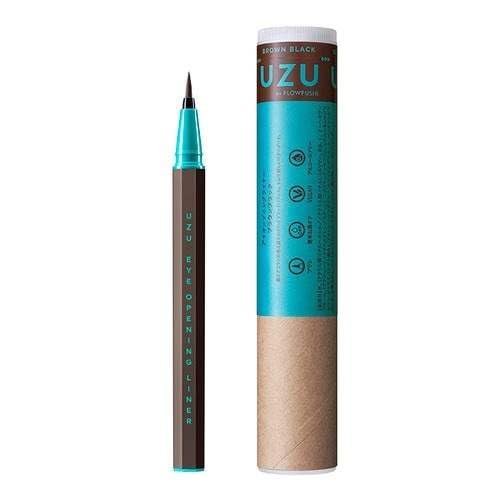
UZU (by Flowfushi) redeveloped their brush-tip technology after discontinuing the original Mote Liner. The result is a hexagonal barrel that’s easier to grip than a round pen, and a tip that snaps back to its original shape after 500+ uses, according to the brand. Reviewers consistently report the line staying crisp through a full day of walking and even a passing rain shower, with warm-water removal taking around 20 seconds of gentle rubbing.
The best shade for a natural lash-line look is Brown-Black. The pure black is intensely pigmented—perfect for a dramatic wing, but it can look stark if you have lighter hair.
Pro Tip
2. Dejavu Lasting Fine a Brush Liquid — Best for Thin Lines
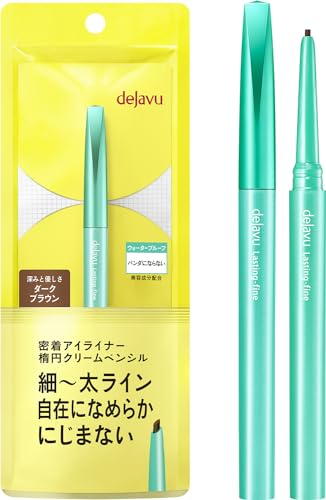
Dejavu has been a staple in Japanese beauty routines for over a decade. The Lasting Fine a model uses what the brand calls a “film-type smooth liquid” that dries within 30 seconds and forms a flexible coating over the lash line. Unlike some film-type formulas that can flake in dry conditions, this one is widely reported to hold up across a full day that mixes air-conditioned interiors and outdoor humidity.
The tip is slightly firmer than UZU’s, which can be an advantage if you have unsteady hands. It doesn’t flex as much, so the line stays consistently thin. The trade-off: it’s harder to build up a thick wing in a single stroke. You’ll need to layer.
3. Heroine Make Smooth Liquid Eyeliner Super Keep — Best Smudge Resistance
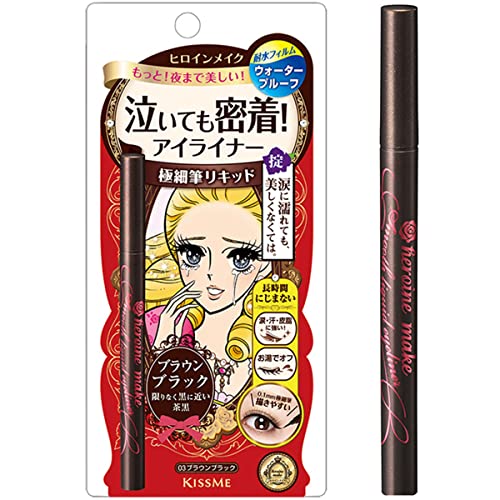
Heroine Make positions itself as the “last resort for oily lids,” and that reputation is earned. Across a typical 8-hour day in humid, 31°C conditions, the line reportedly looks virtually identical to the fresh application—no feathering, no transfer to the crease, no fading at the outer corner.
The 0.1 mm felt tip is springy and precise, though it deposits slightly more product per stroke than the Dejavu. That makes it a better choice for visible liner looks. The formula dries matte, which some people love and others find a bit flat compared to the slight sheen of UZU.
Heads Up
4. Love Liner Liquid — Best for Beginners

Love Liner is one of Japan’s best-selling eyeliner brands, and the liquid version consistently wins Cosme Best Awards. The metal barrel is heavier than a typical felt-tip pen—about the weight of a decent ballpoint—which adds stability for people who struggle with winged liner.
The color “Dark Brown” is particularly popular among tourists. It gives a softer definition than black while still being visible at arm’s length. The formula lasts about 7–8 hours in moderate humidity before minor fading appears at the outer corners. Not quite as durable as Heroine Make, but easier to remove.
5. Canmake Creamy Touch Liner — Best Budget Gel Pencil
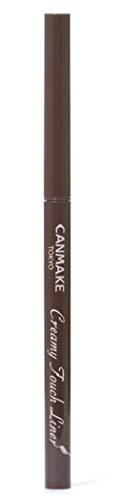
Canmake is Japan’s budget beauty king, and the Creamy Touch Liner is arguably their best product. At ¥715 (about $5 USD), it’s cheap enough to buy in multiple shades without thinking twice. The formula glides on like a crayon but dries down to a semi-matte finish that doesn’t migrate.
For waterline use, this is one of the strongest performers in its class. The soft, rounded tip deposits color smoothly without the dragging sensation you get from harder pencil formulas, and it’s unlikely to irritate or cause tearing during application. After about 6 hours, roughly 70% of the waterline color typically remains—respectable for any pencil liner at any price point.
Shade 02 (Dark Brown) and shade 05 (Bitter Caramel) are worth picking up alongside the standard black if you prefer a softer everyday look.
6. K-Palette 1Day Tattoo Procast the Eye Liner — Best for Hot Weather
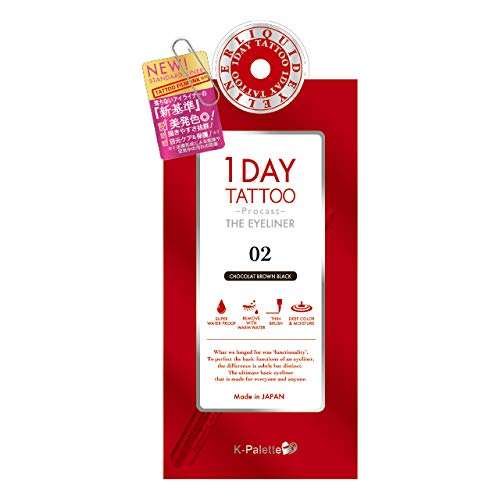
K-Palette made its name with the “1Day Tattoo” eyebrow liner, and they’ve applied the same long-wear philosophy to this eyeliner. The formula is specifically targeted at oily eyelids and humid climates—two things that describe a summer trip to Japan perfectly.
In rainy-season conditions, the K-Palette reportedly holds up nearly as well as Heroine Make’s waterproof formula, but with the key advantage of warm-water removal. Lines typically stay sharp for about 9 hours. The only downside: the felt tip is on the stiff side, so you need a lighter touch to avoid thick lines on the first stroke.
7. KATE Rare Fit Gel Pencil — Best for Smoky Eyes
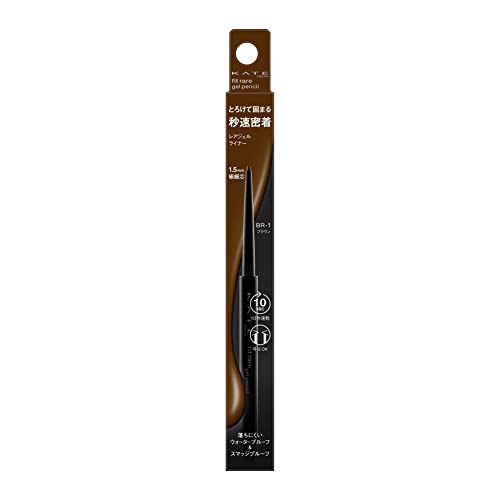
KATE is Kanebo’s drugstore brand, and their Rare Fit line represents the more artistic side of Japanese eyeliner design. Unlike the precision-focused liquid pens above, this gel pencil is built for blending. Apply it, then use the built-in smudge tip (or your fingertip) within 30 seconds to diffuse the line into a soft shadow effect.
Once the formula sets, it locks. It becomes extremely difficult to smudge after the initial 60-second window. That makes it a clever hybrid: soft and forgiving during application, but locked-in for the rest of the day. Typical wear time is 7–8 hours with minimal creasing.
8. Cezanne Drawing Liner — Best Ultra-Budget Liquid
Cezanne is Japan’s other major budget brand alongside Canmake, and their Drawing Liner competes directly with options costing twice as much. The brush tip isn’t quite as refined as UZU’s or Love Liner’s—it can splay slightly after heavy use—but for a trip souvenir or a “toss it in the suitcase and not worry” option, it’s outstanding value.
The brown-black shade is particularly well-balanced: dark enough to define lashes, warm enough to avoid looking harsh. If you’re buying eyeliners as gifts and need to keep costs down, grab a handful of these.
Quick Comparison: All 8 Picks at a Glance
Here’s a simplified breakdown to help you narrow down your choice before hitting the beauty aisle:
| Liner | Type | Price | Wear Time | Removal |
|---|---|---|---|---|
| UZU Eye Opening | Liquid pen | ¥1,650 | 10+ hrs | Warm water |
| Dejavu Lasting Fine a | Liquid pen | ¥1,320 | 8–9 hrs | Warm water |
| Heroine Make Super Keep | Liquid pen | ¥1,320 | 10+ hrs | Oil cleanser |
| Love Liner Liquid | Liquid pen | ¥1,760 | 7–8 hrs | Warm water |
| Canmake Creamy Touch | Gel pencil | ¥715 | 6–7 hrs | Micellar water |
| K-Palette 1Day Tattoo | Liquid pen | ¥1,320 | 9+ hrs | Warm water |
| KATE Rare Fit | Gel pencil | ¥1,210 | 7–8 hrs | Micellar water |
| Cezanne Drawing | Liquid pen | ¥660 | 6–7 hrs | Warm water |
Where to Buy: Store-by-Store Guide for Tourists
Matsumoto Kiyoshi (MatsuKiyo)
Japan’s largest drugstore chain has the widest cosmetics selection and clearly labeled tax-free counters. Most locations in Shibuya, Shinjuku, and Osaka’s Shinsaibashi carry all eight brands listed above. Look for the yellow-and-blue signage. Staff at tourist-heavy branches often speak basic English, and many stores have multilingual product guides posted near the beauty aisles.
Don Quijote (Donki)
Donki is cheaper on some items (especially Canmake and Cezanne), but the shopping experience is chaotic. Eyeliners are usually in the cosmetics section on the upper floors. Tax-free processing happens at designated registers, often with long lines after 6 PM. Go early if you can.
Ainz & Tulpe
This smaller chain focuses exclusively on beauty and has a curated selection. You won’t find every shade of every brand, but the displays are clean and organized, making it easier to compare products side-by-side. Locations in Omotesando, Lumine Shinjuku, and Umeda are particularly well-stocked.
@cosme TOKYO (Harajuku)
This flagship store in Harajuku organizes products by ranking, so you can instantly see what’s trending. They have testers for nearly everything, making it the best spot to swatch eyeliners before committing. Prices are standard retail—no discounts, but the experience is worth it for indecisive shoppers.
Pro Tip
How to Choose the Right Eyeliner for Your Trip
With eight strong options, the “best” pick depends on your specific needs. Use this decision framework:
Traveling in Summer (June–September)?
Prioritize smudge resistance above all else. Heroine Make Super Keep or K-Palette 1Day Tattoo are your safest bets. Both are built for worst-case humidity. If you want warm-water removal, go with K-Palette; if you want maximum staying power and don’t mind oil cleansing, Heroine Make wins.
Want the Thinnest Possible Line?
Dejavu Lasting Fine a and Cezanne Drawing Liner both excel at hair-thin lines. Dejavu’s firmer tip gives more control; Cezanne’s softer tip requires a lighter hand but costs less than half the price.
New to Liquid Liner?
Love Liner’s weighted barrel genuinely helps with hand stability. The dye-based pigment is also more forgiving—mistakes look softer and are easier to correct with a cotton swab. Start here, then graduate to UZU or Heroine Make.
Prefer Pencil Over Liquid?
Canmake Creamy Touch for a tight, defined line; KATE Rare Fit for a smudged, smoky effect. Buy both—the combined cost is under ¥2,000.
Buying Gifts?
UZU’s packaging is the most gift-worthy (sleek, hexagonal, distinctive). Cezanne and Canmake are great for stocking up on budget-friendly gifts. Love Liner’s metal body feels premium without the premium price tag.
Tips for Swatching in Japanese Drugstores
Most larger drugstores and all @cosme locations provide testers. A few etiquette pointers:
Swatch on the back of your hand, not on your eyelid. This is a hygiene norm in Japanese stores, and staff will politely intervene if they see someone applying testers to their face. Some stores provide small paper swatch cards near the tester display—use those if available.
Test tip precision by drawing three parallel lines as thin as possible. Check how evenly the ink flows from the beginning of the stroke to the end. Japanese liners are generally consistent, but individual testers that have been heavily used may give a misleading impression of the tip quality.
Wait 60 seconds after swatching, then rub the line with your thumb. This tells you more about smudge resistance than any marketing claim. Film-type formulas will resist rubbing but peel at the edges; waterproof formulas won’t budge at all.
Black vs. Brown vs. Brown-Black: Which Shade to Pick
Japanese beauty philosophy tends to favor softer, more natural definitions compared to the Western preference for bold, graphic liner. That cultural context influences the shade recommendations you’ll see in-store.
Jet Black: Best for dramatic looks, evening events, or if you have very dark hair and brows. Carbon-based blacks (like Heroine Make and Dejavu) are the most opaque. Dye-based blacks (like Love Liner) appear slightly softer.
Brown-Black:The most versatile shade. It reads as “black from a distance, brown up close,” making it ideal for daytime sightseeing. UZU, Dejavu, and Cezanne all offer excellent brown-black options.
Dark Brown / Brown:Perfect for fair-to-medium complexions or anyone who wants liner that blends with their natural lash color. Canmake’s dark brown and Love Liner’s dark brown are standout shades.
Color Shades (Burgundy, Olive, Navy):UZU offers the widest color range. These work beautifully as accent colors on the lower lash line or as a full liner for a more fashion-forward look. They’re popular picks as souvenirs because they’re unique to the Japanese market.
Frequently Asked Questions
Can I find these eyeliners outside of Japan?
Some brands—UZU, Love Liner, and Heroine Make—are available on Amazon and through international K-beauty/J-beauty retailers, but prices are typically 30–50% higher than Japanese drugstore prices. Canmake, Cezanne, and KATE are much harder to find abroad and are best purchased during your trip. K-Palette has limited international availability. Buying in Japan is almost always cheaper, even before tax-free savings.
What does “film-type” mean, and is it better than waterproof?
Film-type formulas create a thin polymer film on the skin that resists water, sweat, and tears but dissolves when exposed to warm water (around 38–40°C). Waterproof formulas resist both cold and warm water and require an oil-based remover. Film-type is generally more skin-friendly and easier to remove, but true waterproof formulas last longer in extreme heat and humidity. For most tourists, film-type is the better choice because it simplifies your evening routine.
How many eyeliners can I bring back in my luggage?
There’s no specific customs limit on cosmetics for personal use in most countries, including the US, Canada, Australia, and the EU. However, if you’re buying in large quantities (20+ units), customs officers might suspect commercial intent. For a typical haul of 5–10 eyeliners, you won’t have any issues. Pack them in your checked luggage or carry-on—they’re well under the liquid limits for carry-on since they’re classified as solids or semi-solids.
Do Japanese eyeliners work on oily eyelids?
Yes, and this is one of the key reasons they’re so popular globally. Most of the liners in this list are formulated with sebum-resistant polymers. Heroine Make Super Keep and K-Palette 1Day Tattoo are the top picks specifically for oily lids. If you find that even these transfer, apply a thin layer of translucent powder to your lids before lining—this creates a dry base that extends wear time by 2–3 hours.
Are these eyeliners safe for sensitive eyes or contact lens wearers?
Most Japanese drugstore eyeliners are ophthalmologist-tested, and many (including Dejavu, UZU, and Canmake) are marketed as safe for contact lens wearers. That said, individual reactions vary. If you have known sensitivities, check the ingredient list for common irritants like carbon black (CI 77266) or certain preservatives. Film-type formulas tend to be gentler than waterproof ones because they don’t require aggressive removal.
What’s the shelf life of Japanese eyeliners?
Unopened, most liquid liners last 3 years from the manufacturing date (printed on the packaging in Japanese date format: YYYY/MM/DD). Once opened, the general recommendation is to use them within 3–6 months, especially for liquid pens, as the tip can dry out or become a breeding ground for bacteria. Gel pencils like Canmake and KATE tend to last longer after opening—up to 12 months—because the retractable mechanism protects the tip from air exposure.
Disclosure
This article contains affiliate links. We may earn a commission when you buy through them, at no extra cost to you. Every pick is an honest recommendation.
Shop Japanese beauty products