

Best Japanese Hair Dryers 2026: Panasonic Nanoe vs Dyson vs Budget Picks
Updated June 2026 · 14 min read
Japan Shop Helper Editorial
Tokyo-based · prices & fees verified on real orders
Walk into a Yodobashi Camera and you’re met with a wall of 40+ hair dryers in kanji-only packaging, and one question: which one is actually worth hauling home? The Panasonic Nanoe series—particularly the Japan-exclusive EH-NA0J—consistently tops Japanese beauty magazine rankings and outsells every competitor in domestic electronics stores. But voltage compatibility, wattage differences, and plug types make the buying decision trickier than it looks.
This guide ranks the best Japanese hair dryers you can buy as a tourist in 2026, breaks down which models work overseas without a transformer, and tells you exactly when it’s smarter to ship instead of carry. It draws on hands-on impressions and detailed research across seven models spanning price points from ¥3,000 to ¥48,000.
Why Japanese Hair Dryers Stand Apart from Western Models
Japanese consumers are famously particular about hair care. The domestic market supports innovation that never reaches export shelves. Panasonic’s nanoe technology, for example, generates ultra-fine water particles roughly 1,000 times smaller than standard negative ions—a feature the company markets heavily in Japan but barely mentions in its overseas product lines.
Hitachi and Sharp both sell hair dryers with built-in scalp-care modes that alternate hot and cold air at 5-second intervals, a concept almost unheard of in North American or European retail. Meanwhile, Japanese dryers tend to be lighter: the Panasonic EH-NA0J weighs around 550g, roughly 100g less than a standard Dyson Supersonic.
There’s also a cultural factor. Salons in Japan typically use Nobby or Tescom Professional models—brands that most tourists have never encountered. When Japanese hairstylists recommend a home dryer, they almost always point to the Panasonic Nanoe line or Tescom’s Protect Ion series. These endorsements carry real weight in a country where salon visits average once every 5–6 weeks.
The Voltage Problem Every Tourist Needs to Understand
Heads Up
This is the single biggest mistake tourists make when buying electronics in Japan. A Type A plug adapter (the flat two-prong kind) only changes the physical plug shape. It doesn’t step down or step up voltage. Hair dryers pull 1,200–1,500W, so you’d need a heavy-duty step-up transformer weighing 3–5 kg to use a 100V dryer on a 220V circuit safely. That’s impractical for most travelers.
The good news: a handful of Japanese hair dryers include a built-in voltage switch (typically labeled AC100-120V / 200-240V on the spec plate). These models work worldwide with just a cheap plug adapter. We’ve flagged voltage compatibility for every model in this article.
If you live in the US, Canada, Mexico, or parts of Central America (110–120V countries), you’re mostly fine with any Japanese dryer. You might notice very slightly lower heat output because 100V vs 120V means the heating element runs about 17% below its rated wattage, but the difference in drying time is negligible—maybe an extra 30–45 seconds for thick, long hair.
Pro Tip
Quick Comparison: Top 5 Japanese Hair Dryers for Tourists
| Model | Price (approx.) | Weight | Voltage | Best For |
|---|---|---|---|---|
| Panasonic EH-NA0J (Nanoe) | ¥33,000–¥38,000 | ~550g | 100V only | Hair quality enthusiasts (100–120V countries) |
| Panasonic EH-NA9J (Nanoe) | ¥22,000–¥26,000 | ~575g | 100V only | Best value in Nanoe line |
| Panasonic EH-CNA5B (Travel Nanoe) | ¥10,000–¥14,000 | ~545g | 100–240V (dual) | Tourists from 220V countries |
| Dyson Supersonic (Japan model) | ¥45,000–¥49,000 | ~720g | 100V only | Design-conscious buyers who want attachments |
| Tescom Protect Ion TID2400B | ¥3,500–¥5,000 | ~540g | 100V only | Budget pick for 100–120V countries |
The table above gives you the short version. Below, we break down each model in detail—including the specific things that don’t show up on spec sheets.
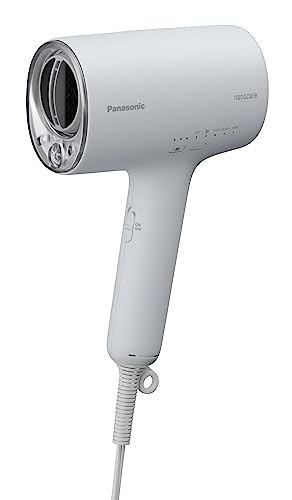
1. Panasonic EH-NA0J Nanoe — The Japan-Exclusive Icon
This is the dryer Japanese beauty editors can’t stop recommending. The EH-NA0J represents Panasonic’s top-tier Nanoe moisture technology, generating what the company calls “high-penetration nanoe” particles. In practical terms, hair feels noticeably smoother after one use—multiple Japanese consumer surveys (like Cosme Best Awards) consistently rank it #1 in the hair-tool category.
The compact, rounded design is a deliberate departure from the traditional elongated dryer shape. At roughly 550g, it’s lighter than you’d expect for a 1,200W dryer. The airflow feels powerful but not aggressive—Panasonic claims the nozzle design reduces drying time by about 20% compared to their previous-generation model.
Five modes are available: hot, warm, scalp, skin (yes, it has a facial moisture mode), and cold. The skin mode sounds gimmicky, but Japanese users swear by it—holding the dryer 20cm from your face on the nanoe setting supposedly improves hydration. We’re skeptical, but the hair-drying performance alone justifies the price.
Heads Up
Where to Buy
You’ll find the EH-NA0J at Yodobashi Camera, Bic Camera, and Labi (Yamada Denki) stores nationwide. Prices are usually fixed across chains, but look for point-card rewards—Yodobashi typically offers 10% points back, effectively dropping the real cost to around ¥30,000. Some Don Quijote locations stock it too, occasionally at a slight discount but without tax-free processing for electronics.
If you’re also shopping for other electronics, check our guide to buying electronics in Japan as a tourist for tips on tax-free purchases and point-card strategies.
2. Panasonic EH-NA9J Nanoe — The Smart Mid-Range Choice
The EH-NA9J sits one tier below the 0J flagship and costs roughly ¥10,000 less. It uses standard nanoe (not the “high-penetration” variant) and lacks the skin-care mode. For pure hair drying, the difference in results is subtle—think 85% of the performance at 65% of the price.
Weighing about 575g, it’s only marginally heavier. The build quality feels identical. You still get the hot/warm/scalp/cold modes and the same folding-free compact body. Japanese Cosme reviews average 5.2/7.0 for this model vs 5.8/7.0 for the 0J—a gap, but not a chasm.
For most tourists, this is the sweet spot. You’re getting genuine Panasonic Nanoe technology at a price that doesn’t sting, and the ¥10,000 saved can cover two nice ramen dinners in Tokyo. Like the 0J, it’s 100V only.
3. Panasonic EH-CNA5B — The Dual-Voltage Nanoe for 220V Countries
Here’s the model that solves the voltage headache. The EH-CNA5B (sometimes listed as EH-NA5B in older catalogs) features a physical voltage switch on the body. Flip it from 100V to 240V, and you’re safe to use it anywhere from London to Sydney.
The trade-off: when running at 240V, the wattage drops from 1,200W to around 700W. That means noticeably slower drying. For someone with short to medium-length hair, expect an extra 2–3 minutes per session. For thick, waist-length hair, the reduced power can be frustrating.
Still, it includes nanoe technology—the standard version, not high-penetration—and comes with a folding handle and a travel pouch. At roughly ¥10,000–¥14,000, it’s purpose-built for the international traveler. The C-2 plug adapter for your specific country is not included, but any universal adapter works.

Pro Tip
4. Dyson Supersonic HD15 (Japan Model) — Premium but Region-Locked
Yes, Dyson sells in Japan too—and the Japan model sometimes comes in exclusive colorways (limited-edition copper/nickel or Prussian blue finishes that aren’t available in US or UK stores). However, the Japan Supersonic is firmly 100V.
At ¥45,000–¥49,000 (roughly US$300–330 at mid-2026 exchange rates), it’s the priciest option here. The drying speed is undeniably fast—Dyson’s V9 motor pushes air at up to 55m/s. The magnetic attachments (smoothing nozzle, diffuser, flyaway attachment, gentle air dryer) snap on cleanly and feel premium.
But here’s the insider angle: most Japanese hairstylists we’ve spoken with prefer Panasonic or Nobby over Dyson for daily client use. The common reason cited is that Dyson’s airflow is “too focused” for the fine, straight hair typical in Japan, causing tangles if you’re not careful with technique. For thick or curly Western hair, Dyson may actually perform better than Panasonic.
If you already own a Dyson Supersonic at home, there’s little reason to buy the Japan version unless you want a Japan-exclusive color. The technology is identical. Spend that ¥45,000 on Japanese skincare souvenirs instead.
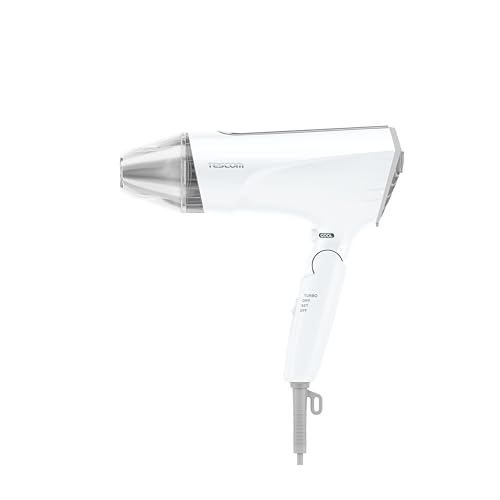
5. Tescom Protect Ion TID2400B — The ¥4,000 Surprise
Tescom is a brand most tourists have never heard of, but it’s a household name in Japan. Their Professional line supplies salons across the country. The TID2400B is their consumer-grade Protect Ion model, and at roughly ¥3,500–¥5,000, it delivers shocking value.
Rated at 1,200W with negative-ion generation, it dries hair competently and produces less frizz than a basic dryer. The build is plasticky compared to Panasonic, and the motor is louder (we’d estimate 78–82 dB vs the Nanoe’s ~72 dB). But for roughly one-tenth the price of a Dyson, the performance-to-cost ratio is remarkable.
Like most budget Japanese dryers, it’s 100V only. US and Canadian tourists can use it directly. Everyone else should pass—or treat it as a Japan-trip-only travel dryer to leave behind or give away.
Where to Buy a Hair Dryer in Japan (and How to Save)
Electronics Mega-Stores
Yodobashi Camera (Akihabara, Shinjuku, Umeda) and Bic Camera (Yurakucho, Shinjuku, Namba) are your best bets. Both offer tax-free purchasing for tourists on items over ¥5,000 (excluding consumables) when you show your passport at checkout. Combined with point-card rewards of 8–10%, you can effectively save 15–18% off sticker price.
Staff in the beauty-appliance section often speak basic English, and many stores now have multilingual product cards. Don’t hesitate to ask them to check voltage compatibility for you.
Don Quijote
Don Quijote stocks popular models but has a smaller selection. Prices are sometimes 5–10% lower than electronics chains, but you won’t earn points. Some locations have a dedicated tax-free counter; others process it at the main register. Lines can be brutal after 8 PM.
Amazon Japan
If you’re staying in Japan for more than a few days, Amazon.co.jp can deliver to your hotel. Create an account (English UI is available), and shipping is often free on Prime-eligible items. This is particularly useful for models that are sold out in physical stores. Check return policies, though—most beauty appliances aren’t returnable once opened.
Should You Carry It Home or Ship It?
A hair dryer is bulky but not heavy. The Panasonic EH-NA0J in its box weighs about 900g total. If your luggage has room, carry it. The box dimensions are roughly 22 × 15 × 10 cm—compact enough to wedge between clothes.
If you’re already maxing out your luggage with other souvenirs (snacks, ceramics, cosmetics), Japan Post’s surface mail (SAL) option costs approximately ¥2,000–¥3,500 to ship a small package to the US or Europe, and takes 2–4 weeks. EMS (express) runs ¥3,500–¥5,000 and arrives in 3–7 days.
Be aware that customs duties in some countries apply to electronics over a certain value. The EU, for example, charges import VAT (typically 19–25% depending on country) on goods valued above €150. A ¥33,000 dryer at current exchange rates is right around that threshold. Factor this into your total cost.
For travelers looking to pack light, our article on packing Japanese souvenirs efficiently covers how to organize fragile and bulky items in a carry-on.
5 Tips for Getting the Most from Your Japanese Hair Dryer
Honorable Mentions: Other Japanese Hair Dryers Worth a Look
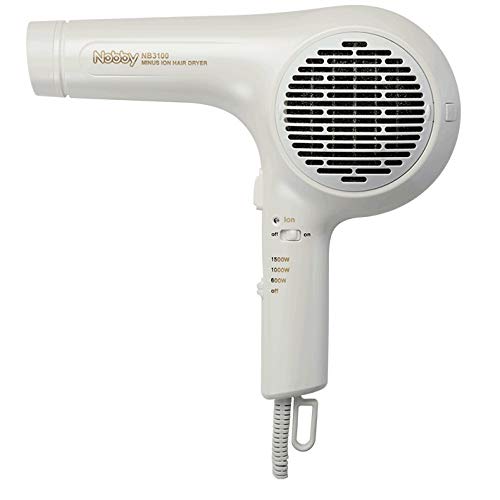
Nobby NB3100
The professional salon workhorse. You’ll find Nobby dryers hanging at stations in roughly 60% of Japanese hair salons. The NB3100 is industrial-strength: 1,500W, built to run 8+ hours a day, with a replaceable filter and motor. At around ¥10,000 in-store, it’s a pure power play. No ion technology, no fancy modes—just incredibly fast drying. 100V only, and the cord is salon-length (3m), which is either a bonus or a nuisance depending on your bathroom layout.
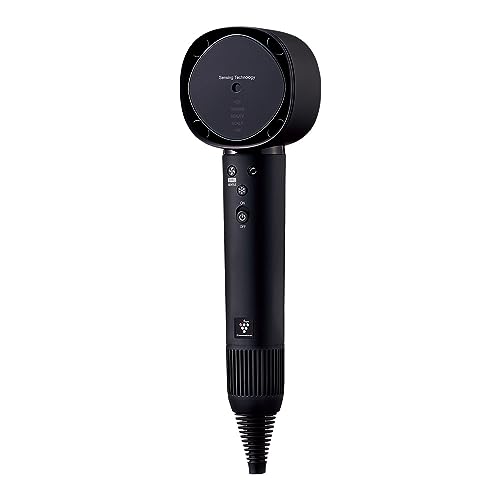
Sharp Plasmacluster IB-WX901
Sharp’s answer to the Nanoe line uses their Plasmacluster ion technology (the same system in their air purifiers). The dryer adjusts airflow and temperature based on its distance sensor—move it closer to your head and it automatically reduces heat. Clever, though the ¥28,000–¥32,000 in-store price tag puts it in Nanoe EH-NA0J territory. 100V only.
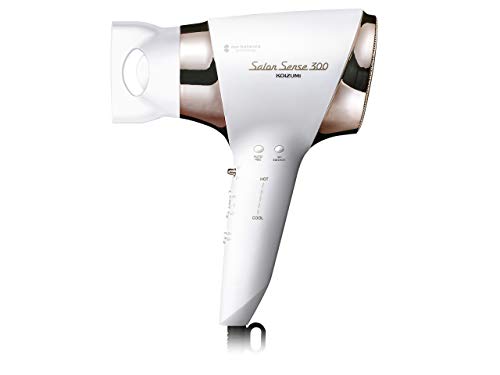
Koizumi Salon Sense 300
Another brand tourists rarely encounter. The Salon Sense 300 features a retractable cord and weighs just 495g—the lightest full-size dryer we’ve seen. At around ¥6,000, it sits between the Tescom budget pick and the Panasonic mid-range. Negative-ion generation, two heat settings, and a surprisingly quiet motor. 100V only.
Frequently Asked Questions
Can I use a Japanese hair dryer in Europe or Australia?
Only if it has a dual-voltage switch (100–240V). Most Japanese dryers are 100V only. Using a 100V dryer on a 220–240V outlet without a step-up transformer will destroy the motor and poses a fire risk. The Panasonic EH-CNA5B is the most popular dual-voltage option with nanoe technology.
Is a Japanese hair dryer cheaper in Japan than buying online?
Generally, yes. The Panasonic EH-NA0J retails for ¥33,000–¥38,000 in Japanese electronics stores. On international Amazon or eBay, resellers list the same model for US$350–$450 (roughly ¥52,000–¥67,000 at mid-2026 rates). With tax-free purchasing and point rewards in Japan, you can save 30–40% compared to importing.
What does “nanoe” actually mean for my hair?
Nanoe is Panasonic’s proprietary technology that generates nano-sized water particles (roughly 5–20 nanometers in diameter) from moisture in the air. These particles are about 1,000 times finer than steam particles. The claimed benefit is that they penetrate the hair cuticle to add moisture from the inside, reducing frizz and improving shine. Independent beauty-industry testing in Japan (e.g., by LDK magazine) has confirmed measurable reductions in static and cuticle damage compared to standard dryers. The effect is most noticeable on color-treated or chemically damaged hair.
Will the warranty work outside Japan?
No. Panasonic, Dyson, and Tescom Japan warranties are domestic-only. The standard warranty period is 1 year. If something breaks after you leave Japan, you’d need to ship the unit back to a Japanese service center or find a third-party repair. Keep your receipt in case, but don’t rely on warranty coverage from abroad.
Can I bring a hair dryer in my carry-on luggage?
Yes. Hair dryers are permitted in both carry-on and checked luggage on all major airlines, including those flying out of Narita and Haneda. There are no lithium battery concerns since hair dryers don’t contain batteries. Keep the box if possible—it makes security screening faster, as the X-ray operator can quickly identify the item.
Is the Panasonic Nanoe dryer sold in the US the same as the Japan model?
No. Panasonic sells a North American Nanoe model (typically the EH-NA65 or similar), but it uses a different generation of nanoe technology and a different body design. The Japan-exclusive EH-NA0J has the latest high-penetration nanoe system, which is not available in the US-market version as of mid-2026. The Japan model also tends to be smaller and lighter.
Disclosure
This article contains affiliate links. We may earn a commission when you buy through them, at no extra cost to you. Every pick is an honest recommendation.
Shop Japanese beauty products