

Japanese Vitamins & Supplements at the Drugstore: What’s Actually Worth Buying in 2026
Updated May 2026 · 14 min read
DHC Vitamin C is a drugstore staple at Matsumoto Kiyoshi — ¥257 for a 60-day supply, which is roughly $1.80. The same dosage from a comparable US brand costs $12–$16 on iHerb. That price gap explains why the supplement aisle is one of the busiest sections in any Japanese drugstore, yet most English-language travel guides skip it entirely.
Japanese drugstore supplements are affordable, tightly regulated under FOSHU and functional-food labeling laws, and sold in convenient 30- or 60-day pouches that slip into a carry-on. But the sheer wall of identical-looking foil packets — hundreds of them, all in Japanese — can freeze anyone in place. This guide sorts the aisle into the categories that matter for tourists: collagen, vitamin C, B-complex, beauty-from-within formulas, and the fatigue-fighters that locals actually repurchase.
Why Japanese Supplements Cost a Fraction of Overseas Equivalents
Three structural factors keep prices low. First, DHC, FANCL, and Kobayashi sell direct-to-consumer through their own branded drugstore sections, cutting out distributor margins. Second, the standard packaging is a resealable foil pouch — no rigid bottle, no cotton filler, no shrink-wrap sleeve — so material costs stay minimal. Third, scale: DHC alone ships over 200 million supplement pouches annually within Japan.
The result is concrete. DHC’s 60-day Multivitamin pouch retails for ¥407 (about $2.80). A comparable Nature Made multivitamin in the US runs $11–$14 for 65 tablets. Even factoring in Japan’s 10% consumption tax, the math is hard to argue with.
One important distinction: Japanese supplements are categorized as “health foods” (健康食品), not pharmaceuticals. They undergo quality testing, but they don’t carry drug-level clinical trial data the way prescription medications do. The labeling system you’ll see most often is 機能性表示食品 (Functional Foods with Function Claims), which means the manufacturer has submitted safety and efficacy evidence to the Consumer Affairs Agency. It’s a notch below FOSHU (特定保健用食品), which requires government review, but still more rigorous than the self-regulated US dietary supplement market.
How to Read a Japanese Supplement Pouch in 30 Seconds
Every DHC, FANCL, and Kobayashi pouch follows the same layout. Once you crack the pattern, you can shop independently without a translation app.
The 日分 number is your best friend. A 90日分 pouch of DHC Vitamin C costs ¥361 — that’s three months for the price of a convenience-store onigiri. Grabbing the larger day-count pouches gives you the lowest per-day cost and the best souvenir-to-suitcase-space ratio.
Pro Tip
Vitamin C: The ¥257 Staple That Starts Every Cart
DHC Vitamin C is the single best-selling supplement in Japanese drugstores, and for good reason. Each capsule delivers 500 mg of ascorbic acid plus 50 mg of vitamin B2 to aid absorption. The 60-day pouch (120 capsules) sells for ¥257 at most Matsumoto Kiyoshi, Welcia, and Sundrug locations. Online, the same product exported to the US fetches $8–$12 on Amazon.

FANCL also makes a vitamin C tablet (¥350 for 30 days) that includes rose hip extract and hesperidin for slower release. It costs more per day (¥11.7 vs ¥4.3), but some users prefer the smaller tablet size. If you already have a vitamin C you like, DHC’s version is the pure value play; FANCL’s is the comfort upgrade.

B-Complex and Alinamin: The Fatigue Fighters Locals Swear By
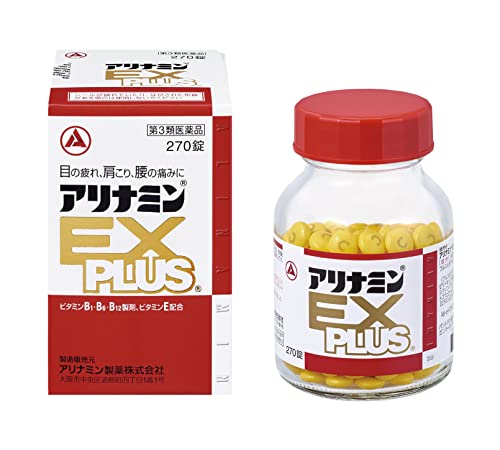
If you ask a Japanese office worker what supplement they take, the answer is usually Alinamin, not a multivitamin. Alinamin EX Plus is a quasi-drug (第3類医薬品) containing fursultiamine (a fat-soluble B1 derivative developed by Takeda), B6, B12, and vitamin E. It’s marketed for eye fatigue, shoulder stiffness, and general tiredness — the holy trinity of complaints for anyone spending 10 hours at a desk.
A 60-tablet bottle of Alinamin EX Plus runs about ¥1,980 at drugstores. That’s a 20-day supply at the recommended 3-tablets-per-day dose. It’s not cheap by DHC standards, but the fursultiamine formulation is patented and unavailable outside Japan in this exact form. Overseas equivalents use benfotiamine, which is structurally similar but not identical.

For a budget B-complex without the quasi-drug classification, DHC Vitamin B-Mix costs ¥228 for 60 days. It covers B1 through B12, biotin, and folic acid. The dosages are moderate (B1 at 40 mg, B2 at 30 mg), but at ¥3.8 per day, it’s essentially free insurance for anyone eating mostly convenience-store food during their trip. Locals know the DHC B-Mix pouch by its red-orange color — it’s usually stocked right next to the Vitamin C.
There’s a third fatigue-fighter that predates both, and you don’t even need to find the supplement aisle for it — check the small rack beside the register.

Japanese Collagen Supplements: Powder, Tablets, and Drinks Compared
Collagen is the single largest sub-category in the Japanese beauty supplement market. Meiji, FANCL, Shiseido, and DHC all compete here, and the format differences matter more than the brand name.
| Format | Example Product | Price (30-day) | Daily Collagen | Best For |
|---|---|---|---|---|
| Powder | Meiji Amino Collagen | ¥2,100–¥2,400 | 5,000 mg | Cost per gram; mixes into coffee or soup |
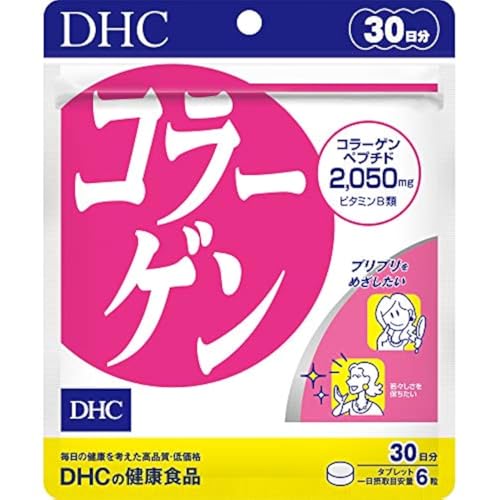
| Tablets | DHC Collagen 60-day | ¥680 | 2,050 mg | Convenience; no taste, no mixing |
| Drink | Shiseido The Collagen | ¥2,700 (10 bottles) | 1,000 mg | Taste; adds CoQ10 and hyaluronic acid |
| Jelly Stick | FANCL Deep Charge Collagen Jelly | ¥3,100 (10 sticks) | 2,600 mg (HTC collagen) | Travel-friendly; no water needed |
The decision rule: if you want the highest collagen-per-yen, buy Meiji Amino Collagen powder (roughly ¥14 per 1,000 mg). If you hate mixing powders and just want something to toss in your bag, DHC Collagen tablets cost ¥680 for 60 days and require zero effort. The Shiseido drinks are the weakest value proposition — 1,000 mg of collagen at ¥270 per bottle, plus they’re heavy to carry.


If a 60-day commitment feels premature, DHC also sells a 30-day starter size — the gold pouch stacked at eye level in every DHC drugstore corner.
One honest caveat: the clinical evidence for oral collagen supplements is still mixed. A handful of small Japanese studies show modest improvements in skin hydration after 4–8 weeks of daily use at 5,000–10,000 mg. But the effect sizes are small, and the studies are often industry-funded. If you’re buying collagen for enjoyment or as a gift, the price makes it a low-risk experiment. Just don’t expect miracles from a single 30-day can.
Beauty-From-Within Supplements: Placenta, Ceramides, and Astaxanthin
The “beauty supplement” sub-aisle is where Japanese drugstores diverge most dramatically from Western equivalents. Three ingredients dominate here, each with a different evidence base.
Ceramide Supplements
Oral ceramides are FANCL’s flagship beauty category. Their Moisture Barrier supplement (¥1,500 for 30 days) contains rice-derived glucosylceramide and has functional-food claim status for “maintaining skin moisture.” The logic: ceramides are a core component of the skin’s lipid barrier, so ingesting them may support moisture retention from the inside. A few Japanese RCTs suggest 0.6–1.8 mg daily glucosylceramide can measurably reduce transepidermal water loss after 4–12 weeks. If you’re already invested in ceramide-based skincare like Curel or Matsuyama, the oral version is a logical extension at a modest price.

Astaxanthin
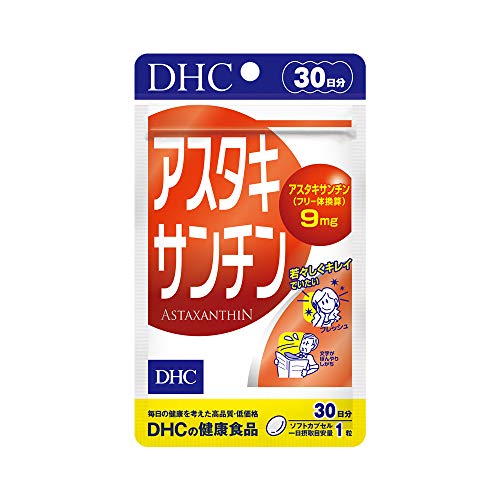
DHC’s Astaxanthin capsules (¥1,539 for 30 days, often discounted to ¥1,153) sit in the upper-mid price range for DHC. Astaxanthin is a carotenoid antioxidant derived from Haematococcus algae. DHC’s formulation delivers 6 mg of free astaxanthin per daily dose. Some dermatology studies associate astaxanthin with UV damage reduction and wrinkle depth improvement, though the effect requires consistent use over 8–16 weeks. DHC runs frequent 20–25% promotions on this product through their own retail counters inside drugstores.
Placenta Extract
Placenta supplements (from porcine or equine sources) are a uniquely Japanese beauty category. DHC’s Placenta capsules cost ¥780 for 30 days. The claimed benefits center on skin brightness and hormonal balance. The evidence base here is thinner than for ceramides or astaxanthin — most studies are small, open-label, and Japan-only. If you’re new to Japanese beauty supplements, ceramides or astaxanthin offer stronger supporting data. Placenta is more of a cultural curiosity than a must-buy.
For a broader overview of what’s worth grabbing in the beauty aisles, check out our Japanese drugstore beauty guide, which covers skincare products that pair well with these supplements.
Fermented Foods and Gut-Health Supplements
Japan’s relationship with fermented foods runs deep — miso, natto, amazake, pickled vegetables — and the supplement aisle reflects this. Two products stand out for tourists.
DHC Sustained-Release Lactobacillus (持続型ビフィズス菌) costs ¥540 for 30 days. It delivers Bifidobacterium longum BB536 in an enteric-coated capsule designed to survive stomach acid. BB536 is one of the most-studied probiotic strains in Japan, with FOSHU-level claims for intestinal regularity.

Kobayashi Pharmaceutical’s Naishi Help(¥1,800–¥2,400 for 30 days) is a functional food targeting visceral fat reduction via Lactobacillus gasseri SBT2055. It carries a legitimate functional-food claim and is one of Kobayashi’s top sellers, though the price per day (¥60–¥80) is significantly higher than DHC’s probiotic.

Heads Up
For travelers dealing with jet-lag digestion issues, a simple 30-day pouch of DHC’s lactobacillus is light (under 20 g), affordable, and doesn’t require refrigeration. Start taking it a few days before your flight for best results.
DHC vs FANCL vs Kobayashi: Which Brand to Prioritize
All three brands occupy different price tiers and philosophies. Understanding the difference saves you from buying randomly.
| Brand | Price Range (30-day) | Packaging | Strength | Best For |
|---|---|---|---|---|
| DHC | ¥230–¥1,500 | Foil pouches, color-coded | Price, range (100+ SKUs) | Budget buyers, basics, gifting |
| FANCL | ¥700–¥3,500 | White pouches, minimal design | Preservative-free, clinical positioning | Beauty-from-within, ceramides |
| Kobayashi | ¥1,000–¥3,000 | Boxed bottles, pharmacy feel | Functional-food claims, gut health | Targeted health issues (visceral fat, joints) |
If you’re a first-time visitor with limited luggage space, start with 3–5 DHC pouches covering your basics (Vitamin C, B-Mix, Collagen). Add one or two FANCL specialty products (ceramides if you have dry skin, or their HTC Collagen jelly sticks for travel). Skip Kobayashi unless you have a specific gut-health or joint concern — their products are heavier (bottles, not pouches) and pricier per day.
Where to Buy: Store-by-Store Pricing and Tax-Free Tips
Supplement prices vary less across drugstore chains than skincare does, because DHC and FANCL enforce tighter retail pricing. Still, there are meaningful differences.
Matsumoto Kiyoshi / Cocokara Fine
The largest drugstore chain in Japan (after merging with Cocokara Fine). Most tourist-heavy locations offer tax-free shopping for purchases over ¥5,000 of consumables. Supplement pouches count as consumables. Staff at Shibuya, Shinjuku, and Ginza locations are accustomed to English-speaking customers and can help locate products. The DHC and FANCL sections are typically on the same aisle, near the back of the ground floor.
Don Quijote (Donki)
Donki stocks a smaller supplement range but occasionally discounts DHC pouches below standard retail — DHC Vitamin C 60-day pouches have turned up at ¥230 in Donki Shibuya vs ¥257 at Matsumoto Kiyoshi down the street. The trade-off: Donki’s layout makes finding anything a treasure hunt. Supplements are often mixed in with snacks and beauty products on random shelves.
Airport and Hotel Shops
Narita and Haneda airside shops stock DHC and FANCL, but pricing runs 15–30% above standard drugstore levels. A DHC Collagen 60-day pouch that costs ¥680 at Welcia was ¥890 at Narita Terminal 2. Buy before you reach the airport.
Pro Tip
Luggage and Customs: How Many Supplements Can You Bring Home
Japanese supplements in foil pouches are remarkably light. Ten DHC 60-day pouches weigh roughly 600–800 g total — less than a single bottle of shampoo. The pouches also flatten, making them ideal for filling gaps in packed luggage.
US customs (CBP) allows personal-use quantities of dietary supplements without restriction. There’s no formal limit, but “personal use” generally means a 90-day supply per product. Bringing 20 pouches of the same DHC supplement could attract questions about resale intent. For most tourists buying 3–8 different products, this isn’t an issue.
Australia, Canada, and the EU have stricter rules on certain ingredients. Australia’s TGA, for example, may flag products containing DHEA or melatonin, which are prescription-only there. Standard vitamins, collagen, and B-complex supplements pass through without issue. Check your home country’s import rules for anything that sounds pharmaceutical-grade, like Alinamin (which is a quasi-drug in Japan).
If you prefer to order from home rather than carry everything, our guide to Japanese proxy shopping services covers how to buy from Japanese drugstore websites and ship internationally.
What to Skip: Supplements That Aren’t Worth the Hype
Not everything in the supplement aisle deserves your yen. A few categories consistently underdeliver relative to their price or claims.
Collagen drinks in single-serve bottles— at ¥250–¥350 per bottle and only 1,000 mg of collagen, they’re among the worst value per milligram. Meiji’s powder delivers 5x the collagen at a lower daily cost. The drinks exist for convenience, but if you’re bringing supplements home, the powder or tablets make far more sense.
Generic “enzyme” (酵素) supplements— these are everywhere, often in ornate packaging with 100+ listed plant extracts. The problem: “enzyme” supplements in Japan are typically fermented plant extracts, not actual digestive enzymes. The clinical support is thin, and the ingredient lists are so broad that individual dosages are negligible. At ¥2,000–¥4,000, they’re one of the worst cost-to-evidence ratios in the aisle.
Royal jelly in premium packaging— often marketed as a luxury health gift at ¥3,000–¥8,000. Royal jelly has some interesting properties in cell-culture studies, but human evidence for skin or energy benefits is limited. The high price reflects marketing and gifting culture more than formulation quality.
A Realistic Shopping List: ¥3,000 for 6 Months of Basics
Here’s a solid trip haul, totaling roughly ¥3,000 (about $20) for nearly six months of daily supplementation:
- DHC Vitamin C 90-day — ¥361
- DHC Vitamin B-Mix 60-day — ¥228
- DHC Collagen 60-day — ¥680
- DHC Zinc 60-day — ¥267
- Meiji Amino Collagen powder refill — ¥1,800 (overlaps with tablet collagen, but powder works at home and tablets on the road)

Total: ¥3,336. Total weight: under 500 g. That’s less than a large bottle of sunscreen and covers vitamin C, B-complex, collagen, and zinc for roughly 60–90 days depending on the product. Individually, none of these would cross the ¥5,000 tax-free threshold, but combined with skincare purchases, they easily push you over.
Frequently Asked Questions
Are Japanese supplements safe for foreigners to take?
Standard Japanese supplements (vitamins, collagen, probiotics) contain the same active ingredients used globally. The regulatory framework classifies them as health foods, which undergo safety testing through Japan’s Consumer Affairs Agency. Quasi-drugs like Alinamin face additional efficacy requirements. If you have specific allergies, check the 原材料名 (ingredient list) on the back — common allergens like shrimp, crab, soy, wheat, and milk are listed even when present in trace amounts. Japan’s allergen labeling is more thorough than most countries.
Can I buy DHC supplements at convenience stores?
Yes, but with limitations. 7-Eleven, FamilyMart, and Lawson carry a small selection of DHC pouches (usually Vitamin C, Collagen, and one or two others). Prices are identical to drugstores, but the range is 5–10 SKUs vs 80–100+ at a dedicated drugstore. For anything beyond the basics, head to Matsumoto Kiyoshi, Welcia, or Sundrug.
What’s the difference between FOSHU and 機能性表示食品?
FOSHU (特定保健用食品, or “Tokuho”) requires government review and approval of health claims. You’ll see a distinctive FOSHU seal on the package. 機能性表示食品 (Foods with Function Claims) requires the manufacturer to submit evidence to the Consumer Affairs Agency, but doesn’t require government approval — only notification. Both are more regulated than generic “health food” supplements, but FOSHU is the higher bar. In practice, most tourist-friendly supplements (DHC, FANCL basics) carry neither badge; the functional-food claims appear more on Kobayashi and FANCL’s premium lines.
Do supplements qualify for tax-free shopping?
Yes. Supplements are classified as consumables (消耗品) for tax-free purposes. You need to spend ¥5,000 or more in a single transaction at a tax-free registered store. The cashier will seal your supplements in a special bag and staple the receipt to your passport. Don’t open the sealed bag until you leave Japan, or you may be asked to pay the 10% tax at departure.
How long do Japanese supplement pouches last?
Most DHC and FANCL pouches have a shelf life of 1.5–2 years from the manufacturing date. The expiration date is printed on the back in YYYY/MM format (e.g., 2028/03). Because turnover in Japanese drugstores is rapid, you’ll typically find products with 18+ months remaining. FANCL’s preservative-free products tend to have slightly shorter shelf lives (12–18 months), so check the date before buying in bulk.
Is Alinamin available for purchase by tourists?
Yes. Alinamin is a quasi-drug (第3類医薬品), the lowest tier of OTC medication in Japan. No prescription is needed, and tourists can buy it freely at any drugstore. It’s also eligible for tax-free purchase. The only difference from standard supplements is that the packaging includes a more detailed drug-facts panel and dosage warnings in Japanese. A 60-tablet bottle is the most practical size for tourists; the 270-tablet bottle exists but weighs considerably more.
Disclosure
This article contains affiliate links. We may earn a commission when you buy through them, at no extra cost to you. Every pick is an honest recommendation.
Shop Japanese beauty products