

How to Buy a Japanese Kitchen Knife (Without Getting Ripped Off)
Updated April 2026 · 10 min read
Japan Shop Helper Editorial
Tokyo-based · prices & fees verified on real orders
Japanese kitchen knives are the single best thing you can buy from Japan. A ¥5,000 Japanese knife will outperform a $100 Western knife. That's not an exaggeration.
But the market is full of overpriced tourist traps and fake "Japanese steel." You'll see ¥15,000 knives at Narita Airport that are worth maybe ¥3,000. And Amazon is flooded with Chinese-made knives branded with Japanese-sounding names.
Here's what you actually need to know.
Steel types explained (in 30 seconds)
Every knife forum will argue about steel for 800 posts. You don't need that. Here's the cheat sheet:
VG-10 (stainless)
The safe pick. Great edge, easy to maintain, won't rust. This is what most people should buy. Tojiro, Shun, and most mid-range knives use this.
AUS-10 (stainless)
Similar to VG-10 but slightly softer. A bit easier to sharpen. You'll find this in budget-friendly options. Perfectly fine for home cooking.
White Steel #2 / Shirogami (carbon)
Takes a scary-sharp edge. But it rusts. Fast. Like, you-left-it-wet-for-five-minutes fast. For experienced knife users only.
Blue Steel #2 / Aogami (carbon)
The premium carbon option. Better edge retention than White Steel. Still rusts, but slightly less aggressively. Professional-level steel.
If you're reading this guide, get VG-10 or AUS-10. Seriously. Carbon steel knives are great, but they need constant attention. We'll cover carbon maintenance at the end for those who want to go down that road.
Which knife to start with

Three knives dominate Japanese kitchens. You only need one to start.
Gyuto (chef's knife)
Best first knifeThe Japanese version of a Western chef's knife. 210mm is the standard. Lighter and thinner than a Wusthof or Henckels. If you only buy one knife, buy this one.
Santoku (all-purpose)
Shorter and wider than a Gyuto. 165-180mm. Better for people with smaller hands or smaller cutting boards. Slightly less versatile but easier to handle.
Nakiri (vegetable knife)
Flat blade, no tip. Built specifically for chopping vegetables. Incredible for that purpose, useless for everything else. Buy it as your second knife, not your first.
Pro Tip
Knife types at a glance
| Type | Best For | Blade Length | Difficulty | Price Range | Tourist Pick |
|---|---|---|---|---|---|
| Gyuto (牛刀) | All-purpose, meat & veg | 210–240mm | Beginner | ¥5,000–20,000 | ★★★★★ Best first |
| Santoku (三徳) | All-purpose, veg-heavy | 165–180mm | Beginner | ¥4,000–15,000 | ★★★★☆ |
| Nakiri (菜切り) | Vegetables only | 165–180mm | Beginner | ¥4,000–12,000 | ★★★☆☆ |
| Petty (ペティ) | Fruit, small tasks | 120–150mm | Beginner | ¥3,000–8,000 | ★★★☆☆ |
| Yanagiba (柳刃) | Sashimi / raw fish | 270–330mm | Advanced | ¥8,000–30,000 | ★★☆☆☆ |
Prices are approximate Tokyo retail / Amazon Japan at time of writing.
Where to buy
| Location | Price Level | Selection | English Support | Best For |
|---|---|---|---|---|
| Amazon Japan | ★ Lowest | Excellent (all brands) | Yes — app / website | Overseas buyers |
| Kappabashi, Tokyo | ★★★ Medium | Excellent (hands-on) | Limited | In-person buying |
| Department stores | ★★★★★ High | Curated, luxury | Good | Gifts, premium picks |
| Don Quijote | ★★ Low | Limited, tourist brands | Minimal | Budget / last-minute |
Kappabashi prices are in line with or slightly above Amazon Japan. Department store prices vary significantly by brand.
Amazon Japan (best for overseas buyers)
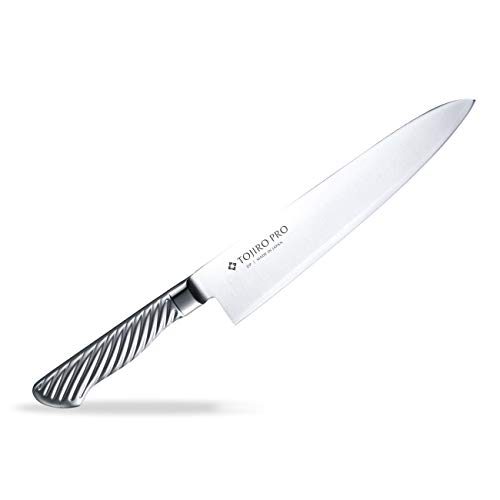
Sounds boring. But Amazon Japan has the best prices on mainstream brands like Tojiro, Kai, and Fujiwara. A Tojiro DP Gyuto 210mm currently runs ¥12,000–¥16,500 (~$80–110) — still meaningfully less than what the same knife sells for through Western retailers, and the gap widens as you move up the range.
Amazon Japan ships some knives directly overseas. For others, use a forwarding servicelike Tenso. Either way, you're saving 40-60% compared to buying the same knife in the US or Europe.
Kappabashi Street, Tokyo (if you're visiting)
The famous "kitchen town" district near Asakusa. Dozens of knife shops. Kamata, Tsubaya, and Kama-Asa are the big three. You can handle the knives, get advice from staff, and sometimes get engraving done on the spot.
Prices are slightly higher than Amazon Japan. But you get to hold the knife before buying. That matters more than people think.
Avoid: Airport shops
Narita and Haneda gift shops sell knives at 2-3x markup. That ¥15,000 "premium Japanese knife" in the departure lounge? It's a ¥5,000 knife in nice packaging. The r/japanlife community has been warning about this for years.
Avoid: "Japanese steel" on Amazon US/eBay
If the brand name sounds vaguely Japanese but you can't find any information about the company in Japanese, it's probably made in China. Look for specific maker names: Tojiro, Misono, Masamoto, Fujiwara, Kai/Shun, Sakai Takayuki. These are real companies.
The ¥5,000 sweet spot
Here's the truth about knife prices that manufacturers don't want you to hear: for home cooking, anything above ¥15,000 is diminishing returns.
The ¥3,000–8,000 range ($20–53) is where value peaks. At this price you get VG-10 or AUS-10 steel, proper heat treatment, and a comfortable handle. The edge will be excellent out of the box.
Going from ¥5,000 to ¥15,000 gets you better fit and finish, maybe Damascus cladding (which is purely aesthetic), and a nicer handle. Going from ¥15,000 to ¥50,000 gets you... bragging rights, mostly. The steel performance difference is marginal for home use.
Price tiers at a glance:
- ¥3,000–5,000: Excellent daily drivers. Tojiro DP, Fuji Narihira.
- ¥5,000–10,000: Best balance of quality and value. This is where most of r/chefknives lands.
- ¥10,000–20,000: Premium handles, better aesthetics. Misono UX10, Sakai Takayuki.
- ¥20,000+: Artisan makers, custom handles, hand-forged. Beautiful but overkill for 99% of home cooks.

Shipping knives overseas
Good news: it's easier than you'd think. Some rules to know:
- Most countries allow kitchen knives via mail.Kitchen knives are tools, not weapons. EMS, surface mail, and most courier services will ship them. The US, UK, Canada, Australia—all fine.
- Some countries restrict blade length. The UK has specific rules about blade length for import. Check your country's customs regulations before ordering.
- Amazon Japan sometimes ships direct. Check whether the listing offers international shipping. If it does, that's the easiest path.
- Forwarding services handle it well. Tenso and Buyee both ship knives regularly. They know how to package them.
Pro Tip
Don't forget these
If you're ordering a knife from Japan, throw these in. They weigh almost nothing and save you money vs buying locally.


Carbon steel: the honest truth
Plenty of readers are going to buy a carbon steel knife anyway. So here's what you're signing up for.
Heads Up
The care routine:
- Wipe the blade dry immediately after every use. Not in five minutes. Now.
- Never put it in the dishwasher. Ever. This goes for stainless too, honestly.
- Apply a thin layer of camellia oil (tsubaki oil) before storing.
- Don't cut acidic foods for extended periods—citrus, tomatoes, onions all accelerate rust.
- Store it on a magnetic strip or in a blade guard. Not loose in a drawer.
Spoiler: most people who buy carbon steel as their first Japanese knife end up buying a stainless one within six months. Not because carbon is bad—it's phenomenal—but because the maintenance is a real commitment.
Start with VG-10 stainless. Use it for six months. If you find yourself getting into sharpening and knife care, then consider carbon. That's the smart progression.
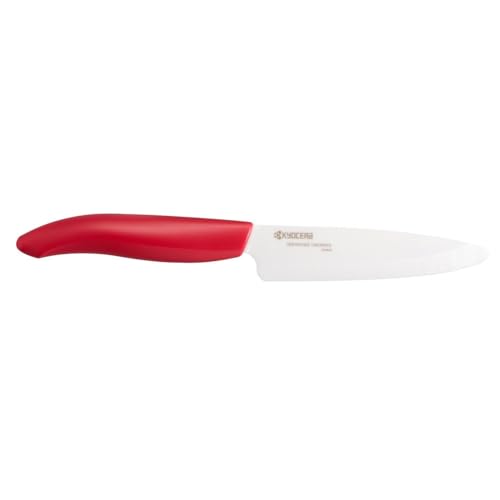
And at the opposite end of the maintenance spectrum entirely, there’s ceramic — a niche option worth understanding before you dismiss it.
One more thing: sharpening
A Japanese knife is only as good as its edge. They're harder steel than Western knives, which means they hold an edge longer but need a whetstone when they do dull.
Get a 1000/3000 grit combination whetstone. King and Shapton are both good. Total cost from Amazon Japan: ¥2,000–4,000. Learn the technique from YouTube—it takes about 30 minutes of practice.
Do NOT use a pull-through sharpener. Those are designed for softer Western steel and will destroy a Japanese edge. A honing steel is fine for daily maintenance, but actual sharpening needs a stone.
The short version
Buy a 210mm Gyuto in VG-10 steel from Amazon Japan. Spend ¥5,000–8,000. Ship it via EMS for ¥3,000. Total cost: $50–70. You now have a knife that's better than anything you'd find at Williams-Sonoma for $150.
That's it. That's the guide. Everything else is details.
Frequently Asked Questions
What is the best Japanese knife for a beginner?
A 210mm Gyuto (chef’s knife) in VG-10 stainless steel is the best starting point for most people. It handles vegetables, meat, and fish, resists rust, and holds an edge far longer than a Western knife. Expect to pay ¥5,000–8,000 on Amazon Japan, which still beats a $150 Western knife on performance.
Can you ship Japanese kitchen knives overseas?
Yes. Kitchen knives are tools, not weapons, and the US, UK, Canada, and Australia all allow them via mail. EMS, surface mail, and most couriers will carry them for about ¥3,000 ($20) per knife. The UK restricts blade length on imports, so check your country’s customs rules first. Forwarding services like Tenso and Buyee ship knives regularly and know how to package them.
Should I buy carbon steel or stainless steel?
Start with VG-10 stainless. Carbon steel (White Steel, Blue Steel) takes a phenomenal edge but rusts easily — leave it wet for ten minutes and you’ll get rust spots, and it needs wiping dry immediately after every use plus a coat of camellia oil before storage. Most people who buy carbon as their first Japanese knife switch to stainless within six months.
How do I sharpen a Japanese knife?
Use a 1000/3000 grit combination whetstone (King and Shapton are both good), which costs ¥2,000–4,000 on Amazon Japan. Japanese knives use harder steel that holds an edge longer but needs a stone when it dulls. Never use a pull-through sharpener — they are made for softer Western steel and will destroy a Japanese edge.
Where should I buy a Japanese knife?
Amazon Japan is the easiest option and sometimes ships internationally directly — check the listing. If a knife you want doesn’t ship to your country, a forwarding service such as Tenso or Buyee will receive it at a Japanese address and forward it on, packaging it safely for transit.
Disclosure
This article contains affiliate links. We may earn a commission when you buy through them, at no extra cost to you. Every pick is an honest recommendation.
Buy Japanese kitchen gear