
Japan Campervan Rentals Compared: Best Companies vs Ones to Avoid
Updated June 2025 · 14 min read
Japan Shop Helper Editorial
Tokyo-based · prices & fees verified on real orders
Road-tripping through Japan in a campervan sounds like a dream—and it can be. Winding through the mountains of Hokkaido, parking at a michi-no-eki (roadside station) overlooking the Sea of Japan, waking up to the sound of waves on a Shikoku coast. But if you rent from the wrong company, that dream can become an expensive nightmare.
A viral Reddit thread in the r/JapanTravel community highlighted exactly this scenario: a tourist was hit with surprise damage charges, opaque insurance terms, and a company that refused to communicate in English once the contract was signed. The post resonated because it exposed a real gap—while Japan’s public transit is world-class, campervan rental remains a niche market with limited English support and wildly inconsistent quality.
This article breaks down the major campervan rental companies operating in Japan, compares their pricing and English-language support, and flags the red flags you need to watch for before handing over your credit card. Whether you’re planning a two-week Hokkaido circuit or a quick weekend escape from Tokyo, you’ll find concrete, practical information here.
Why a Campervan Makes Sense in Japan (and When It Doesn’t)
Japan’s rail network is fast, reliable, and covers most major cities. But it has limits. If you want to explore the Noto Peninsula, the backroads of Kyushu, or the remote onsen towns of Tohoku, a car—or better yet, a campervan—opens up parts of Japan that trains simply don’t reach efficiently.
A campervan also saves money on accommodation if you plan your stops carefully. Many of Japan’s 1,200+ michi-no-eki (roadside stations) allow overnight parking for free, and auto-camping grounds typically charge ¥1,000–¥3,000 per night—a fraction of hotel costs.
That said, a campervan is a poor choice for exploring cities like Tokyo, Osaka, or Kyoto. Traffic is dense, parking is expensive (¥300–¥600 per hour in central areas), and public transit handles urban travel far better. The sweet spot: use trains for cities, then pick up a campervan from a regional hub to explore the countryside.
Best Regions for Campervanning
Hokkaidois the undisputed king of Japan campervan culture. Wide roads, fewer cars, stunning national parks, and a robust network of campgrounds make it the ideal first-timer destination. Summer (July–September) is peak season.
Kyushu offers onsen culture, volcanic landscapes, and a milder climate that extends the camping season into November. Shikoku is smaller but has excellent coastal routes and the 88 Temple Pilgrimage trail, which many campervanners follow at a leisurely pace. Tohokuis underrated—fewer tourists, dramatic autumn foliage, and some of the best hot springs in the country.
What You Need Before You Rent
Before comparing companies, make sure you meet Japan’s legal requirements for driving. The minimum driving age in Japan is 18. Foreign tourists need either a valid International Driving Permit (IDP) based on the 1949 Geneva Convention or, for citizens of Belgium, France, Germany, Monaco, Switzerland, and Taiwan, an official Japanese translation of their home license.
Heads Up
If you need a Japanese translation of your license, the Japan Automobile Federation (JAF) provides this service at their offices across Japan, typically for around ¥4,000. Processing takes about two weeks by mail, so plan ahead or visit a JAF office in person.
Your IDP is valid for up to one year from your date of entry into Japan. You must also carry your original home-country license alongside the IDP at all times while driving.
The Major Campervan Rental Companies Compared
Japan’s campervan rental market ranges from large operations with fleet management systems to family-run shops with a handful of vans. Below are the most commonly recommended (and commonly complained about) options for English-speaking tourists.
1. Japan Campers (Recommended)
Based in Narita and Chitose (Hokkaido), Japan Campers is one of the most foreigner-friendly operations. Their website is fully in English, booking is straightforward, and staff communicate in English at both pickup and drop-off. Vehicles range from compact two-person vans to larger models sleeping four to five.
Pricing:Expect ¥10,000–¥18,000 per day for a compact van in off-peak, rising to ¥15,000–¥25,000 in peak summer. Their insurance packages are clearly explained, with a CDW (Collision Damage Waiver) typically adding ¥1,500–¥2,000 per day. They also offer an NOC (Non-Operation Charge) waiver that caps your liability if the van needs repairs.
Strengths: Clear English documentation, transparent pricing, good vehicle condition, airport-adjacent locations. Weaknesses: Limited pickup locations (mainly Narita and Chitose), smaller fleet that books out quickly in summer.
2. Dream Drive (Recommended with Caveats)
Dream Drive aggregates vehicles from multiple owners and smaller rental shops across Japan. Think of it as an Airbnb for campervans. This gives you more pickup/drop-off flexibility—locations span from Sapporo to Okinawa—but the experience varies dramatically depending on the individual vehicle owner.
Pricing:Ranges widely. You can find older kei-vans for ¥5,000–¥8,000 per day or newer, fully-equipped rigs for ¥20,000+. Insurance terms differ by listing, which is where things get tricky. Always read the specific policy for each vehicle.
Strengths: Huge selection, many locations, competitive prices. Weaknesses: Inconsistent quality, English support depends on the owner, insurance terms vary.
3. Campingcar Rental Center
A mid-sized operation with locations in Tokyo, Osaka, Fukuoka, and Sapporo. They carry a range of vehicles from compact vans to large motorhomes. English support exists but can be limited to email—phone calls may default to Japanese-only staff.
Pricing:¥12,000–¥30,000 per day depending on vehicle class and season. Insurance is bundled, though upgrading to full coverage costs an additional ¥2,000–¥3,000 per day. Drop-off at a different location incurs a one-way fee, often ¥20,000–¥50,000 depending on distance.
4. Road Trek Japan
A smaller, foreigner-focused company based primarily in Hokkaido. They receive positive reviews for personal service and well-maintained vehicles. However, their fleet is small, and availability during July–August is limited. Book three to four months ahead for summer trips.
Pricing:¥12,000–¥20,000 per day, with straightforward insurance packages. They include bedding, cooking equipment, and sometimes camping chairs at no extra charge.
5. Budget Options: Kei-Van Rentals
Several local shops rent out converted kei-vans (mini vehicles with 660cc engines). These are cheap—sometimes as low as ¥3,000–¥5,000 per day—but tiny. You’ll fit a single person or a very close couple. They struggle on expressways and mountain passes, and air conditioning can be weak. Think of them as a sleeping-pod on wheels.
Pro Tip
Red Flags: Companies and Practices to Avoid
The Reddit thread that sparked much of this discussion centered on a common pattern: a rental company that seemed fine during booking but turned hostile when damage was reported (or fabricated). Here are the specific warning signs to watch for.
No Written English Contract
If the rental company can’t provide the full contract terms in English before you sign, walk away. Some companies present a Japanese-only document at pickup and pressure you to sign immediately. You have no way to verify what you’re agreeing to. A reputable company will email you English terms in advance.
Vague or Missing Insurance Details
Japan’s mandatory vehicle insurance covers third-party liability, but it doesn’t cover damage to the rental vehicle itself. CDW (Collision Damage Waiver) and NOC (Non-Operation Charge) waivers are separate, and some companies obscure these terms. If a company can’t clearly explain your maximum out-of-pocket liability in yen, that’s a red flag.
Pre-Existing Damage Not Documented
Heads Up
Cash-Only Deposits
A company that demands a large cash deposit (¥50,000+) at pickup and won’t accept credit cards is harder to dispute if they withhold your money. Credit card chargebacks offer a layer of consumer protection. Stick with companies that process deposits on credit cards.
No Online Reviews from English Speakers
If you can’t find a single English-language review on Google, TripAdvisor, or Reddit, be cautious. This doesn’t automatically mean the company is bad, but it does mean you’re going in blind. At minimum, look for Japanese reviews on Google Maps and run them through a translator.
Full Cost Breakdown: What a Campervan Trip Really Costs
Rental fees are just one part of the equation. Here’s a realistic daily budget for a campervan trip in Japan, based on a 10-day Hokkaido circuit for two people in a mid-range van.
Vehicle rental: ¥15,000/day × 10 days = ¥150,000
CDW insurance: ¥2,000/day × 10 days = ¥20,000
Fuel: Roughly 800 km total, ~8 km/liter, gasoline at ¥175/liter = ¥17,500
Expressway tolls: Variable, but Hokkaido has fewer toll roads. Budget ¥5,000–¥10,000 for the trip
Campgrounds: 6 nights at ¥2,000 + 4 nights free at michi-no-eki = ¥12,000
Food and supplies: Cooking in the van saves money—budget ¥3,000/day for two = ¥30,000
Onsen visits:¥500–¥800 per person, every other day = ¥5,000
Total for 10 days, 2 people: ~¥240,000–¥250,000 (roughly $1,600–$1,700 USD).That’s about ¥12,000–¥12,500 per person per day, which is competitive with budget hotel travel once you factor in accommodation savings.
Pro Tip
Essential Gear to Bring or Buy in Japan
Most rental campervans come with basic bedding and a small cooking setup. But “basic” varies wildly between companies. Some provide a full kitchen kit; others give you a mattress and nothing else. Pack or purchase these items to fill the gaps.
Beyond a stove, bring or buy a headlamp (essential for nighttime campground arrivals), a microfiber towel for onsen visits, and a portable power bank rated at 20,000 mAh or higher for keeping devices charged when the engine is off.

Japanese 100-yen shops (Daiso, Seria, Can*Do) are your best friend for cheap camping supplies. You can pick up cutting boards, utensils, storage containers, clotheslines, laundry bags, and mosquito coils for pocket change. Hit one up in the first city you pass through.

Where to Sleep: Michi-no-Eki, Campgrounds, and RV Parks
Japan has a layered system of overnight parking options, and understanding the etiquette around each is critical. Getting it wrong can mean a knock on your window at 2 AM or, worse, contributing to the backlash that’s making some areas ban overnight campervan parking.
Michi-no-Eki (Roadside Stations)
Japan has over 1,200 michi-no-eki, and many tolerate overnight parking. However, “tolerate” is the key word—it’s not officially encouraged, and putting out chairs, tables, or cooking equipment in the parking lot crosses the line from “resting” to “camping,” which is not allowed. Stay discreet: park, sleep, and leave by morning. Use facilities respectfully.
Auto-Camping Grounds
These are designated campgrounds with car-accessible sites, often including power hookups, water, and cooking areas. Prices range from ¥1,000 for basic municipal sites to ¥5,000+ for well-equipped private grounds. Hokkaido has the densest network, with many towns operating affordable municipal campgrounds.
Reservation systems are usually Japanese-only. The app “Nap Camp” (なっぷ) lists thousands of campgrounds with booking capability, though the interface is in Japanese. Use your phone’s built-in translation feature to work through it.
RV Parks and Paid Parking Areas
A growing number of RV-specific parks offer flat parking, power outlets, dump stations, and sometimes shower facilities. These typically cost ¥2,000–¥4,000 per night. The Japan RV Association maintains a list, and some campervan rental companies provide a printed directory.
Heads Up
Driving in Japan: Practical Tips for Campervan Operators
Japan drives on the left. If you come from a right-hand-drive country, this is the single biggest adjustment. Most rental campervans are automatic transmission, which helps. Take extra care at intersections and when merging—your instincts will initially push you toward the wrong lane.
Speed limits are lower than you might expect: 40–60 km/h on regular roads, 80–100 km/h on expressways. Police enforce these with speed cameras and occasional patrols. Fines start at ¥15,000 for minor violations and escalate sharply.
Gas stations (both self-service and full-service) are common even in rural areas, though they close earlier outside cities—often by 7 PM or 8 PM. Fill up before heading into mountain passes or remote coastal stretches. The word for regular gasoline is “reghyuraa” (レギュラー), and most campervans take regular rather than premium.
Japan has a strict zero-tolerance policy for drinking and driving. The legal blood alcohol limit is effectively 0.03%, and penalties include immediate arrest, heavy fines, and deportation for foreign nationals. Don’t risk it. If you’re drinking at a campground, you’re not driving until the next morning.
Pro Tip
When and How to Book: Timing Your Reservation
Peak season for Japan campervanning runs from late June through early September, with Golden Week (late April–early May) as a secondary spike. Popular companies sell out their Hokkaido inventory three to four months ahead during summer. Book as early as possible for July and August.
Shoulder seasons—May, June, October, and November—offer better availability and lower prices. Autumn in Tohoku or Hokkaido (late September through mid-October) is arguably the most beautiful time to campervan in Japan, with fiery koyo (autumn leaves) and fewer crowds.
When booking, confirm the following in writing before paying any deposit:
Pay by credit card whenever possible. This gives you chargeback rights if the company makes unauthorized charges or fails to deliver on its commitments.
Stocking the Van: Best Convenience Store Finds for Road Trips
One of the genuine pleasures of campervanning in Japan is the food. Convenience stores (konbini) like 7-Eleven, Lawson, and FamilyMart stock surprisingly high-quality meals, snacks, and drinks. Here’s what to grab.
Onigiri (rice balls, ¥120–¥200 each) are the ultimate road trip food: portable, filling, and available in dozens of flavors. Nikuman(steamed pork buns, ¥160–¥200) are perfect for cool mornings. For dinner, most konbini carry bento boxes for ¥400–¥600 and will heat them for you in-store.
Michi-no-eki often sell regional specialty foods—local vegetables, fresh seafood, mochi, and seasonal fruits—at prices well below tourist-area restaurants. These make excellent van-cooking ingredients. Don’t miss Hokkaido’s famous corn, melon, and dairy products at roadside stands during summer.
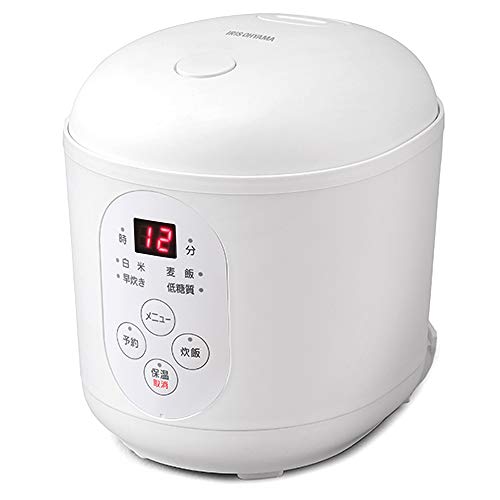
Japanese rice cookers produce the fluffiest rice in the world — it's a technology Japan has perfected. This compact 1-2 cup model is designed for small kitchens and is surprisingly affordable. Makes perfect rice every time with fuzzy logic technology.
Frequently Asked Questions
Do I need a special license to drive a campervan in Japan?
No special license is required as long as the vehicle is under 3,500 kg (which covers virtually all rental campervans). You need a valid International Driving Permit based on the 1949 Geneva Convention plus your original home-country license. Citizens of Belgium, France, Germany, Monaco, Switzerland, and Taiwan need an official Japanese translation of their license instead of an IDP.
Can I sleep in my campervan anywhere in Japan?
Not anywhere. Parking overnight at michi-no-eki is tolerated if you keep a low profile—no setting up outdoor furniture or cooking in the parking lot. Designated campgrounds and RV parks are always safe choices. Never sleep in convenience store lots, shopping centers, or residential streets. Some popular tourist areas have explicitly banned overnight parking for campervans.
How much does a Japan campervan trip cost per day?
For two people in a mid-range van, expect a total daily cost of ¥20,000–¥25,000 (roughly $130–$170 USD) including rental, insurance, fuel, campground fees, and food. Solo travelers in kei-vans can bring this down to ¥10,000–¥15,000 per day. These numbers assume a mix of free overnight spots and paid campgrounds.
Is it safe for solo women to campervan in Japan?
Japan consistently ranks as one of the safest countries in the world for solo travelers, including women. Many Japanese women campervan solo, and the community is growing. Standard precautions apply: lock your doors at night, choose well-lit parking spots, and let someone know your general itinerary. Michi-no-eki are generally well-lit and have security cameras.
What happens if I get in an accident?
Call the police (110) and your rental company immediately. Japan requires a police report for all traffic accidents, no matter how minor. Your mandatory insurance covers third-party liability. If you purchased CDW, your out-of-pocket for vehicle damage is capped (typically ¥50,000–¥100,000 without NOC waiver). Without CDW, you could be liable for the full repair cost. Some travel insurance policies also cover rental vehicle damage—check your policy before departure.
Should I rent a campervan or a regular car with hotel stays?
A regular car is cheaper to rent (¥5,000–¥8,000/day for a compact) and easier to park. But once you add hotel costs (¥8,000–¥15,000/night for budget options), a campervan often breaks even or comes out ahead on total cost. The real advantage of a campervan is flexibility: you go where you want, stop when you want, and don’t need to book accommodation in advance. For structured itineraries in popular areas, a car plus hotels might be simpler. For open-ended exploration of rural Japan, the campervan wins.
Disclosure
This article contains affiliate links. We may earn a commission when you buy through them, at no extra cost to you. Every pick is an honest recommendation.
Prepare before you arrive