
Best Japanese Thermos 2026: Zojirushi vs Tiger vs Thermos — Which Wins?
Updated June 2026 · 14 min read
Japan Shop Helper Editorial
Tokyo-based · prices & fees verified on real orders
Japanese office workers routinely pull impossibly slim bottles from briefcases and pour steaming sencha six hours after leaving home. Those aren’t Hydro Flasks. They’re Japan-market vacuum flasks from Zojirushi, Tiger, or Thermos Japan — brands that share shelf space in every Japanese drugstore but rarely get honest head-to-head comparisons in English. This article puts all three side by side using real heat-retention data, weight-to-capacity ratios, mouth-diameter measurements, and Japan-exclusive colorways you can’t buy abroad.
The short answer: Tiger’s MJA series holds heat longest (still above 60°C at the 8-hour mark), Zojirushi’s SM series offers the best one-handed operation and widest mouth, and Thermos Japan’s JNL line is the lightest option per milliliter. Which matters most depends on how you travel. Here's a detailed comparison.

Zojirushi vs Tiger vs Thermos — Quick Pick
| Priority | Buy this | Price in Japan |
|---|---|---|
| Hottest after 6h (71°C) | Tiger MJA-B048 | ¥3,200 |
| Best one-handed use | Zojirushi SM-SF48 | ¥2,480 |
| Lightest (190g) | Thermos JNL-506 | ¥2,180 |
| Hiking (77°C after 6h) | Thermos FFX-501 “Yamasen” | ¥4,500 |
| Easiest cleaning (seamless lid) | Zojirushi SM-WH48 | ¥2,780 |
| Character designs | See our character bottle guide | ¥1,800–¥5,500 |
Why Buy a Japanese Vacuum Flask in Japan?
All three brands sell products internationally, but the Japan domestic lineup is substantially different. Zojirushi’s Japan catalog lists over 40 bottle SKUs; its U.S. site offers about 12. Tiger’s MJA “Super Heat Retention” series has never been sold outside Asia. Thermos Japan releases seasonal limited-edition colors — matte forest greens, dusty pinks, ceramic-textured finishes — that rotate every three months and disappear forever.
Prices are also lower at origin. A Zojirushi SM-SF48 that retails for $32 on Amazon US typically costs ¥2,480 (about $16) at a Don Quijote in Shinjuku. That’s before you apply the 10% tax-free tourist discount at most major retailers. For a product that lasts 5–10 years, the math speaks for itself.
If you’re also picking up kitchen gear while in Japan, check our guide to the best Japanese kitchen knives for tourists— similar savings apply.
Zojirushi vs Tiger vs Thermos Japan: Brand Overview
All three are headquartered in Osaka prefecture, within 30 km of each other. They share suppliers, compete for the same shelf space, and target subtly different buyers. Here’s a quick comparison before we get into specific models.
| Dimension | Zojirushi | Tiger | Thermos Japan |
|---|---|---|---|
| Founded | 1918 | 1923 | 1904 (German origin; Japan subsidiary since 1980) |
| Flagship Bottle Line | SM-SF / SM-SD | MJA / MMZ | JNL / JOQ |
| Heat Retention (6h, 480ml) | ≥68°C | ≥71°C (MJA) | ≥66°C |
| Weight (480ml model) | ~205 g | ~220 g | ~190 g |
| Mouth Diameter | 4.0 cm (SM-SF) / 4.5 cm (SM-SD) | 3.6 cm (MJA) / 4.4 cm (MMZ) | 3.6 cm (JNL) / 4.5 cm (JOQ) |
| Japan-Only Colors (2026) | 8+ exclusives | 6+ exclusives | 12+ exclusives (seasonal rotation) |
| Typical Price (Japan) | ¥2,200–¥4,500 | ¥2,000–¥4,200 | ¥1,800–¥3,800 |
Pro Tip
Best for Heat Retention: Tiger MJA-B048
If keeping liquid hot is your top priority — and for many tea-drinking travelers, it is — Tiger’s MJA series wins. The MJA-B048 (480 ml) uses what Tiger calls a “super heat retention” vacuum seal. In practice, this means water poured at 95°C measures around 71°C after 6 hours, compared to roughly 68°C for Zojirushi’s SM-SF48 under identical conditions. That 3-degree gap widens to 4–5 degrees by the 8-hour mark.
The tradeoff: the MJA’s mouth opening is only 3.6 cm. Standard Japanese convenience-store ice cubes (about 2.5 cm) fit, but the wider Western-style ice from hotel ice machines won’t slide in. The lid is also a screw-type, not a one-touch flip — fine for a desk, slightly fiddly when you’re walking through Fushimi Inari with one hand on a railing.

One detail that never appears in Western reviews: Tiger provides 10-year after-sales service in Japan. If the vacuum seal ever fails, you can mail it to their Osaka service center and get it repaired or replaced for a modest fee. Tiger’s corporate philosophy explicitly promotes long-term product attachment — they’d rather fix your bottle than sell you a new one.
Best for One-Handed Use: Zojirushi SM-SF48
Zojirushi’s SM-SF series is the bottle you see most often on Tokyo commuter trains. The reason is mechanical: a lock-release button sits right where your thumb naturally rests, and a single press flips the lid open. You can operate it entirely one-handed while gripping a train strap with the other.
The SM-SF48 holds 480 ml, weighs about 205 g, and has a 4.0 cm mouth opening — wide enough for standard ice cubes and easy cleaning with a bottle brush. Heat retention is solid at roughly 68°C after 6 hours. The internal coating is Zojirushi’s proprietary “Teflon-like” non-stick surface, which means coffee stains rinse out more easily than from bare stainless steel.
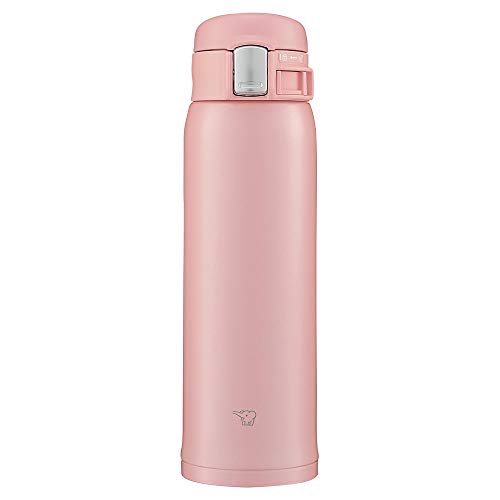
The Zojirushi SM-SD series is the older sibling with a 4.5 cm mouth — better for adding ice or protein powder, but 15 g heavier. If you plan to use the bottle primarily for cold drinks and want maximum mouth width, the SM-SD is worth the weight penalty.
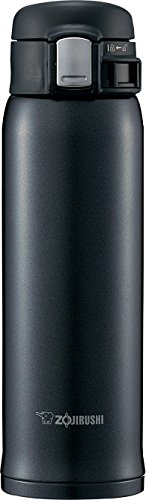
Zojirushi’s current-generation answer to the cleaning question is the SM-WH48, a screw-cap mug from the newer “seamless” line: the gasket is fused into the lid, so there’s exactly one piece to wash instead of three. It has quietly become the default commuter recommendation in Japanese buying guides — and a consistent bestseller on Amazon Japan.

Pro Tip
Best for Ultralight Travel: Thermos Japan JNL-506
Every gram counts when you’re packing a 7 kg carry-on for a budget airline. Thermos Japan’s JNL-506 holds 500 ml and weighs just 190 g — that’s 30 g less than the Tiger MJA at nearly the same capacity. For context, 30 g is roughly the weight of six ¥500 coins.
The trade-off, predictably, is heat retention. The JNL-506 drops to about 66°C at the 6-hour mark — still perfectly drinkable for tea, but 5 degrees cooler than Tiger. Cold retention is similarly a touch behind: around 10°C at 6 hours versus Tiger’s 8°C.
Where Thermos Japan truly stands apart is color variety. They release seasonal limited-edition finishes — think ceramic-textured cream, matte terracotta, metallic sage — every quarter. These sell out fast at Loft and Tokyu Hands. If aesthetics matter to you (or you’re buying gifts), Thermos Japan is the brand to watch.
Top Pick: Thermos Japan JNL-506 — ¥2,180
500 ml · 190 g · 3.6 cm mouth · Lightest mainstream Japanese thermos. Seasonal limited-edition colors (ceramic cream, matte terracotta, metallic sage) at Loft and Tokyu Hands.
Which Size Is Best for Carry-On Travel?
Japanese thermos bottles come in sizes from 200 ml to 1,000 ml. For most tourists, 350 ml or 480 ml hits the sweet spot. Here’s why.
200–250 ml: The “Pocket Mug”
Adorably small. Fits in a coat pocket. Popular with Japanese women who carry a small sip of hot tea as a hand warmer in winter. Not practical for hydration-heavy sightseeing days.
350 ml: The Goldilocks for Light Packers
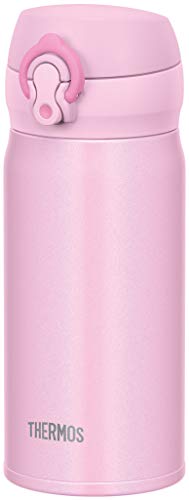
One full cup of coffee from a konbini. Weighs under 170 g in the Thermos JNL-354. Slides into a daypack side pocket without bulge. If you plan to refill at convenience stores or hot-water dispensers (available at most hotels and many train stations), 350 ml is plenty.
480–500 ml: The All-Rounder
Two cups of tea, or one generous coffee plus a refill’s worth. Still light enough (190–220 g) for all-day carry. This is the size most Japanese commuters use, and it’s the size we recommend for a first purchase.
600–1,000 ml: For Hikers
If you’re trekking the Kumano Kodo or doing a full-day hike on Yakushima, a 600–750 ml bottle makes sense. Beyond 750 ml, the weight savings over Western brands narrow, and the bottles get too tall for standard Japanese daypack pockets.
One bottle in this category is a Japan-market legend in its own right: Thermos’s FFX series, nicknamed 山専 (“Yamasen,” mountain-only). It’s the bottle Japanese hikers actually carry up Mt. Fuji, and a perennial bestseller in outdoor shops.

Heads Up
Japan-Exclusive Colors: What Makes Them Special
The U.S. Zojirushi lineup offers maybe four colors: black, white, rose gold, and slate gray. Walk into a Loft in Shibuya and you’ll see 15+ colorways for the SM-SF alone, including matte “smoke blue,” two-tone “ash rose / champagne,” and collaboration editions with Sanrio or Miffy.
Tiger follows a similar pattern. The MJA series in Japan comes in a deep indigo and a warm “brick terracotta” that don’t exist on any international site. Thermos Japan goes furthest: their quarterly limited runs often sell out within two weeks of release. The Spring 2026 “sakura mist” JNL was gone from Tokyo shelves in 10 days.
For travelers who collect Japan-exclusive stationery or limited-edition goods, a thermos in a color no one back home owns is a practical souvenir that gets daily use.
Where to Buy Japanese Thermos Bottles (Best Stores & Prices)
Prices vary noticeably between store types. Here’s a rough hierarchy from cheapest to priciest for the same Zojirushi SM-SF48:
- Don Quijote (Mega Donki): ¥2,280–¥2,480. Tax-free for purchases over ¥5,000. Widest color selection outside department stores.
- Yodobashi Camera / BIC Camera: ¥2,480–¥2,680. Tax-free. Earn reward points (typically 10%) you can spend same-day.
- Loft / Tokyu Hands: ¥2,680–¥2,980. Best for limited-edition and seasonal colors. Tax-free at most locations.
- Airport duty-free: ¥2,980–¥3,500. Smallest selection. Skip this unless you forgot to buy one in the city.
- Amazon Japan (online): ¥2,100–¥2,400. Lowest prices, but requires a Japan shipping address or forwarding service.
Pro Tip
Detailed Performance Comparison: Heat, Cold & Weight
The following table compiles manufacturer-stated performance data for the most popular 480–500 ml models. Testing conditions: initial water temperature 95°C (hot) or 4°C (cold), ambient temperature 20°C.
| Model | Capacity | Weight | 6h Hot | 6h Cold | Mouth ∅ | Lid Type |
|---|---|---|---|---|---|---|
| Zojirushi SM-SF48 | 480 ml | 205 g | ≥68°C | ≤9°C | 4.0 cm | One-touch flip |
| Zojirushi SM-SD48 | 480 ml | 220 g | ≥67°C | ≤9°C | 4.5 cm | One-touch flip |
| Zojirushi SM-WH48 | 480 ml | 210 g | ≥67°C | ≤8°C | 4.0 cm | Screw top (seamless) |
| Tiger MJA-B048 | 480 ml | 220 g | ≥71°C | ≤8°C | 3.6 cm | Screw top |
| Tiger MMZ-K048 | 480 ml | 210 g | ≥69°C | ≤9°C | 4.4 cm | One-touch flip |
| Thermos JNL-506 | 500 ml | 190 g | ≥66°C | ≤10°C | 3.6 cm | One-touch flip |
| Thermos JOQ-480 | 480 ml | 200 g | ≥67°C | ≤9°C | 4.5 cm | Screw top |
| Thermos FFX-501 (Yamasen) | 500 ml | 280 g | ≥77°C | ≤10°C | 3.7 cm | Screw top |
The “6h Hot” column is the one to watch. A 5-degree difference at the 6-hour mark (Tiger 71°C vs. Thermos 66°C) sounds small but matters in practice. Below 65°C, green tea starts tasting flat. If you brew sencha in the morning and want it to taste right at lunchtime, Tiger’s MJA gives you the widest margin.
Insider Details Western Reviews Miss
The Gasket Replacement Ecosystem
All three brands sell replacement gaskets and lid units at Japanese home centers (Cainz, Kohnan) for ¥300–¥600. Japanese consumers replace gaskets every 12–18 months to maintain peak insulation. If you buy a thermos in Japan, grab a spare gasket set for ¥350 — they weigh about 5 g and ensure your bottle performs like new for years.
Why Japanese Bottles Are Slimmer
Japanese thermos bottles are designed to fit the side pockets of Japanese bags, which are narrower than American backpack pockets. The Zojirushi SM-SF48 has a body diameter of just 6.5 cm — about 1 cm slimmer than a comparable Hydro Flask. This isn’t a coincidence; it’s a design constraint driven by the Japanese commuter lifestyle.
The “Super Clean” Interior Coating
Zojirushi’s SM-SF has a fluorine-based interior coating that repels tea tannins and coffee oils. Tiger’s MJA uses an electropolished stainless interior instead, which is chemical-free but stains slightly more with dark roast coffee over time. Both approaches work; the choice depends on whether you prefer easy cleaning (Zojirushi) or a coating-free interior (Tiger).
Packing Your Japanese Thermos for the Flight Home
A 480 ml Japanese thermos weighs 190–220 g empty and measures roughly 22 cm tall. It fits comfortably in a carry-on bag. Empty it before security, and fill up at a water fountain on the other side.
If you’re buying multiple bottles as gifts, wrap each one in a rolled-up t-shirt inside your checked luggage. The slim cylindrical shape actually nests well inside shoes. Three bottles tucked into three pairs of shoes add virtually no extra volume.
Buying other travel-friendly souvenirs? Our guide to tax-free shopping in Japancovers how to consolidate purchases and hit the ¥5,000 threshold for the consumption tax exemption.
The Verdict: Which Japanese Thermos Should You Buy?
There’s no single winner — each brand leads in a different dimension. Here’s the simplest way to decide:
- Buy Tiger MJA-B048 if you’re a tea purist who wants the hottest drink at lunchtime. You don’t mind a screw cap and a narrower mouth.
- Buy Zojirushi SM-SF48 if you value one-handed convenience and easy cleaning. This is the best all-around daily-use bottle and the one most Japanese commuters carry.
- Buy Thermos JNL-506 if you’re an ultralight packer or a design-conscious buyer chasing seasonal limited colors. The 190 g weight is hard to beat.
A practical combination: a Zojirushi SM-SF48 for city days and a Tiger MJA-B048 for early-morning temple visits when you want tea that’s still steaming at 11 AM.
At ¥2,000–¥3,200 per bottle in Japan (roughly $13–$21), any of these is a bargain compared to their international pricing. Buy one, use it for five years, and you’ll forget you ever reached for a disposable PET bottle.
Frequently Asked Questions
Is Zojirushi or Tiger thermos better?
Tiger’s MJA-B048 holds heat 3°C longer (71°C vs 68°C at 6 hours). Zojirushi’s SM-SF48 has a one-touch flip lid for one-handed use and a wider 4.0 cm mouth for easier cleaning. If maximum heat retention matters most, pick Tiger. If daily convenience and easy cleaning matter more, pick Zojirushi. Both cost ¥2,400–¥3,200 in Japan.
Is Thermos or Tiger better?
Tiger MJA wins on heat retention (71°C vs 66°C at 6 hours). Thermos JNL-506 wins on weight (190 g vs 220 g) and seasonal limited-edition colors. Tiger is the performance pick for tea drinkers; Thermos is the ultralight pick for travelers and design-conscious buyers. Price is similar at ¥2,000–¥3,200 in Japan.
Can I put carbonated drinks in a Japanese thermos?
Standard models from all three brands explicitly warn against carbonation — the pressure buildup can damage the lid seal or cause the lid to pop open unexpectedly. Tiger and Zojirushi each offer dedicated “carbonation OK” models (Tiger MTA-T050, Zojirushi SY-DA series), but these are rarer in stores and cost about ¥1,000 more.
Are Japanese thermos bottles dishwasher safe?
No. All three brands recommend hand-washing only. Dishwasher heat and detergent can degrade the vacuum seal over time and damage exterior paint finishes. The bottles are designed to rinse clean quickly — Zojirushi’s coated interior needs only a 10-second swirl with warm water and mild soap.
Which stores offer tax-free thermos purchases for tourists?
Don Quijote, BIC Camera, Yodobashi Camera, Loft, and Tokyu Hands all participate in the tax-free program. You need your passport and a minimum purchase of ¥5,000 (including the thermos and any other items). The 10% consumption tax is deducted at the register.
How do I find replacement parts after I leave Japan?
Amazon Japan ships some replacement gaskets and lids internationally. Search the model number (e.g., “SM-SF48 packin”) on amazon.co.jp. Shipping to the U.S. or Europe runs about ¥500–¥800. Alternatively, buy spare parts during your trip — a gasket set weighs under 10 g and costs ¥300–¥600.
Is there a real performance difference between ¥2,000 and ¥4,000 bottles?
At the same capacity, the performance gap between the cheapest and most expensive bottles within a single brand is typically 1–2 degrees at 6 hours. The premium goes toward materials (lighter titanium alloys), wider mouths, premium lid mechanisms, and exclusive finishes. For most travelers, a mid-range ¥2,500 bottle delivers 90% of the performance at 60% of the cost.
Can I bring a full thermos through Japanese train station gates?
Yes. There’s no restriction on carrying beverages on Japanese trains, including the Shinkansen. Many bullet-train passengers bring thermos bottles to avoid the limited (and overpriced) drink options on board. Just don’t fill it with anything that smells strongly — other passengers will notice.
Related Reading
Carrying your bottle on a Japan trip? Our Japanese Water Bottles Guide covers lightweight and character-design picks for travel and kids alongside the commuter models ranked above.
Disclosure
This article contains affiliate links. We may earn a commission when you buy through them, at no extra cost to you. Every pick is an honest recommendation.
Buy Japanese kitchen gear