

Best Japanese Lip Balm 2026: Mentholatum vs Vaseline vs Laneige — Fully Ranked
Updated June 2026 · 14 min read
Japan Shop Helper Editorial
Tokyo-based · prices & fees verified on real orders
Burt’s Bees, Aquaphor, a ¥3,000 La Mer balm — against all of them, a ¥300 tin with a nurse logo that’s been on Japanese drugstore shelves for seventy years holds its own. Mentholatum Original fixes chapped lips. Not temporarily covers them, actually fixes them. One night. That’s the whole pitch.
Below: 10 Japanese lip balms across classic tins, tinted treatments, overnight masks, and SPF formulas. Prices, key ingredients, and who should actually buy each one. Some are genuinely excellent. A few are packaging-forward tourist traps. This guide flags which is which.
Why Japanese Lip Care Actually Outperforms Western Alternatives
Walk into a Japanese drugstore like Matsumoto Kiyoshi, Sugi, or Welcia and you’ll find 20–30 lip balm SKUs on a single shelf. That’s roughly five times the selection at a typical US CVS. The reason is simple: competition drives innovation. Rohto, the 125-year-old pharmaceutical company behind Mentholatum, competes with Shiseido, DHC, Canmake, and dozens of other domestic brands — all fighting for shelf space in stores that cycle inventory every season.
Japanese lip care formulations tend to prioritize two things Western balms often don’t: lightweight texture and layerability. Most Japanese women layer a hydrating balm under a tinted gloss or lipstick, so the base product needs to absorb fast without leaving a greasy film. The result is balms that feel like they disappear into your lips within 30 seconds, yet keep moisture locked in for 4–6 hours.
Another factor: Japan’s humidity extremes. Tokyo summers hit 35°C with 80%+ humidity; Hokkaido winters drop to −15°C with bone-dry indoor heating. Lip products here are stress-tested by climate, not just marketing departments.
The Full Ranking: 10 Japanese Lip Balms Compared
Below is a side-by-side comparison of every product covered in this article. Prices are approximate Japanese retail (drugstore or convenience store). “Best For” tells you who should actually buy each one.
| Product | Price | Key Ingredient | SPF | Best For |
|---|---|---|---|---|
| Mentholatum Original (Tin) | ¥300 | Camphor + Menthol | None | Severe overnight repair |
| Rohto Mentholatum Lip Baby | ¥300 | Hyaluronic Acid + Shea Butter | None | Daily hydration, teens & light users |
| DHC Lip Cream | ¥700 | Vitamin E + Olive Oil | None | Airport souvenir, cracked lips |
| Vaseline Lip Therapy (Japan) | ¥400 | Petroleum Jelly | None | Barrier protection, familiar brand |
| Canmake Moisture Lip Cream | ¥500 | Honey + Royal Jelly | None | Tinted lip color + hydration |
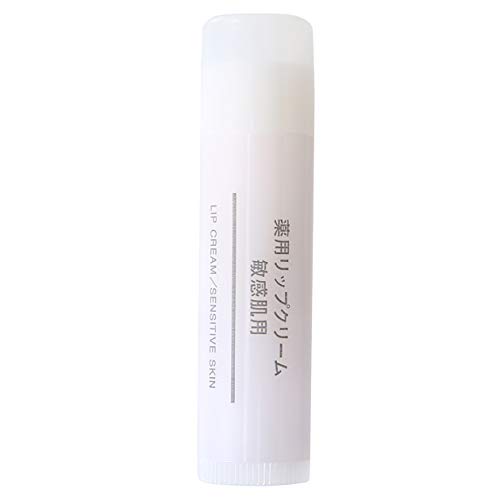
| Muji Lip Balm | ¥490 | Jojoba Oil (petroleum-free) | None | Sensitive skin, minimalists |
| Biore Athlizm Tone-Up Lip | ¥600 | UV filters + Moisturizers | SPF22 PA++ | Outdoor sports, hiking, skiing |
| Shiseido Integrate Lip Powder Jelly | ¥800 | Powder + Jelly hybrid | None | Tinted finish, gift-worthy packaging |
| Club Cosmetics Coconut Lip Balm | ¥550 | Coconut Oil | None | Souvenirs (retro packaging) |
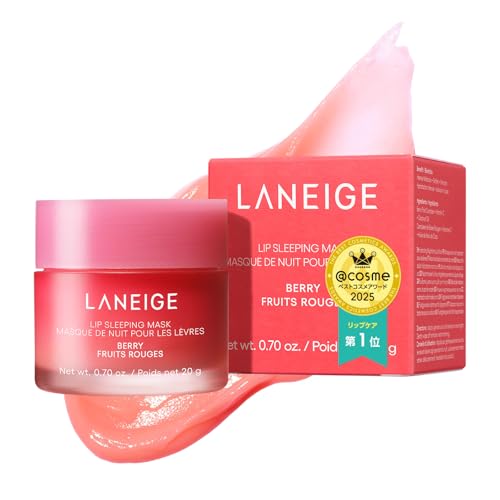
| Laneige Lip Sleeping Mask | ¥2,000 | Berry Extracts + Vitamin C | None | Overnight intensive repair |
#1 — Mentholatum Original: The 70-Year Icon
The round tin with the nurse logo has been a fixture in Japanese households for over 70 years. Originally an American brand (it dates back to 1889 in the US), Mentholatum was acquired by Rohto Pharmaceutical — one of Japan’s largest OTC drugmakers — and has since become more associated with Japan than with its Tennessee origins. At ¥300 for a 12g tin, the cost per gram is absurdly low: about ¥25/gram, roughly one-quarter the price of most Western lip balms.
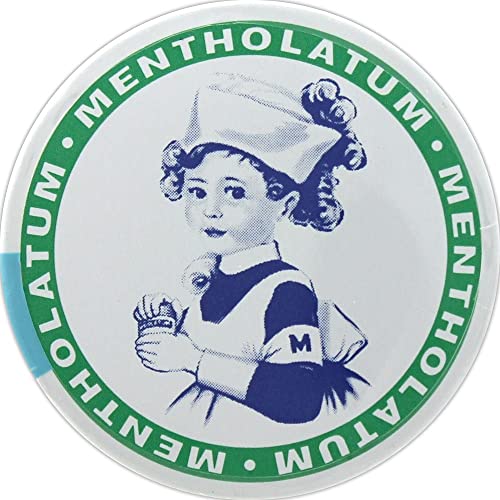
The formula is straightforward: petrolatum base infused with camphor and menthol. It’s not fancy. But the cooling menthol provides immediate relief from wind-chapped lips, while the occlusive petrolatum layer locks in whatever moisture your skin already has. In February conditions in Niseko where temps hover around −12°C, one thick application before bed keeps lips soft until morning. No peeling, no cracking.
One caveat: this is a repair product, not a daily wear. The menthol scent is strong, and the texture sits on top of your lips rather than absorbing. You won’t want to layer lipstick over it.
Skip it if menthol bothers you. Everyone else: this is the one. Three hundred yen. Just buy it.
#2 — Rohto Mentholatum Lip Baby: The One Japanese Teenagers Swear By
Also from Rohto’s Mentholatum line, Lip Baby targets a completely different user. Where the Original tin is thick and medicinal, Lip Baby is light, slightly sweet-scented, and absorbs in about 20 seconds. It’s the bestselling lip balm among Japanese high school and university students, largely because of its clean, non-greasy finish and pocket-friendly ¥300 price tag.
The formula includes hyaluronic acid and shea butter — both humectants that draw moisture into the lip tissue rather than just sitting on top. In a humid Japanese summer, this keeps lips hydrated without the heavy, waxy feel of petroleum-based balms. The tube is slim enough to fit inside a coin purse.
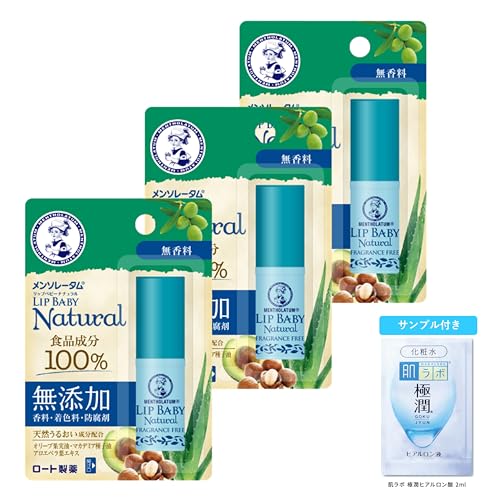
The “Lip Baby Crayon” variant adds a sheer tint, bridging the gap between skincare and makeup. If you want one product that handles both hydration and a hint of color for a day of sightseeing in Kyoto, the Crayon version is worth the extra ¥100.
#3 — DHC Lip Cream: Japan’s #1 Airport Beauty Souvenir
Here’s an insider fact most tourists don’t know: DHC Lip Cream is consistently one of the top-3 bestselling beauty souvenirs at Narita and Haneda airport shops. It’s small (1.5g tube), TSA-safe, and the vitamin E + organic olive oil formula is dermatologist-recommended for chronic dryness. At ¥700, it’s pricier per gram than Mentholatum but still a fraction of what you’d pay for equivalent quality abroad.
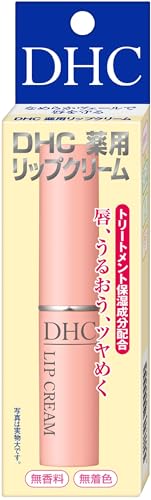
DHC (short for Daigaku Honyaku Center, a translation company turned beauty empire) built its reputation on olive-oil-based skincare. The Lip Cream applies like a very smooth wax candle — slightly firm at first, then melting on contact with warm skin. It has a faint herbal scent, barely noticeable. The vitamin E component helps with cell turnover, which is why dermatologists often recommend it for lips that crack and bleed in winter.
If you’re buying souvenirs for friends back home and want something compact, universally useful, and distinctly Japanese, DHC Lip Cream ticks every box. You can find it at nearly every drugstore, convenience store, and airport duty-free counter in the country. For more beauty-souvenir ideas, check our guide to best Japanese sunscreens for face.
#4–#6: Vaseline Japan, Canmake, and Muji
#4 — Vaseline Lip Therapy (Japan Formula)
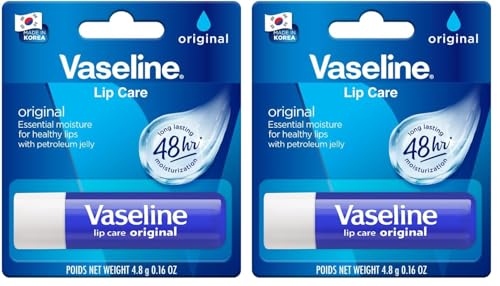
The Japanese version of Vaseline Lip Therapy comes in a small 7g pot and uses a slightly different formulation than the US equivalent. The Japan version includes a ceramide complex that the US version lacks, giving it a smoother spread and faster absorption. At ¥400, it’s positioned as a premium petroleum jelly lip product — an oxymoron anywhere else, but in Japan’s competitive lip-care market, even Vaseline has to try harder.
Best use case: applying before bed as a sealing layer after your regular lip balm. The occlusive barrier prevents transepidermal water loss overnight. Think of it as a lid on a pot of soup — it doesn’t add moisture, but it prevents existing moisture from escaping.
#5 — Canmake Moisture Lip Cream
Canmake is Japan’s undisputed queen of affordable cosmetics. Their Moisture Lip Cream at ¥500 does double duty: it hydrates with honey and royal jelly extracts while depositing a sheer tint. The “Stay-On Rouge” shade range includes pinks, corals, and a surprisingly wearable brick red. Japanese women often use this as a “lip and cheek” product — dab some on lips, then blend a tiny amount onto cheekbones.
The hydration lasts about 3 hours before you need to reapply. That’s average for a tinted balm, but the color payoff is impressive for the price. If you’re heading to Japan for a longer trip, pick up 2–3 shades. They’re so small and cheap, you can rotate colors daily.
#6 — Muji Lip Balm
Muji’s lip balm is petroleum-free, fragrance-free, and comes in the brand’s signature minimalist packaging. The formula uses jojoba oil, shea butter, and beeswax. At ¥490, it’s priced right for a natural/organic option. The texture is softer than most stick balms — almost creamy — which some people love and others find too slippery.
If you have sensitive skin or prefer to avoid petroleum derivatives, Muji is the pick. It won’t win awards for long-lasting moisture (reapply every 2–3 hours), but it won’t irritate reactive lips either. Available at every Muji store in Japan and many airports. While you’re at Muji, their travel essentials range is worth browsing too.
SPF Lip Protection: Why Biore Athlizm Belongs in Your Ski Jacket
Most tourists forget that lips burn. They have almost no melanin and very thin skin — at just 3–5 cell layers thick compared to 16 on the rest of your face. UV exposure at altitude (say, skiing in Hakuba at 1,800m) is about 20% stronger than at sea level. Yet most lip balms, including all the drugstore favorites above, offer zero UV protection.
Biore’s Athlizm Tone-Up Lip solves this with SPF22 PA++ protection. It’s marketed as a sports lip product and includes a subtle color-correcting tint that neutralizes dark or purple-ish lip tones. The ¥600 price includes a svelte tube that clips easily onto a jacket zipper pull.
Heads Up
Premium Picks: Laneige, Shiseido Integrate, and Club Cosmetics
#7 — Laneige Lip Sleeping Mask
Technically a K-beauty import, but Laneige is stocked in virtually every @cosme store, Loft, and major Japanese drugstore. The Lip Sleeping Mask (¥2,000 for a 20g pot) is the priciest product on this list, but the cost per use is reasonable — a single pot lasts 4–6 months because you need only a pea-sized amount each night.
The berry-extract formula creates a thick, slightly sticky film over your lips. By morning, the dead skin has softened enough that you can gently wipe it away with a damp cloth, leaving lips noticeably smoother. It’s particularly useful after a day of walking in cold, dry air — say, a 12-hour sightseeing day in Sapporo in January.
#8 — Shiseido Integrate Lip Powder Jelly
This is a hybrid — part lip tint, part jelly treatment. The “powder jelly” texture feels like a thin gel that dries to a semi-matte, powdery finish. It’s popular with Japanese women in their 20s and 30s who want lip color without the commitment of a full lipstick. At ¥800, it sits at the high end of drugstore pricing but comes in a cute, gift-worthy tube.
The hydration is moderate — don’t expect all-day moisture. Think of it as a tinted treatment that adds a pop of color while providing a few hours of softness. Layer it over a hydrating balm (like Lip Baby) for the best results.
#9 — Club Cosmetics Coconut Lip Balm
Club Cosmetics has been making beauty products in Japan since 1903. Their Coconut Lip Balm is wrapped in retro Taisho-era-inspired packaging — think pastel florals and art deco fonts. At ¥550, the product itself is decent (coconut oil base, mild fragrance, average hydration), but the real selling point is the packaging. It photographs beautifully, fits in a stocking, and screams “I brought this from Japan.”
If you’re looking for Japanese beauty souvenirs that look more interesting than a generic tube of lip cream, Club Cosmetics is a strong choice.
How to Layer Japanese Lip Products Like a Local
Japanese beauty routines are famously multi-step, and lips are no exception. Here’s the layering order that Japanese beauty editors recommend:
The key insight: Japanese women separate their lip care into “base” and “color” steps, just like they separate skincare (serum) from makeup (foundation). A hydrating base prevents lipstick from settling into fine lines and extends wear time by 1–2 hours.
Pro Tip
Where to Buy: Drugstores, Airports, and Duty-Free
Every product on this list (except Laneige) is available at major drugstore chains: Matsumoto Kiyoshi, Sugi Yakkyoku, Welcia, Sundrug, and Cocokara Fine. Prices are consistent across chains — maybe ¥20–30 variation. Don Quijote (Donki) also stocks most of these, often with tax-free pricing for purchases over ¥5,000.
Airport duty-free shops at Narita (Terminal 1 and 2) and Haneda (International Terminal) carry DHC Lip Cream, Mentholatum products, and Canmake in curated “beauty souvenir” sets. However, selection is narrower and prices are sometimes 10–15% higher than in-town drugstores. If you know what you want, buy it during your trip rather than gambling on airport availability.
Laneige is available at @cosme stores (there’s one in Tokyo Station, Harajuku, and several other locations), Loft, and select Ainz & Tulpe drugstores. It’s not at standard drugstores or convenience stores.
Heads Up
Budget Breakdown: What ¥2,000 Gets You
Here’s a practical example. With ¥2,000 (about $13 USD), you could buy:
- Mentholatum Original Tin — ¥300 (overnight repair)
- Rohto Lip Baby — ¥300 (daily hydration)
- DHC Lip Cream — ¥700 (souvenir for a friend)
- Biore Athlizm Lip — ¥600 (SPF for outdoor days)
Total: ¥1,900. That’s four quality lip products — covering day, night, outdoor, and gifting needs — for less than the price of a single Laneige pot. In the US, ¥1,900 barely buys two mid-range lip balms at Sephora.
This is the core appeal of Japanese drugstore lip care: extreme value at every price point. Even the “premium” picks on this list (Shiseido Integrate at ¥800, Laneige at ¥2,000) would be considered affordable by Western standards.
Frequently Asked Questions
What is the best Japanese lip balm for severely chapped lips?
Mentholatum Original in the round tin. The camphor-menthol formula provides immediate cooling relief, and the thick petrolatum base seals in moisture overnight. Apply a generous layer before bed and you’ll notice a difference within 8 hours.
Is DHC Lip Cream available at Japanese airports?
Yes. DHC Lip Cream is stocked at duty-free shops in Narita (Terminals 1 and 2), Haneda (International Terminal), and Kansai International Airport. It’s often displayed in “Japanese beauty bestsellers” sections near the boarding gates. That said, drugstore prices in town are typically 10–15% lower.
Can I use Japanese lip balm as a base under lipstick?
Absolutely. Rohto Mentholatum Lip Baby and Muji Lip Balm both absorb quickly and create a smooth, non-greasy surface for lipstick application. Apply, wait 60 seconds, blot with a tissue, then apply your color. This is standard practice among Japanese makeup artists.
Are Japanese lip balms safe for people with sensitive skin?
Most Japanese lip balms are formulated with fewer irritants than Western equivalents. For the most sensitive skin, choose Muji Lip Balm (fragrance-free, petroleum-free, minimal ingredient list) or DHC Lip Cream (olive oil base, no artificial fragrances). Avoid Mentholatum Original if you’re sensitive to menthol or camphor.
Which Japanese lip balm has SPF protection?
Biore Athlizm Tone-Up Lip offers SPF22 PA++ and is the best option for outdoor activities like hiking, skiing, or beach days. Reapply every 90 minutes during prolonged sun exposure. Most other Japanese lip balms on this list do not include UV filters.
How many lip balm SKUs do Japanese drugstores typically carry?
A standard Matsumoto Kiyoshi or Welcia location stocks 20–30 lip balm SKUs, roughly five times the selection at a US CVS or Walgreens. Larger stores in tourist areas like Shibuya or Shinsaibashi may carry even more, including limited-edition seasonal flavors and collaboration packaging.
Disclosure
This article contains affiliate links. We may earn a commission when you buy through them, at no extra cost to you. Every pick is an honest recommendation.
Shop Japanese beauty products