

Best Japanese Eye Creams 2026: 8 Drugstore & Department Store Picks Ranked
Updated May 2026 · 14 min read
Japan Shop Helper Editorial
Tokyo-based · prices & fees verified on real orders
Walk into a Matsumoto Kiyoshi in Shibuya and you’ll face a wall of 40+ eye creams labeled entirely in Japanese, with no obvious way to tell which one targets dark circles versus fine lines. The short answer: Japanese eye creams routinely outperform Western equivalents at 40–60% lower prices because they’re formulated for Japan’s humid climate — lighter textures, faster absorption, and active-dense formulas that don’t pill under sunscreen.
This guide ranks 8 eye creams across two tiers — drugstore (under ¥2,000) and mid-range (¥2,000–¥6,000) — so you can walk into any Japanese pharmacy or department store and grab the right tube in under five minutes. Every pick has been cross-referenced against @cosme user ratings, published ingredient lists, and documented texture and absorption profiles suited to Tokyo’s summer humidity.
Why Japanese Eye Creams Outperform Western Brands at Half the Price
Japan’s eye cream market is shaped by two forces most Western shoppers don’t consider: high humidity (Tokyo averages 77% relative humidity in July–August) and the regulatory framework that allows cosmeceutical actives — like retinol derivatives, niacinamide, and tranexamic acid — in over-the-counter products at concentrations that would require a prescription in some EU countries.
Because of that humidity, Japanese formulators prioritize gel-cream and water-oil hybrid textures. A heavy European eye balm that works in the dry air of a Parisian winter can feel greasy and cause milia in a Kyoto summer. Japanese eye creams absorb in 10–15 seconds on average and sit comfortably under the multi-layer SPF routines that locals follow daily.
Then there’s price. Shiseido’s Benefiance Wrinkle Smoothing Eye Cream retails for about ¥5,500 at a Japanese department store counter. The same 15 mL tube costs $70–75 USD (roughly ¥10,500) at Sephora in the US. Buying in Japan saves you nearly 48%. Multiply that across a few beauty purchases and you’ve funded a nice dinner in Ginza.
How We Ranked These 8 Japanese Eye Creams
Each product was evaluated on five dimensions: key active ingredients, texture and absorption speed, @cosme community score (Japan’s largest beauty review platform with over 20 million reviews), target skin concern, and accessibility for tourists (availability in at least one major drugstore chain or department store).
We split the list into two tiers. The drugstore tier covers products priced under ¥2,000, all available at chains like Matsumoto Kiyoshi, Sugi Drug, or Don Quijote. The mid-range tier covers products from ¥2,000 to ¥6,000 found at department store counters or flagship brand shops. If you’re looking for more guidance on navigating Japanese beauty shopping, check out our Japanese skincare shopping guide.
Quick Comparison: All 8 Eye Creams at a Glance
| Product | Price (approx.) | Key Ingredients | Texture | Best For |
|---|---|---|---|---|
| Rohto Obagi Derma Power X Eye Specialist | ¥5,500 | Collagen, elastin, retinol | Rich cream | Fine lines & firmness |
| Shiseido Benefiance Wrinkle Smoothing Eye Cream | ¥5,500 | ReNeura Technology+™, niacinamide | Silky cream | Wrinkles & dullness |
| Kose Sekkisei MYV Eye Treatment | ¥4,400 | Oriental herb blend, ITOWA extract | Gel-cream | Dark circles & brightening |
| Orbis U Dot Eye Vitalizer | ¥3,630 | Decaglucoside, energy-active complex | Lightweight gel | Puffiness & early aging |
| DHC Enriched Eye Cream | ¥2,200 | Retinol, collagen, vitamin E | Medium cream | Fine lines on a budget |
| Rohto Melano CC Vitamin C Eye Cream | ¥1,210 | Ascorbic acid, vitamin E derivative | Lightweight gel-cream | Dark spots & pigmentation |
| Nameraka Honpo Soy Isoflavone Eye Cream (Sana) | ¥990 | Soy isoflavone, retinol derivative | Light cream | Hydration & mild firming |
| Kracie Hadabisei Wrinkle Care Eye Mask | ¥770 (30 pairs) | Retinol, hyaluronic acid, collagen | Sheet patch | Travel-friendly hydration boost |
Mid-Range Tier (¥2,000–¥6,000): 5 Department Store & Specialty Picks
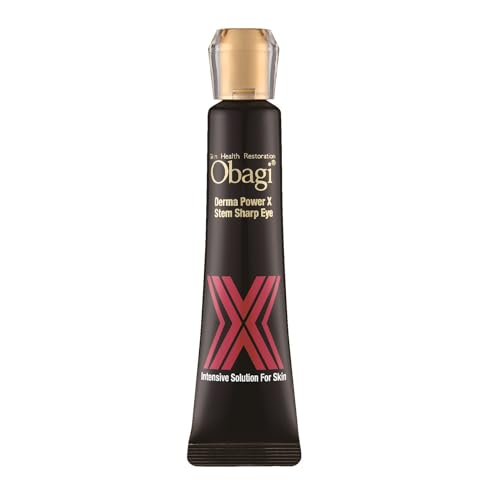
1. Rohto Obagi Derma Power X Eye Specialist — Best for Fine Lines & Firmness
Obagi is a name many Western shoppers associate with the US brand, but Rohto’s Japanese Obagi line is a separate entity developed in-house. The Derma Power X Eye Specialist packs a one-two punch of retinol and hydrolyzed collagen in a 20 g tube that lasts about 8 weeks of twice-daily use.
Texture-wise, it’s the richest product on this list, but still thin enough to absorb in under 20 seconds in air-conditioned environments. In a 35°C Osaka afternoon, it takes closer to 30 seconds. Users on @cosme consistently praise its de-puffing effect when stored in a fridge and applied cold in the morning.
2. Shiseido Benefiance Wrinkle Smoothing Eye Cream — Best for Wrinkles & Overall Radiance
The Benefiance line has been a staple at Japanese department store counters since 1989, and the current formula uses Shiseido’s proprietary ReNeura Technology+ to help skin respond more effectively to topical actives. The niacinamide content addresses both wrinkle depth and uneven tone — something most Western eye creams tackle with separate products.
At ¥5,500 in Japan versus roughly ¥10,500 equivalent at US retailers, this is one of the highest-value Japan-exclusive purchases a beauty-focused tourist can make. The 15 mL tube feels small but a rice-grain amount per eye is all you need — expect about 10 weeks of use.

3. Kose Sekkisei MYV Eye Treatment — Best for Dark Circles & Brightening
Sekkisei has been Japan’s go-to brightening brand since 1985. The MYV (Modernize Your Vitality) line reformulated the classic herbal extracts — Angelica, Melothria, and Coix Seed — into a gel-cream texture that blends into skin almost instantly. This eye treatment specifically targets melanin-driven dark circles with its ITOWA extract complex.
Where many brightening eye creams sting or tingle, the Sekkisei formula feels cooling and calm. Apply it after your toner and before your moisturizer. At ¥4,400 for 20 g, it’s priced aggressively against Western competitors like Clinique’s Even Better Eyes (¥7,000+ in Japan).
Pro Tip
4. Orbis U Dot Eye Vitalizer — Best for Puffiness & Early Aging Signs
Orbis, a Pola subsidiary, focuses on oil-free and science-driven formulations. The U Dot Eye Vitalizer uses a decaglucoside complex to support the skin’s energy metabolism at a cellular level — the brand’s answer to what they call “cellular fatigue” around the eyes.
At ¥3,630 for 20 g, this is the sweet spot between drugstore and luxury. The texture is a true lightweight gel — no white cast, no stickiness, no interference with makeup. Users in their late 20s and 30s make up the majority of its @cosme reviewers, praising its de-puffing effect after long flights or jet-lag mornings.
5. DHC Enriched Eye Cream — Best Budget Retinol Option
DHC is best known overseas for its Deep Cleansing Oil, but the brand’s skincare lineup is massive in Japan. The Enriched Eye Cream contains retinol, hydrolyzed collagen, and vitamin E at a ¥2,200 price tag that barely nudges into mid-range territory.
The formula is slightly thicker than the Orbis gel but still comfortable in humidity. DHC operates its own retail stores across Japan (over 50 locations) and sells through convenience stores and drugstores. You can also order it on DHC’s official online shop for hotel deliveryif you’re running short on time.

Drugstore Tier (Under ¥2,000): 3 Budget Picks That Punch Above Their Price
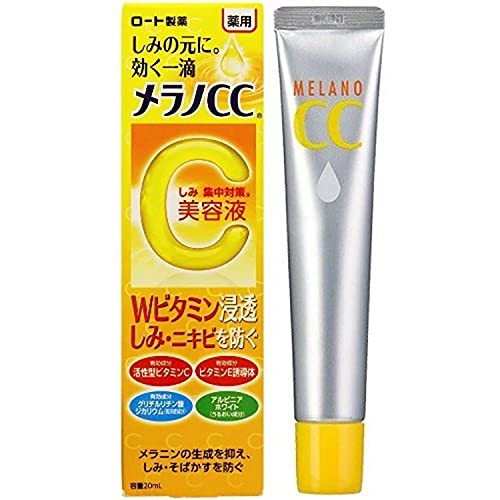
6. Rohto Melano CC Vitamin C Eye Cream — Best Drugstore Pick for Pigmentation
The Melano CC line is arguably the most beloved drugstore vitamin C range in Japan. The eye cream formulation uses ascorbic acid (pure vitamin C) rather than a derivative, which is unusual at this price point. At ¥1,210 for a 15 g tube, it’s cheaper per gram than most US drugstore eye creams.
The gel-cream texture sinks in within about 8 seconds — the fastest absorber on this list. It layers well under concealer and sunscreen. One downside: the tube is small and will run out in about 5–6 weeks of twice-daily use, so grab two if you’re stocking up.
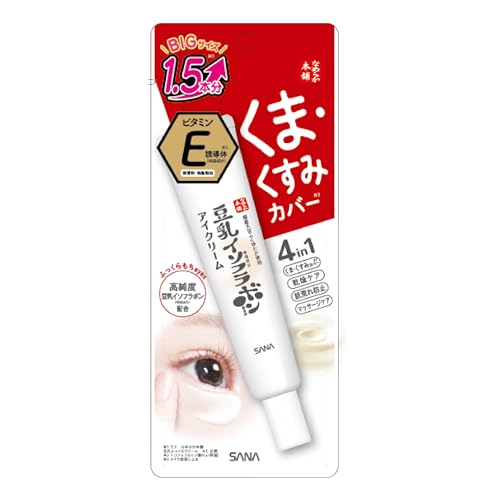
7. Nameraka Honpo Soy Isoflavone Eye Cream (Sana) — Best for Gentle Hydration
Sana’s Nameraka Honpo line revolves around soy isoflavone, a phytoestrogen that mimics mild retinol-like effects without irritation. The eye cream version includes a retinol derivative (retinyl palmitate) and costs only ¥990. For context, that’s about $6.50 USD.
This is the gentlest pick on the list, suitable for sensitive skin or anyone who reacts to stronger retinol formulas. The light cream texture has a faint soy milk scent. It doesn’t target deep wrinkles — think of it as a preventive moisture lock rather than a corrective treatment.
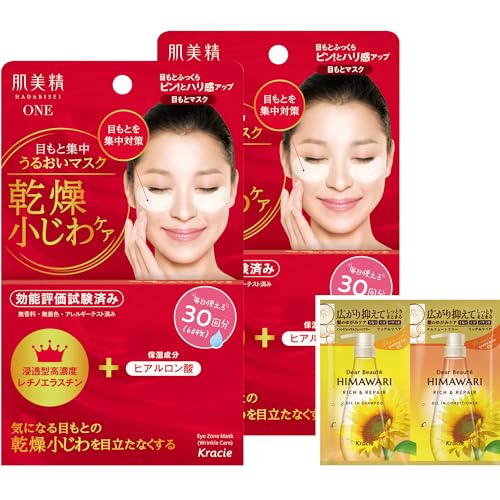
8. Kracie Hadabisei Wrinkle Care Eye Mask — Best Travel-Friendly Hydration Boost
Technically a patch rather than a cream, but this product consistently ranks in @cosme’s top eye-care categories. Each box contains 30 pairs of gel patches infused with retinol, hyaluronic acid, and collagen for ¥770 — about ¥26 per use.
Stick a pair under your eyes for 10–15 minutes after a long-haul flight or a late night in Shinjuku. They’re individually wrapped and TSA-friendly. Not a replacement for a daily eye cream, but an excellent supplement and a crowd-pleasing souvenir for beauty-loving friends back home.
The Humidity Factor: Why Texture Matters More Than You Think
Here’s something Western beauty blogs almost never mention: Japanese eye cream formulations are designed for 60–85% humidity environments. That sounds like a technical detail, but it has a direct impact on your experience. An eye cream optimized for dry European or North American climates often contains heavy occlusives (petrolatum, mineral oil) that form a moisture barrier. In Tokyo’s July heat, that barrier traps sweat against your skin and can trigger milia — those tiny white bumps under the eyes.
Japanese formulations lean on lighter hydrating agents like squalane, hyaluronic acid (multiple molecular weights), and glycerin-based emulsions. They rely on the ambient humidity to do part of the moisture-retention work. This is why many tourists report that Japanese eye creams “feel like nothing” going on but deliver visible hydration by morning.
If you live in a dry climate (Arizona, Madrid, most of inland Australia), you may want to layer a thin occlusive balm over a Japanese eye cream at night. But for the duration of your Japan trip, the Japanese formulas will feel superior to anything in your current routine.
Where to Buy Japanese Eye Creams: A Tourist’s Store-by-Store Guide
Matsumoto Kiyoshi & Sugi Drug— Japan’s two largest pharmacy chains stock all six drugstore and DHC picks on this list. Most central Tokyo locations have English-speaking staff during peak hours (11 AM–3 PM). Look for the yellow “Tax Free” counter if your purchase totals ¥5,000+ in one receipt.
Don Quijote (Donki)— Open until midnight or later. Prices are 5–10% higher than pharmacy chains, but the convenience of late-night shopping can be worth it. The Shibuya Mega Donki has the broadest beauty selection.
Department store counters (Isetan, Takashimaya, Mitsukoshi)— The place to buy Shiseido Benefiance, Kose Sekkisei MYV, and Orbis. Counters often provide a complimentary 5-minute skin analysis using a UV-light scope — ask for it in English and they’ll identify your under-eye concerns before recommending a product.
For a broader breakdown of Japan’s tax-free shopping rules and how to claim your exemption, see our tax-free shopping in Japan guide.
Heads Up
Reading Japanese Eye Cream Labels: 5 Terms to Know
You don’t need to be fluent to decode the key information on a Japanese eye cream. Here are the five terms that appear on nearly every package:
If you spot both シワ改善 and 医薬部外品 on the packaging, you’re holding a government-certified anti-wrinkle product. That’s a level of regulatory backing that most Western eye creams don’t carry.
How to Apply Japanese Eye Cream for Maximum Results
Japanese beauty advisors at department store counters teach a specific application method that differs from the Western “pat and hope” approach. Here’s the technique they recommend:
Step 1:Scoop a rice-grain-sized amount onto your ring finger. The ring finger exerts the least pressure of all five fingers — roughly 30% less force than the index finger — which matters when working over the thin orbital skin.
Step 2:Dot the product in a C-shape from the inner corner under the eye, along the orbital bone, and up to the outer brow bone. Don’t apply directly on the eyelid unless the product label specifically says it’s safe for lids.
Step 3:Press and lift — don’t rub. Use a gentle press-and-release motion following the C-shape. This encourages lymphatic drainage and reduces morning puffiness over time. Repeat 3–5 presses per area.
Step 4:Wait 60 seconds before applying sunscreen or makeup. Japanese eye creams absorb quickly, but giving them a full minute ensures they don’t dilute the SPF layer above.
Pro Tip
Building a Travel-Ready Japanese Eye Care Routine for Under ¥3,000
If you’re on a tight budget, you can assemble a surprisingly effective eye care routine with products from this list plus a few extras from the drugstore shelf.
Morning: Rohto Melano CC Eye Cream (¥1,210) → sunscreen. The vitamin C targets dark circles and provides mild antioxidant protection under SPF. If you need sunscreen recommendations, our best Japanese sunscreen roundup covers the top picks for humid conditions.
Evening:Nameraka Honpo Soy Isoflavone Eye Cream (¥990) for hydration and gentle retinol-derivative activity. Layer over your regular moisturizer or sleeping pack.
Weekly boost:Kracie Hadabisei Eye Masks (¥770/30 pairs). Use 2–3 times per week before applying your evening eye cream.
Total: ¥2,970. That’s less than the cost of a single La Mer eye concentrate sample at a US department store.
Frequently Asked Questions About Japanese Eye Creams
Can I buy Japanese eye creams online and ship them overseas?
Yes. Amazon Japan ships many beauty products internationally, and retailers like Dokodemo and Kokoro Japan specialize in overseas beauty shipping. Expect to pay ¥800–¥2,000 for shipping depending on weight. Buying in-store in Japan remains cheaper for most multi-product hauls due to tax-free savings.
Are Japanese eye creams safe for sensitive skin?
Most are formulated with minimal fragrance and fewer harsh preservatives than Western counterparts. However, “sensitive skin” means different things in different markets. For the gentlest options on this list, choose the Nameraka Honpo Soy Isoflavone Eye Cream or the Orbis U Dot Eye Vitalizer, both designed for reactive skin types. Always patch-test behind your ear for 24 hours before applying near your eyes.
What’s the difference between a “quasi-drug” eye cream and a regular cosmetic eye cream in Japan?
A quasi-drug (医薬部外品) has undergone government review by Japan’s Ministry of Health, Labour and Welfare to confirm that its active ingredients deliver a specific claimed effect — like wrinkle reduction or skin brightening. A regular cosmetic can only claim to “moisturize” or “protect.” On this list, products labeled as quasi-drugs include the Shiseido Benefiance line and any item stamped with シワ改善 (wrinkle improvement).
How long does a tube of Japanese eye cream last?
A standard 15–20 g tube lasts 8–12 weeks with twice-daily use (rice-grain amount per eye, per application). The Kracie eye patches last 15 weeks if used twice per week. Stockpile at least two tubes if you want a 6-month supply back home.
Do I need to refrigerate Japanese eye creams?
Refrigeration isn’t required for stability — Japanese eye creams are formulated to remain stable at room temperatures up to 30°C. However, applying a cold eye cream boosts the de-puffing effect significantly. Many Japanese beauty enthusiasts keep their eye creams in a dedicated skincare mini-fridge (available at Loft and Tokyu Hands for about ¥3,000).
Can I use Japanese eye cream and retinol serum together?
If your eye cream already contains retinol (like the Rohto Obagi or DHC Enriched), skip additional retinol around the eyes. The orbital skin is 0.5 mm thick — roughly 40% thinner than the rest of your face — and double-dosing retinol can cause flaking and redness. Use your retinol serum on the rest of your face and let the eye cream handle the eye area independently.
Disclosure
This article contains affiliate links. We may earn a commission when you buy through them, at no extra cost to you. Every pick is an honest recommendation.
Shop Japanese beauty products